
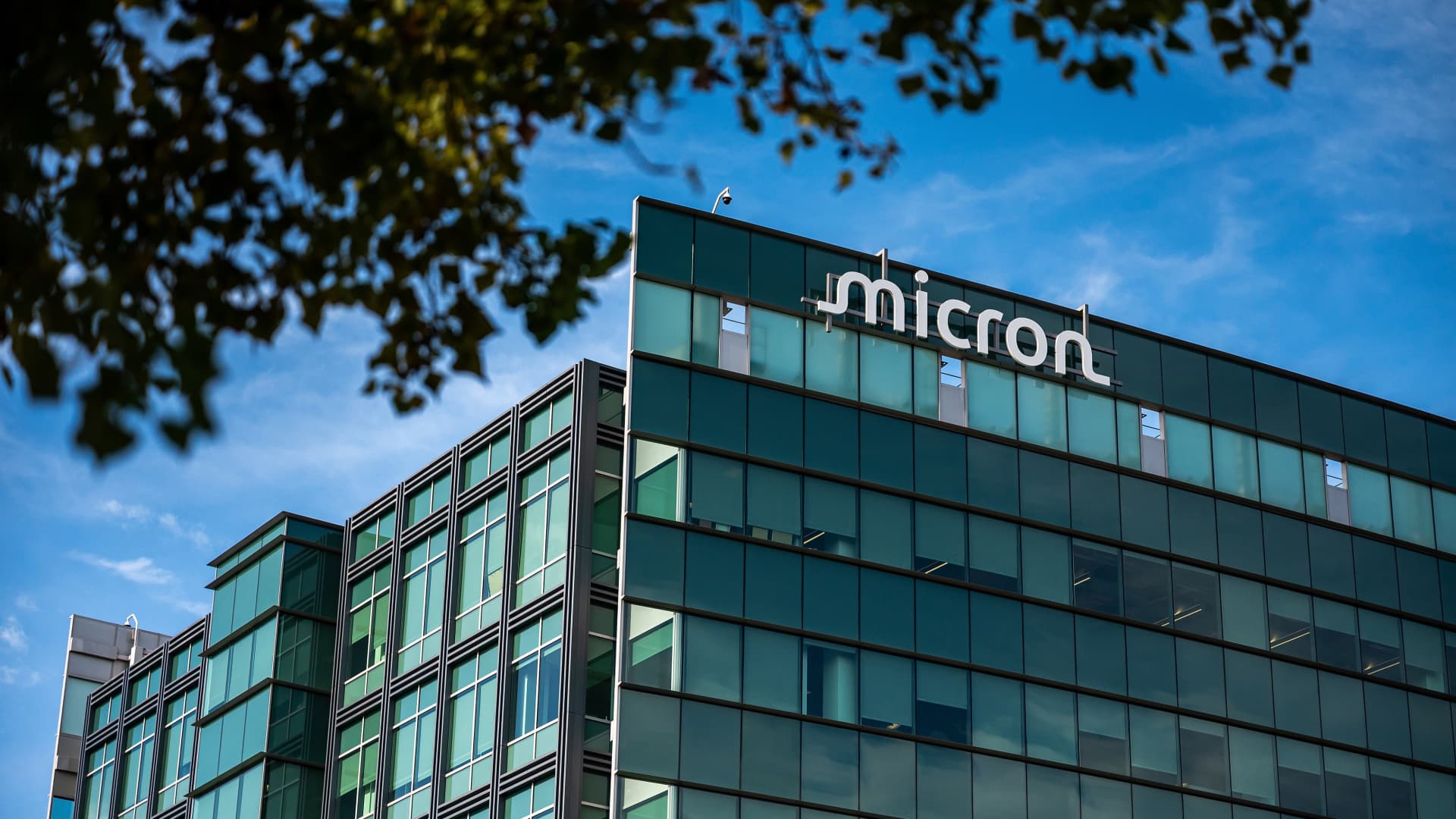
Memory chip makers have been riding a wave of surging demand that’s boosted pricing power and profit projections in the historically volatile sector. Rather than a one-time shortage in need of a correction, analysts are increasingly talking about this demand as evidence of a “supercycle” in the sector. They think it could last for years, especially if artificial intelligence adoption by big companies happens more quickly than they currently expect. “Surging demand for AI accelerators and inference hardware can dramatically boost revenue for semiconductor firms. If adoption outpaces forecasts, chipmakers across memory, logic, and networking could see windfall gains,” analyst Jay Goldberg at Seaport Research Partners wrote in a Wednesday note. Traders have caught wind of the rising demand for memory chips, sending shares of those companies higher in the past week. Chipmaker Micron Technology surged nearly 38% for its best weekly performance since 2008. MU YTD mountain Micron, YTD The Roundhill Memory ETF (DRAM) , whose constituents include Micron, SK Hynix and Samsung Electronics, gained more than 30% for the week. DRAM YTD mountain Roundhill Memory ETF, YTD Readying for a boost in production Samsung Electronics, which recently joined the trillion-dollar valuation club , is advancing the construction of a new mega-fab plant by six months as part of the supercycle, which could extend beyond 2027, analysts said. The company is expected to start building the facility, known as P5 Fab 2, in July at its Pyeongtaek semiconductor campus. “Beyond merely responding to current demand, the move reflects an intent to cement market dominance throughout the multi-year AI semiconductor boom,” analysts for Roth wrote in a Tuesday commentary. South Korean memory chip maker SK Hynix is fielding offers from big tech firms to invest in specific production pipelines in order to ramp memory chip production, Reuters reported last week. AI processors need high-bandwidth memory like DRAM and NAND to handle workloads, along with large amounts of storage to channel data back to processors. DRAM is typically faster and less stable while NAND is slower and more reliable, but both types of memory are crucial for AI. In March, Micron finished its acquisition of a plant in Taiwan from Powerchip Semiconductor Manufacturing Corporation’s (PSMC), a move that could give “Micron more flexibility for future DRAM and HBM nodes,” according to Roth. “By the end of 2028, Micron’s wafer output could be much larger than expected,” Roth analysts said. Limited supplies are leading to higher prices The memory crunch is driving downstream cost increases that are weighing on the hyperscalers. “Beyond the June quarter, we believe memory costs will drive an increasing impact on our business and we’ll continue to evaluate this. And as we’ve said before, we’ll look at a range of options,” exiting Apple CEO Tim Cook said on the iPhone maker’s April 30 earnings call. “We are … navigating complex PC market dynamics impacted by memory prices,” Microsoft CFO Amy Hood said during the company’s latest earnings call. Supply constraints could take months to normalize and the impact on prices by the middle of this year could be huge. Krish Sankar, analyst with TD Cowen, estimated that DRAM and NAND pricing by mid-2026 could be up around 180% from the third quarter of last year. Those downstream margin pressures due to cost increases reflect upstream margin expansion for the memory component manufacturers themselves. For this year, gross margins are projected to be 76.9% for Micron, 70% for SanDisk, 65.8% for TSMC, and 55.3% for AMD, according to data from FactSet. For next year, the sector’s pricing power is likely to strengthen. Micron is projecting an 81% gross margin, and SanDisk an 82% margin.
