

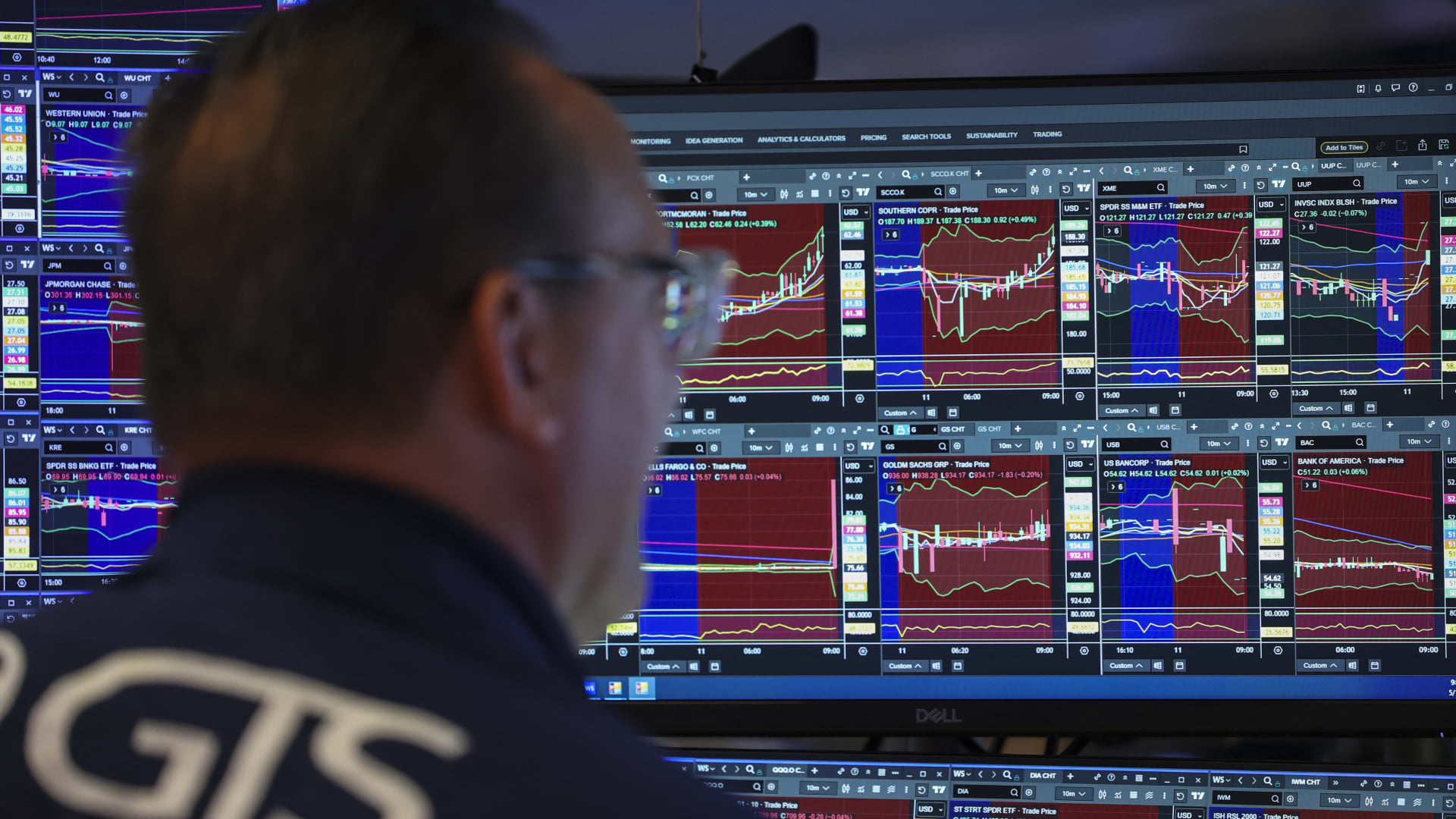
A trader works on the floor of the New York Stock Exchange (NYSE) during the opening bell in New York, on May 11, 2026.
Angela Weiss | Afp | Getty Images
It’s official: traders haven’t been this aggressively bullish since they were stuck at home with stimulus checks betting on a bounce-back in the global economy.
Retail traders are buying calls in Cboe’s “Mag 10” stocks – the big seven plus AMD, Palantir and Broadcom – at the heaviest 10-day clip since 2021, according to a report from the exchange. Of new positions opened, 52% were call-buying, and 17% were call–selling.
“Hedgers have thrown in the towel,” Mandy Xu, head of derivatives market intelligence for Cboe, said in a call. “It’s a consistent theme we’re seeing, with people trying to catch up to the market rally through buying calls.”
It’s a sharp about-face from just a month ago when Cboe’s call-buying metric was 15 points lower and investors were preoccupied by geopolitics and crude oil prices. The pick-up in optimism matches other data characterizing speculative appetite amid this year’s extraordinary surge in tech stocks.
The price of call contracts on the Nasdaq-100 index that are one standard deviation out of the money is at a 52-week high and close to a three-year record, according to Nations Indexes’ 30-day CallDex Index.
“The story is not just that Nasdaq-100 calls are pricey, but that nobody seems interested in selling covered calls,” said Nations Indexes president Scott Nations. “That signals a whole other level of bullishness.”
The Nasdaq-100 set a new record Monday, bringing its year-to-date gain to more than 16%, as semiconductors extend their blistering run and are nearing 20% of the S&P 500’s market capitalization.
Nasdaq-100 index, YTD
The concentration of the market rally means options traders are placing more bets on single stocks than indexes, keeping volatility elevated on a single-stock basis. The ratio of Cboe’s S&P 500 Constituent Volatility Index VIXEQ to VIX has widened to the 98th percentile as correlations remain low.
Traders have been buying tech giants on dips and selling big-name laggards including Costco, UnitedHealth and Alibaba, according to data from retail trading giant Robinhood Markets published via Sherwood. Most-traded stocks on the platform include Nvidia, Tesla, Micron, Sandisk, AMD and Microsoft. “Robinhood traders are savvy, with a long-standing conviction in tech and innovation names,” said Steve Quirk, chief brokerage officer at Robinhood. “We often see them net buying these tech titans, including the Mag 7, when the opportunity presents itself, and this year is no different.”
