
U.S. ‘reverse blockade’ in Strait of Hormuz is ‘stroke of genius,’ Netanyahu says
In this handout photo provided by U.S. Central Command, U.S. forces patrol the Arabian Sea near M/V Touska on April 20, 2026, after firing upon the Iranian-flagged vessel that the U.S. accused of attempting to violate the U.S. naval blockade of Iranian ports near the Strait of Hormuz.
U.S. Navy | Getty Images
Netanyahu praised Trump’s retaliatory blockade of Iranian ports in the Strait of Hormuz, calling it “very effective.”
“It’s been a stroke of genius, the reverse blockade,” he said.
— Kevin Breuninger
‘If necessary, there will be a full-scale return to military action’
Netanyahu, asked if there actually is a ceasefire with Iran, said, “I think there’s a tactical game that is being played.”
“And Iran surely knows what [Trump] has said, that if necessary, there will be a full-scale return to military action,” Netanyahu said. “It’s a president’s decision, Israel is ready, and the U.S. forces are ready.”
“I think Iran should take that into account,” he said. “I think they are taking into account what they’re playing with fire, that’s clear.”
— Dan Mangan
Netanyahu would rather a ‘bad editorial than a positive obituary’
Netanyahu said he would “rather get a bad editorial than a positive obituary.”
He noted that in previous centuries, Jewish people were “vilified”, culminating in the Holocaust.
“We’re still being vilified. But when they come to slaughter us, we fight back,” Netanyahu said of his approach to the Middle East conflict.
— Hugh Leask
Netanyahu says he and Trump have ‘tactical disagreements’ but ‘agree on the main things’
Netanyahu downplayed any hint of of a schism with Trump, saying that while they sometimes have “tactical disagreements,” they “agree on the main things.”
Those include preventing Iran from getting a nuclear weapon and threatening Israel with it, he said.
“Sometimes we have, as in the best of families, you have these tactical disagreements,” he said. But “we always find a way to work them out, and we do so as great friends.”
“We can disagree in the morning” and find common ground by the afternoon, he insisted.
— Kevin Breuninger
Iran ‘is an enemy that wants to destroy our country, that wants to destroy your country’
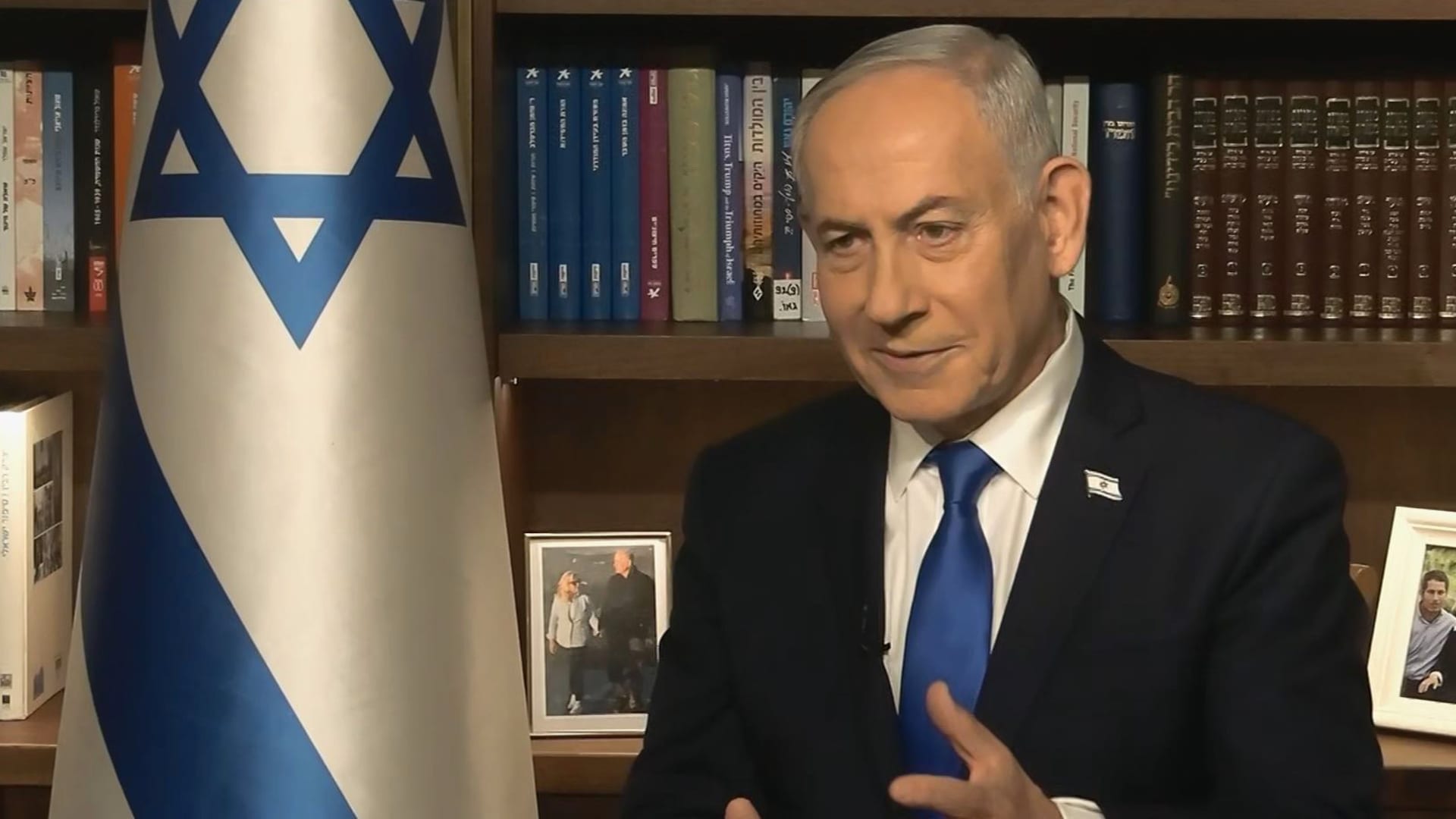
Israeli Prime Minister Benjamin Netanyahu speaks with CNBC from Jersusalem on June 3rd, 2026.
CNBC
Netanyahu said, “We’re fighting for the good guys” against Iran, which represents an existential threat to both Israel and the U.S.
“We’re faced with an enemy that wants to destroy our country, that wants to destroy your country, that wants to destroy free democracies everywhere and spread their terrorist ilk around the globe,” he said.
“So, when we fight Iran and its proxies, we’re not only fighting our war, we’re fighting your war, and frankly, Europe’s war as well,” Netanyahu said.
— Dan Mangan
Netanyahu slams European leaders: ‘Don’t have the guts’ to stand up to ‘barbarians’

Netanyahu laced into European leaders, such as French President Emmanuel Macron, who have criticized Israel’s military actions.
“The way European leaders cater to radical Islamic minorities in their own countries is shameful,” Netanyahu said.
“They know we’re protecting them as well, but they don’t have the guts to stand up and line up with the right thing that will save our civilization against these barbarians.”
— Kevin Breuninger
Israel and Lebanon set for further talks in Washington following deadly strikes
A plume of smoke rises following an Israeli airstrike on the outskirts of Tyre, southern Lebanon, on June 1, 2026.
Kawnat Haju | Afp | Getty Images
Israeli and Lebanese officials are set to meet for further talks in Washington after the two sides look to de-escalate tensions in southern Lebanon.
Four Israeli soldiers were injured n southern Lebanon Tuesday following a Hezbollah drone attack, while an Israeli drone strike on southern Lebanon on Tuesday killed eight people.
Israeli forces did not attack Beirut as part of a partial ceasefire agreement with Iran-backed Hezbollah, which pledged not to bomb Israel.
— Hugh Leask
Sara Eisen speaks to Israeli Prime Minister Benjamin Netanyahu in Jerusalem, an ancient city
Sara Eisen’s interview with Netanyahu takes place in the prime minister’s office in Jerusalem, one of the world’s oldest cities, with a history spanning thousands of years. The city has been under many empires over history.
It is considered holy by Judaism, Islam and Christianity and home to key religious sites like the Western Wall, the Al-Aqsa Mosque and Church of the Holy Sepulchre.
Both Israelis and Palestinians claim Jerusalem as their capital, and the city’s status remains a central issue in the broader Israeli-Palestinian conflict.
— Emma Graham
Netanyahu mum on claim Trump called him ‘effing crazy’
Israeli Prime Minister Benjamin Netanyahu speaks with CNBC from Jersusalem on June 3rd, 2026.
CNBC
Netanyahu brushed off a question about Trump crudely cursing at him during a phone call this week, and that the U.S. president said Netanyahu would be in jail if not for him.
“I’m not going to get into details,” Netanyahu said when asked about Trump reportedly calling him “effing crazy.”
— Dan Mangan
Iranian official disputes Trump’s claim on nuclear pledge, calls it “misleading”
An Iranian official pushed back on Trump’s assertion that Tehran had agreed not to pursue nuclear weapons, calling the characterization “misleading” and inconsistent with Iran’s longstanding position.
Speaking to CNBC Wednesday on condition of anonymity to discuss private negotiations, the official said Iran, a signatory to the Nuclear Non-Proliferation Treaty, has always maintained that its nuclear program is exclusively peaceful and has “never sought nuclear weapons.”
Framing the issue as a new agreement, the official added, falsely implies Iran was previously pursuing such arms, contradicting what it describes as Tehran’s “declared policy and international obligations.”
— Emma Graham
Dow Jones index down, oil prices up
Some pumpjacks operate while others stand idle in the Belridge oil field near McKittrick, California. Oil prices rose in early Asian trade on the prospect that a stalled Iran nuclear deal and Moscow’s new mobilization campaign would restrict global supplies.
Mario Tama | Getty Images
Trump confirms he told Netanyahu “you’re crazy” in tense call, praises wartime leadership
Trump in an interview with The New York Post’s “Pod Force One” podcast confirmed reports that he told Netanyahu during a phone call “you’re f**king crazy. You’d be in prison if not for me.”
Trump framed the conversation as two wartime leaders who work well together, saying “I was a little bit perturbed at his constantly fighting with Lebanon,” Trump said, adding that the two have “worked very well together” during the Iran war.
— Emma Graham
Rubio said Iran’s nuclear program could be negotiated
US Secretary of State Marco Rubio testifies during a Senate Foreign Relations Committee hearing concerning the fiscal year 2027 budget for the State Department, on Capitol Hill in Washington, DC, on June 2, 2026.
Brendan Smialowski | AFP | Getty Images
Secretary of State Marco Rubio appeared before two congressional committees on Tuesday and has two more appearances scheduled for Wednesday. He told the Senate Foreign Relations Committee on Tuesday that Iran “could negotiate aspects of their nuclear program.”
He told lawmakers talks between the U.S. and Iran were ongoing, following Iran’s comments that they were stalled. The appearance was Rubio’s first public testimony since the Iran war started Feb. 28.
— Angela Greiling Keane
Trump suggests Iran has agreed to not have nuclear weapons
President Trump told The New York Post in a podcast interview that Iran agreed to not have nuclear weapons, but “‘they can change their mind.”
CNBC has reached out to Iran’s Foreign Ministry, which declined to comment.
— Emma Graham
Iran fired missiles at Kuwait and Bahrain, U.S. Central Command says
A huge art work banner newly posted on the corner of Vali Asr Square depicts Iranian missiles with messages addressing Minab schoolgirls and victims of Epstein Island on March 17, 2026 in Tehran, Iran. =
Kaveh Kazemi | Getty Images
U.S. Central Command says Iran fired missiles at Kuwait and Bahrain, marking the first time Bahrain has been attacked since the ceasefire between Iran and the U.S. was agreed to on April 7.
According to Kuwait’s Army HQ, “a number of hostile drones targeted today the passenger building (T1) at Kuwait International Airport,” injuring 63 people according to Kuwait’s Health Ministry.
In Bahrain, Iran’s Islamic Revolutionary Guard Corps claimed they struck U.S. 5th Fleet headquarters and a U.S. air base in the region.
U.S. Central Command said “all Iranian attacks on American forces failed,” and insisted the ceasefire is in place.
Central Command said it launched “self defense” strikes overnight on Iran, “on Qeshm Island in response to attempted attacks by Iran across the Middle East.”
— Emma Graham
