
Stay informed with free updates
Simply sign up to the Travel & leisure industry myFT Digest — delivered directly to your inbox.
Holiday bookings to the eastern Mediterranean are surging as hotels cut prices and travellers reassess the risks of a spillover from the Gulf conflict.
Bookings in Cyprus, Turkey and parts of north Africa dropped immediately after the US and Israel launched strikes on Iran in late February. But demand has been rebounding steadily even before this week’s ceasefire agreement, according to airlines, travel agents and industry data.
Travellers have not only become less concerned that the conflict may spread. Many also realised that some destinations that suffered a drop in bookings were hundreds, if not thousands, of miles from the hostilities.
Consumers “get their maps out and realise the Suez Canal is not linked to the Strait of Hormuz”, easyJet chief executive Kenton Jarvis told the FT. “I think it’s been a really good geography lesson.”
He added that hotels in the region had also “put amazing offers into the system, so you can get a much better quality . . . than you can in Spain for the same price”.
Consumer searches for hotels in Egypt, Turkey and Cyprus have been climbing steadily most weeks since mid-April, roughly six weeks after the conflict began, according to data group Lighthouse.
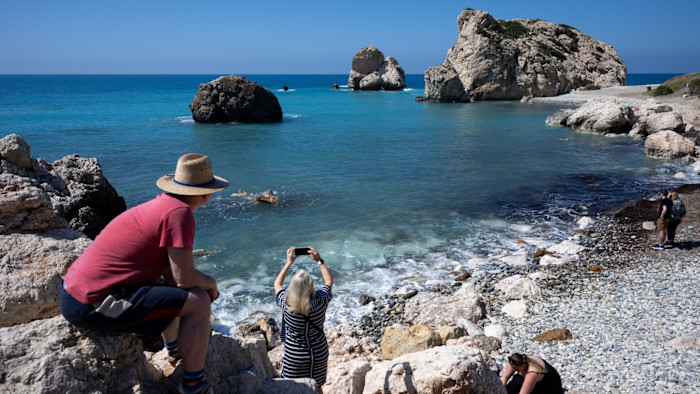
Searches for Turkey and Egypt were both a third higher in the second week of June than the first, while those for Cyprus, which was hit by a drone strike early in the conflict, were up 29 per cent.
“Since May, things have improved dramatically,” said Nick Aristou, commercial director of luxury hotel group Muskita, which operates three hotels in Cyprus.
“We were down 20 per cent for the summer back in March,” he said, adding that Muskita was now “clawing back lost ground for the business when it comes to travel bookings from the UK and Europe”.
A drop-off in bookings for later in the year from families, who typically book early and have already settled on other locations, has been offset by demand from younger couples.
Before the conflict, the company had expected to grow this year and although it is now only likely to match its 2025 levels, according to Aristou, this had been unthinkable in the initial weeks of the conflict. “Business is back to normal,” he said.
Certain markets have bounced back particularly quickly. EasyJet said it had gone from a “negative position in Egypt to a very strong positive position year-on-year within a matter of a couple of weeks”, easyJet holidays boss Garry Wilson told investors last month.
József Váradi, chief executive of Wizz Air, said it was seeing a “very strong recovery of some of the markets . . . like Turkey, Egypt, Cyprus that got affected because they were just too close to the events”, with some now “fully recovered”.
Johannes Thomas, chief executive of accommodation search platform Trivago, said there were “clear signs that UK travellers are beginning to re-engage with destinations that were hit hard by the fallout from the conflict in the Middle East”. He added that Morocco and Egypt were “standout performers” with searches 22 per cent higher than a year ago.
European demand has also increased after people who would otherwise have flown through or to the Gulf choosing holidays closer to home — even though Gulf carriers have been offering insurance policies to convince consumers to return.
The UK this week lifted its guidance against people travelling to the region, which had prevented travel agencies from booking trips to or through Gulf airports.
“Families will go on holidays,” Ryanair boss Michael O’Leary told the FT, before the changes were announced. “The question is, will they go on holiday long-haul or to the Middle East, or will they stay at home and go on holidays in Europe? We think they will stay at home and go on holiday in Europe.”
