Close Menu

    Subscribe to Updates

    Get the latest creative news from FooBar about art, design and business.

    What's Hot

    Agility Robotics to go public via SPAC merger valuing firm at $2.5 billion – WSJ

    June 24, 2026

    Burnham’s people: MPs and advisers who could be in line for a job if he gains power

    June 24, 2026

    Oil extends decline as Trump accuses oil firms of ‘gouging’ consumers

    June 24, 2026
    Facebook X (Twitter) Instagram
    Addison Markets
    • Home
    • USA
    • Europe
    • Business
    • Investing
    • Tech
    • Politics
    • Contact Us
    Addison Markets
    Home»Tech»Early land animals skipped the tadpole phase
    Tech

    Early land animals skipped the tadpole phase

    franperez66q@protonmail.comBy franperez66q@protonmail.comJune 24, 2026No Comments2 Mins Read
    Facebook Twitter Pinterest Telegram LinkedIn Tumblr WhatsApp Email
    Share
    Facebook Twitter LinkedIn Pinterest Telegram Email


    Without the tadpole phase and metamorphosis, though, the transition from water to land was probably way tougher than we thought.

    Amphibian innovation

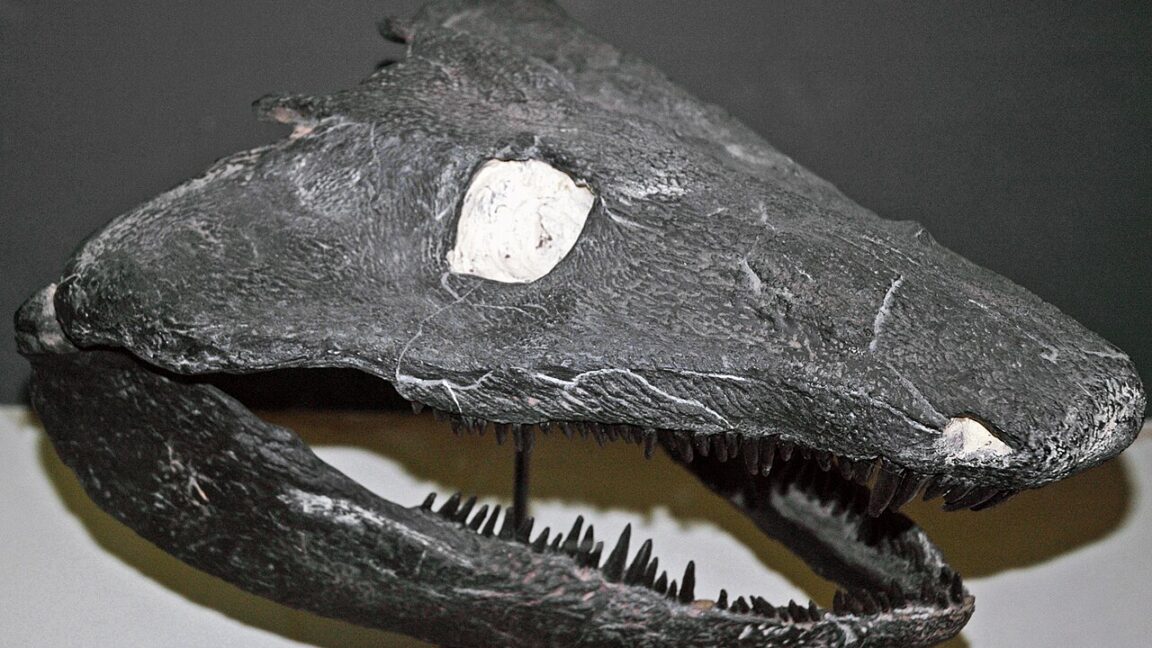
    “We have lots of assumptions in our field that are based on relatively limited data,” Pardo said. One of those assumptions was that a distinct aquatic larval stage made the water-to-land transition easier for early tetrapods. While direct development, without undergoing a radical metamorphosis early in the animal’s lifecycle, might appear to be a simpler solution, it likely made the lives of young embolomers considerably harder.

    The first challenge they faced was being tied to the same environment throughout their entire lifespan. Unlike amphibian tadpoles, they lived in the same ecological niche as larger juveniles and three-meter-long adults and had to compete with them for resources. Then there was the problem of supporting their body mass on land. The team noted in the paper that juvenile embolomers had weak, poorly developed limbs at hatching, which probably left them unable to move long distances across land. They were likely stuck wherever they hatched.

    “It certainly makes it harder to not have a tadpole stage,” Pardo said.

    He suggested that this is evidence that amphibian metamorphosis is not an ancient evolutionary stepping stone that enabled the first animals to expand out of water and conquer the land, which was then preserved in modern frogs or toads. Instead, it might be an evolutionary innovation that amphibians developed much later in response to challenges coming with the water-to-land transition.

    “It may be something unique to amphibians that emerged as an adaptation to their specific way of living on land,” Pardo said. “Instead of being primitive, it may actually be something new, something novel and exciting. We’ve never thought about it this way.”

    Science, 2026. DOI: 10.1126/science.aeb7635


    Source link

    Share. Facebook Twitter Pinterest LinkedIn Tumblr Email
    franperez66q@protonmail.com
    • Website

    Related Posts

    ABC asks viewers to protest FCC attempt to “control who is allowed” on The View

    June 24, 2026

    Oracle’s 21,000 layoffs help drive its debt-fueled AI investments

    June 24, 2026

    White House drastically shortens deadline for dropping quantum-vulnerable crypto

    June 24, 2026

    An off-grid power project gets a major proof of concept. What it means for GE Vernova

    June 24, 2026

    US’s climate.gov site, taken down by Trump, relaunched by nonprofit

    June 23, 2026

    Alphabet added to Dow Jones Industrial Average, replacing Verizon

    June 23, 2026
    Leave A Reply Cancel Reply

    Top Reviews
    Editors Picks

    Agility Robotics to go public via SPAC merger valuing firm at $2.5 billion – WSJ

    June 24, 2026

    Burnham’s people: MPs and advisers who could be in line for a job if he gains power

    June 24, 2026

    Oil extends decline as Trump accuses oil firms of ‘gouging’ consumers

    June 24, 2026

    Nvidia banned chips more than double in price on China black market- FT

    June 24, 2026
    © 2026 All right reserved
    • Privacy Policy
    • Terms & Conditions

    Type above and press Enter to search. Press Esc to cancel.