


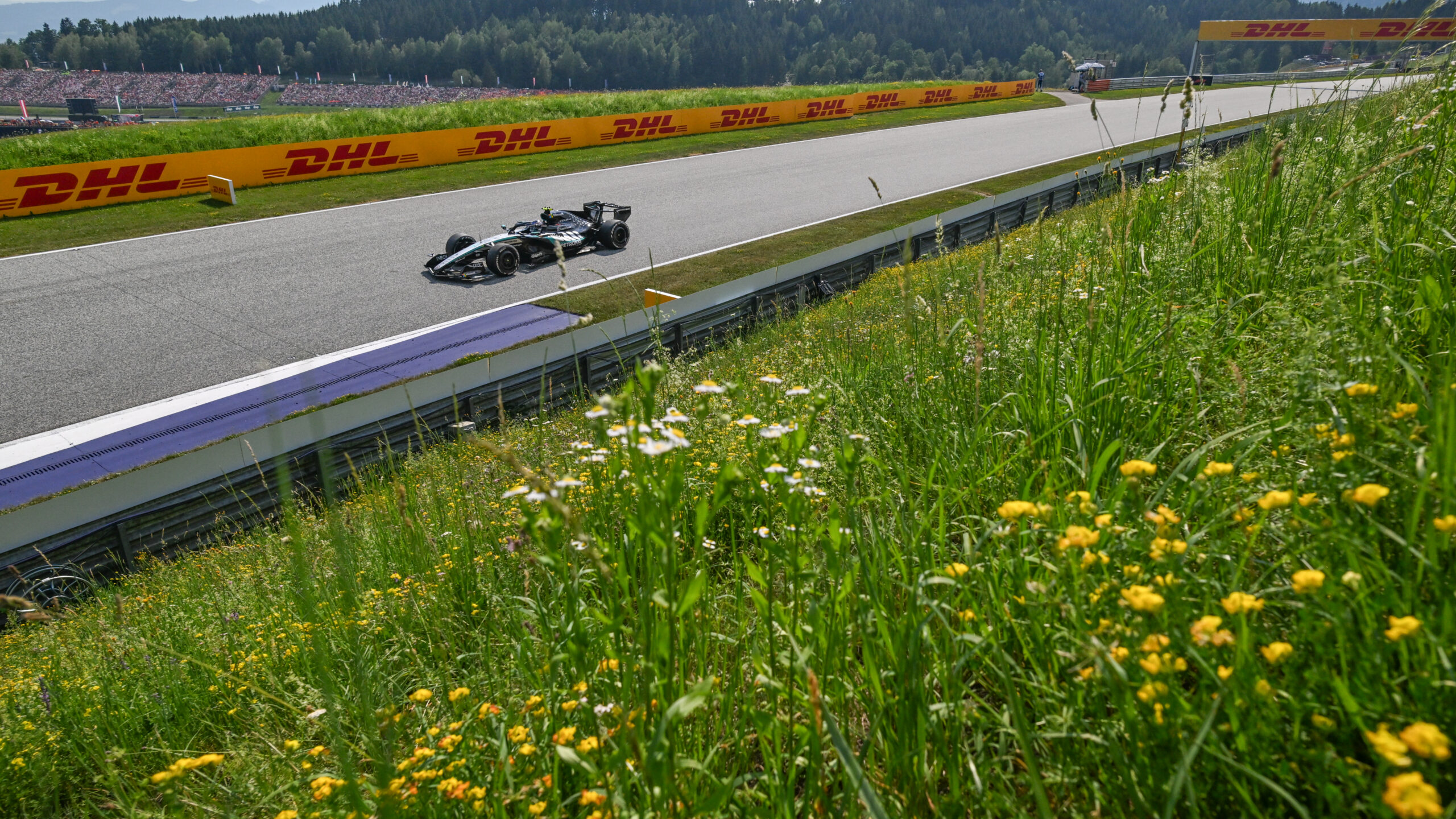
Another few laps would have let Antonelli catch up to Verstappen, too—the young Italian finished just shy of two seconds behind the Red Bull. Russell retakes second place in the standings, Antonelli’s third place means the gap remains large, and Verstappen leaves his team’s home track with a smile on his face and a greater chance of staying in the sport a while longer.
Ferrari, on the other hand, had a horrible weekend. The FIA determined that Ferrari’s engine is significantly behind the most powerful V6 in the field—Red Bull’s new in-house motor—so it is allowed two engine upgrades this season. Ferrari introduced the first of these in Austria, along with a new synthetic Shell fuel, which many thought would be the missing piece that would propel the chassis and aero upgrades from Barcelona to the front of the pack.
That didn’t happen. During Friday’s practice sessions, Hamilton could do no better than fifth, behind various combinations of Mercedes, Verstappen, and McLaren. On Saturday, Leclerc managed to beat him in qualifying, claiming second on the grid, with Hamilton in third. Antonelli was in fourth, having aborted his final run after Verstappen crashed and brought out a yellow flag at turn 9.
Luca Martini/SOPA Images/LightRocket via Getty Images
Verstappen drives past a legion of his supporters.
Luca Martini/SOPA Images/LightRocket via Getty Images
Artur Widak/NurPhoto via Getty Images
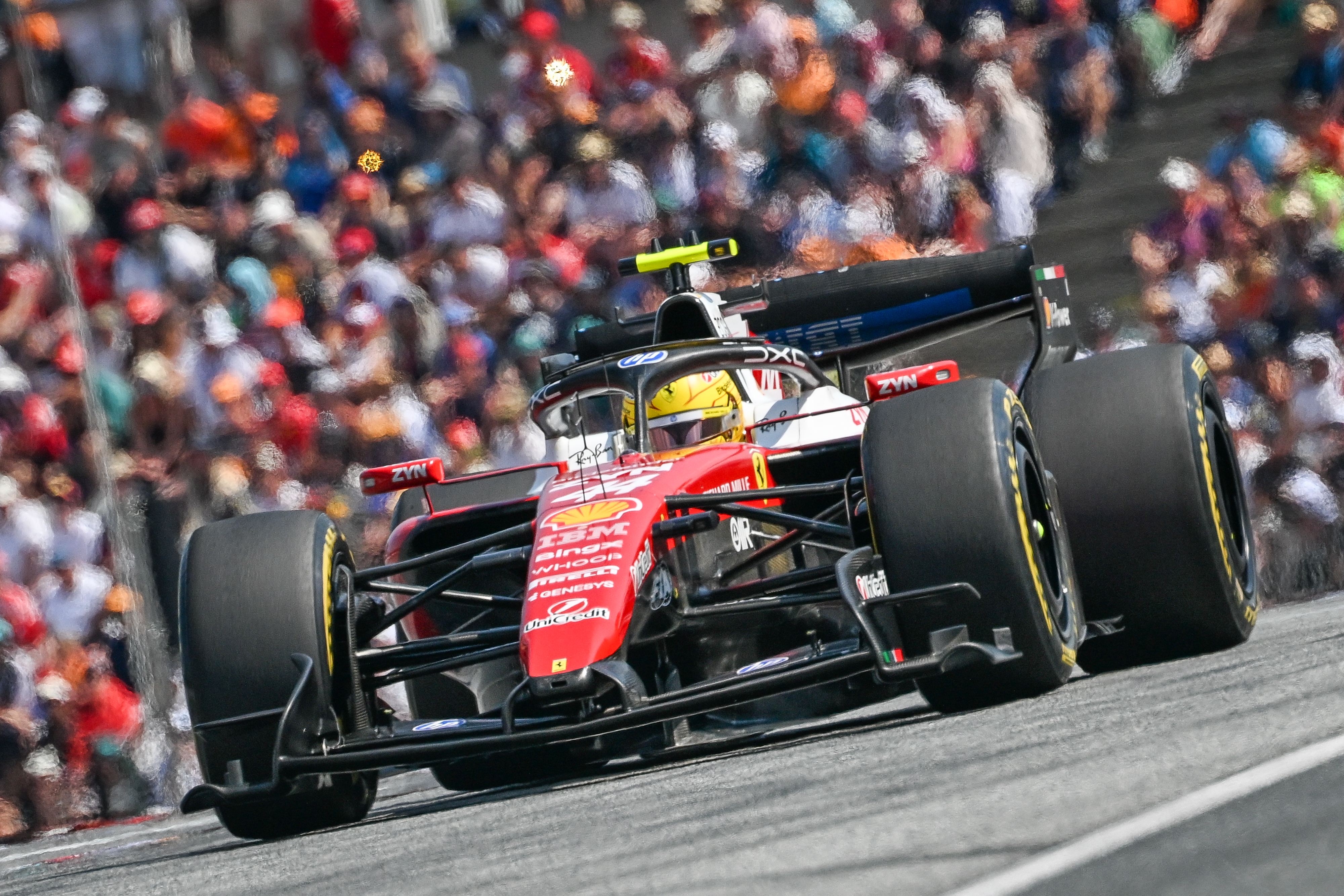
Lewis Hamilton tried to hold off Verstappen but couldn’t.
Artur Widak/NurPhoto via Getty Images
Verstappen drives past a legion of his supporters.
Luca Martini/SOPA Images/LightRocket via Getty Images
Lewis Hamilton tried to hold off Verstappen but couldn’t.
Artur Widak/NurPhoto via Getty Images
The Ferraris made OK starts in the race, though the rocket-like advantage they had in early races is long gone. But the superior tire wear from Barcelona was gone here, and both red cars soon began losing time. Hamilton finished fifth, with Leclerc in an even more distant eighth place. McLaren had a slightly less mediocre time, finishing fourth (Oscar Piastri) and seventh (Lando Norris), with Isack Hadjar’s Red Bull in sixth. Red Bull’s other F1 team, Racing Bulls, took best of the rest by claiming the final two points places with Liam Lawson in ninth and Arvid Lindblad in 10th.
