
Stay informed with free updates
Simply sign up to the Chinese trade myFT Digest — delivered directly to your inbox.
A dispute over the meat used to make Peking duck could ignite a trade war between the EU and China after Brussels on Thursday opened an investigation into dumping of Chinese duck meat at below-market prices.
Tensions between the two sides are already high after the European Commission complained that the EU’s growing trade deficit with China, running at €1bn a day, was “unsustainable”.
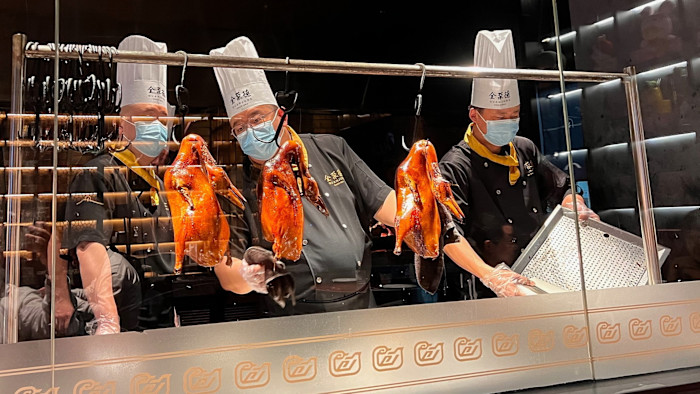
The commission claims that Chinese farmers of the fabled Pekin duck — the breed is used to make the Peking Duck dish served in restaurants with hoisin sauce and spring onions — benefit from subsidies, soft loans and cheap soyabean feed under the country’s five-year plans.
European farmers say these underpriced imports are devouring their sales and profits, with five unnamed domestic producers complaining of “fowl play”. The case was first reported by Capitol Forum.
If proven, the EU could impose tariffs on imports of duck meat, whether fresh, frozen or smoked.
EU trade defence actions against China are running at record highs. But by hitting China’s rural areas it takes the fight to new terrain.
The EU so far has tended to act against industrial products such as chemicals and electric vehicles. China has responded with tariffs on pork, dairy products and cognac, seeking to generate pressure on EU governments from their own farmers, a powerful domestic lobby group.
John Clarke, a former senior agriculture trade negotiator for the EU, said the timing was odd as the EU was about to recognise Peking Duck as a meat product of protected origin, banning non-Chinese producers from using the term. He warned that hitting an “iconic product” would likely prompt a tough response.
“It is hard to think of anything more iconic in terms of Chinese food — and the fact that it is targeted for possible anti-dumping action will be read badly by the Chinese authorities and producers.
“They may see it as revenge for their own anti-dumping measures on cognac, another iconic product. They may retaliate. Prosecco producers should be nervous.”
The two sides had sought de-escalation. After a crunch meeting between European trade commissioner Maroš Šefčovič and Chinese commerce minister Wang Wentao on June 29 the two sides set up a trade and investment dialogue to try to resolve a string of issues.
Šefčovič said the “status quo is not an option” after listing alleged Chinese practices such as using subsidies, a devalued currency and state support to boost production of exports to keep China’s economy growing.
He warned that without progress on reining in the exploding trade deficit by October, the EU would act.
Wang complained of EU tariffs and export controls on technology such as ASML’s world-leading chipmaking machines, according to people familiar with the talks.
The Pekin duck is popular among farmers for its rapid growth rate. It has a large body, orange feet and beak and creamy white feathers. The breed is at least 400 years old.
China is responsible for 4.8mn tonnes of the 5mn tonnes of duck meat produced annually worldwide, according to the UN’s Food and Agriculture Organization.
The EU market for duck was worth an estimated €800mn in 2025, and imports from China were €199mn.
Avec, which represents the poultry industry in Europe from Poland to Portugal, said “it expects that anti-dumping duties at a level that restores fair trade will be imposed as swiftly as possible”.
The commission said the volume and prices of imports had had “a negative impact on the quantities sold, the level of prices charged and market share held by the EU industry, resulting in substantial adverse effects on the overall performance of the EU industry”.
In a notice announcing the investigation, the commission said: “The complainants also refer to the promotion of regional feed production clusters to support duck feed by subsidising local soy-processing and compound feed mills, especially in provinces like Shandong.”

China’s national five-year plan approved in March 2026 also has measures supporting agriculture, including poultry production, it said.
The country has increased its output of luxury foods in recent years, from caviar to foie gras, in some cases breaking into overseas markets. Kaluga Queen, a brand developed by experts working for the agriculture ministry, has become the world’s largest caviar producer.
China’s global trade surplus in goods last year hit a record high of $1.2tn, adding intensity to the complaints of various trading partners, especially those in Europe.
Its exports have continued to grow rapidly this year while other measures of economic activity have slowed.
The commission investigation is likely to take around a year and a majority of member states will have to approve any tariffs if dumping is established.
