

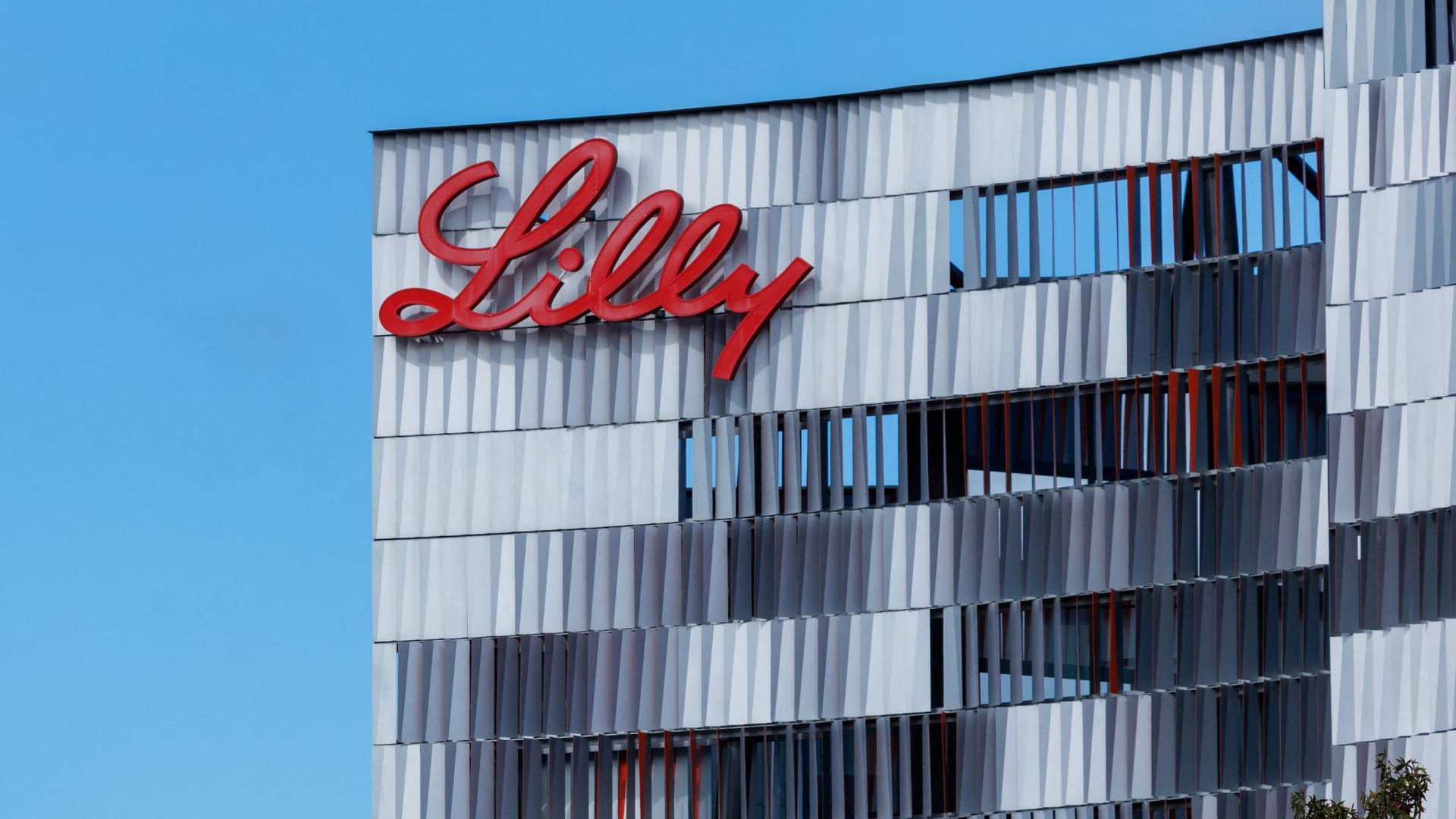
The Eli Lilly logo appears on the company’s office in San Diego, California, Nov. 21, 2025.
Mike Blake | Reuters
Eli Lilly will acquire psychedelic drugmaker AtaiBeckley for $2.8 billion up front, the company said Thursday, as momentum grows for using versions of the drugs as mental health treatments.
The transaction gives Lilly access to AtaiBeckley’s experimental DMT-based drug that’s being studied in Phase 3 clinical trials for treatment resistant depression. AtaiBeckley is developing several other psychedelics for mental health conditions, including one related to MDMA, also known as ecstasy.
AtaiBeckley’s lead drug, BPL-003, is related to dimethyltryptamine, or DMT. The nasal spray is administered in a clinic where patients are monitored for about two hours. Initial Phase 3 trial results are expected in 2029.
“The goal here was to find a different type of medicine that could help them, not just changing the neurotransmitters in their brain, but actually changing the connections of neurons in their brain to try and help them from the disease,” Lilly’s Chief Scientific Officer Dan Skovronsky said Thursday in an interview with CNBC.
He said the team at AtaiBeckley found the drug could have a profound effect very quickly that could persist for months, making BPL-003 a “very different type of medicine for treating depression.” It’s possible that people could receive the treatment a couple times a year, Skovronsky said.
The acquisition price of $6.75 per share in cash, or about $2.8 billion, is 26% higher than AtaiBeckley’s Wednesday close of $5.36 per share. Lilly could pay up to an additional $2.50 per share, or $1 billion, if the company’s drugs meet certain development and regulatory milestones.
The acquisition marks the latest sign of momentum behind psychedelics. The Trump administration has prioritized development of psychedelic-based treatments for mental health conditions, including depression and post-traumatic stress disorder.
Lilly has a long history in mental health. Its blockbuster antidepressant Prozac transformed the treatment of depression and fueled Lilly’s last major sales boom before the GLP-1 explosion. Skovronsky said when Lilly started working in the area, there was stigma around treating depression at all. He compared that to some of the resistance to psychedelics now and said that actually attracts him to the space.
Where Prozac and similar drugs slowly change the chemicals in the brain, psychedelics may quickly prompt neurons to create new connections. Emerging research suggests people with treatment-resistant depression may not have enough plasticity in the brain, and these experimental drugs try to change that.
“We understand now the different receptors in the brain that drugs like this bind to, and we understand that those receptors have a signaling cascade inside of neurons that then tells them to become more plastic,” Skovronsky said. “Now, is that related to the hallucinogenic experience, or are those two things dissociated? I think the field debates that now, but for now, we have a medicine that causes both, and as a result, I think has this really important treatment effect.”
It’s also the latest deal for Lilly, which has been on a spending spree. Before announcing its intention to acquire AtaiBeckley, Lilly had already said it would spend more than $10 billion upfront and potentially up to $25 billion on eight acquisitions this year.
The drugmaker has deliberately targeted later stage and therefore more expensive deals than it has historically pursued as it settles into its status as the world’s most valuable healthcare company.
“If we see great ideas that we think we can use to help people that need them, of course we’ll do deals,” Skovronsky said.
AtaiBeckley shares spiked more than 30% in premarket trading following the announcement.
