


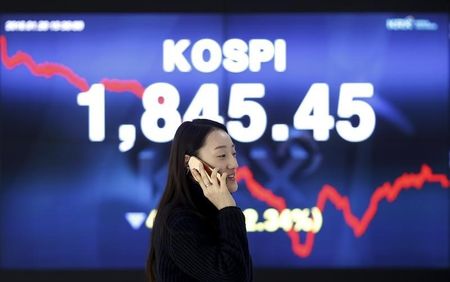
Investing.com– South Korean stocks have suffered an unusually sharp selloff despite robust corporate earnings, with investors focusing more on financing costs and geopolitical uncertainty than on improving profits, according to a KB Securities research note.
KB Securities analysts said earnings were not the primary driver behind the recent decline in the , arguing that markets are increasingly valuing artificial intelligence investments through the lens of funding costs rather than long-term growth prospects.
Samsung Electronics () and SK Hynix () have both posted steep declines from recent peaks, dragging the benchmark index KOSPI, even as earnings expectations have remained resilient, the note said.
Get premium analyst insights with InvestingPro subscription — now at 60% off
According to KB, a sustained rebound will require both a macroeconomic catalyst that stabilizes interest rates and a company-specific event that restores confidence among capital providers.
The brokerage said concerns over the return on AI-related capital spending are not new, pointing to a similar selloff last November that later reversed as expectations for U.S. Federal Reserve rate cuts strengthened. It argued that lower borrowing costs, rather than greater confidence in AI profitability, drove that recovery.
Analysts said that renewed tensions in the Middle East have pushed Treasury yields higher and revived fears of tighter monetary policy, weighing on equity valuations.
However, it expects geopolitical uncertainty to ease over time, citing political pressure on the Trump administration ahead of the U.S. midterm elections, where higher oil prices and borrowing costs could hurt voter support.
The report also highlighted potential policy developments that could improve market sentiment, including OpenAI’s proposal to grant the U.S. government a 5% equity stake to establish an AI-focused sovereign wealth fund.
If adopted, analysts said such a move could reduce perceived default risk for AI investments, lower funding costs and narrow corporate credit spreads, although it warned that greater government backing could also encourage excessive risk-taking and inflate asset bubbles over the longer term.
