
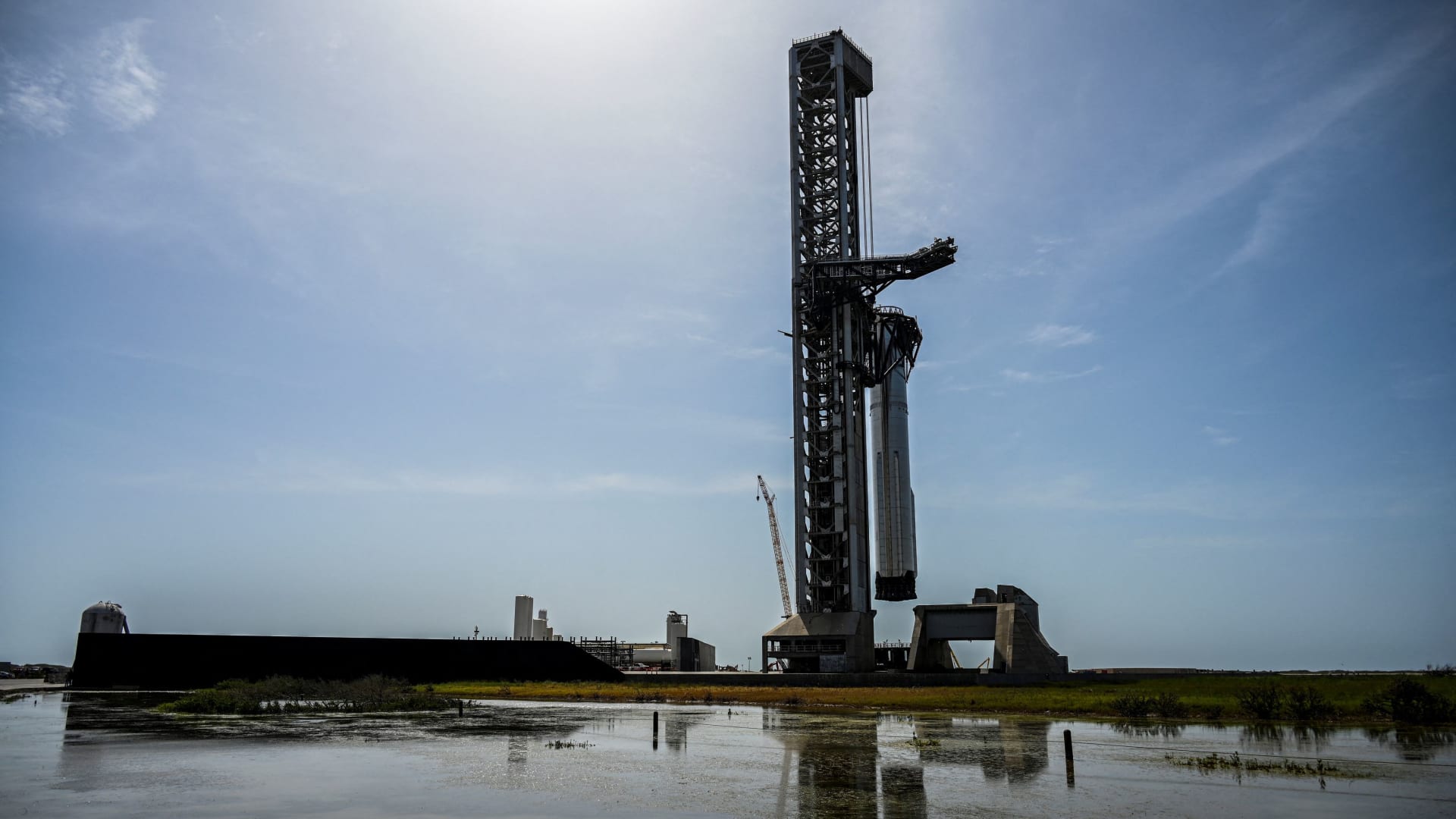
The race to build data centers is reshaping power grids, construction markets and corporate capital spending on Earth. Now, some of the biggest names in technology and space want to move part of that infrastructure into orbit.
This would launch a new frontier for insurers — if they can figure out how to price a risk that has never existed at scale.
SpaceX has laid out the most aggressive vision. In January, the company filed with the Federal Communications Commission for a constellation of up to 1 million satellites that could form an orbital artificial intelligence data center. CEO Elon Musk has argued that solar-powered computing in space could become cheaper than terrestrial data centers within two to three years as launch costs fall and the cost of adding power on Earth rises.
Jeff Bezos is also betting on orbital computing, though on a longer timeline. His space tech company Blue Origin filed plans in March for 51,600 data-center satellites in low Earth orbit. Bezos told CNBC in May that data centers in space are “very realistic,” but called a two- to three-year timeline “a little ambitious.” Google is exploring Project Suncatcher, an interconnected network of solar-powered satellites using its AI chips, while startup Starcloud has already flown an Nvidia H100 GPU in orbit.
If those ambitions add up to hundreds of billions of dollars of hardware in space, then insurance will become part of the equation.
“If you’re an insurer and you’re just writing terrestrial assets, and you’re not looking at space as kind of the next frontier for insurance underwriting, you’re going to miss out on a big growth story,” Patton Kline, Marsh U.S. aviation and space practice leader, told CNBC in an interview.
Insurers and clients are already showing interest, Kline said. About 30 insurers worldwide specialize in space coverage, he said, with annual premiums currently totaling roughly $500 million to $750 million, a fraction of what would likely be needed to insure hundreds of billions of dollars of orbital computing infrastructure.
Kline argued that orbital compute is an extension of a space insurance market that has covered launches and satellites for decades, and it offers insurers risk largely uncorrelated with hurricanes, earthquakes and other terrestrial catastrophes.
Scaling that insurance market to cover orbital data centers is another matter.
Wild West
Andreas Berger, group CEO of global reinsurer SwissRe, said the concept combines two fast-growing risks, AI infrastructure and commercial space, but it raises fundamental questions about regulation, insurance capacity and pricing.
“There are too many unknowns to quantify the risk with enough confidence to support a sustainable insurance proposition,” Berger said.
A blunter assessment came from an insurance CEO who asked not to be named. “This is insane,” the executive said, citing a lack of regulation, insufficient capital and no reliable ability to model the risk in what he described as “the Wild West” of space.
The technical uncertainties are substantial as well. Orbital data centers would face launch failures, radiation, hardware breakdowns, heat-management challenges and the growing risk of collisions and space debris. Unlike terrestrial data centers, repairs or replacement could require another launch.
For insurers, that is the problem and the opportunity. If computing moves into orbit, a new multibillion-dollar class of assets could move with it. But before insurers can cover the next data-center boom, they may have to invent much of the rulebook.
–CNBC’s Dawn Giel contributed to this report.
