


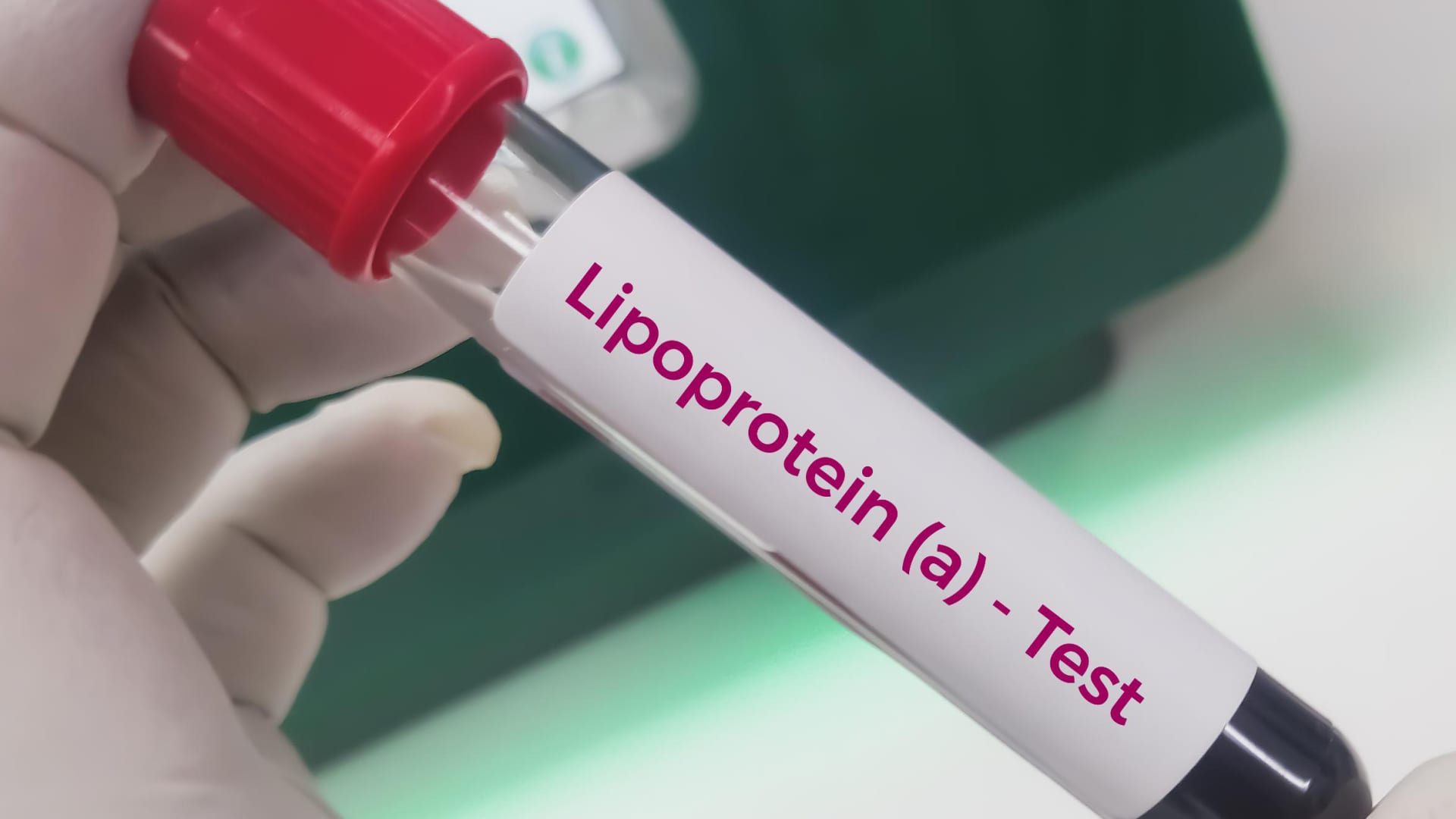
Blood sample for a lipoprotein(a) test.
Md Babul Hosen | Istock | Getty Images
Novartis‘ failure in a closely watched cardiovascular trial has raised questions about one of the pharmaceutical industry’s biggest drug races and rival treatments from U.S. heavyweights Amgen and Eli Lilly.
The pelacarsen drug, developed jointly with Ionis Pharmaceuticals, reduced a particularly harmful form of cholesterol in a late-stage clinical trial, but failed to significantly improve cardiovascular outcomes, Novartis said after the bell on Friday. The stock fell 3% on Monday.
It is the first major clinical setback in the race to develop treatments that lower Lp(a), which elevates cardiovascular risks that are estimated to affect roughly one in five people worldwide and for which there is currently no approved targeted treatment.
Novartis stock
Although Amgen and Lilly are testing different technologies that have been shown to produce deeper reductions in the cholesterol called Lp(a), analysts say pelacarsen’s failure raises the risk around a market that market watchers expect to be worth billions of dollars.
“The Lp(a) hypothesis is weakened, but not disproven,” Citi analysts said in a research note, noting that details remain scarce beyond the topline miss, including the magnitude by which pelacarsen lowered Lp(a) levels.
More data is needed to determine whether the miss reflects pelacarsen’s mechanism, trial design, or a challenge to the whole hypothesis that lowering Lp(a) can reduce heart attacks and strokes, they added.
Novartis said full results would be presented at an upcoming medical congress. The company’s chief medical officer, Shreeram Aradhye, said they “provide important evidence that advances scientific understanding of the relationship between Lp(a) lowering and cardiovascular outcomes and may help inform future approaches to cardiovascular risk management.”

Lp(a), short for lipoprotein(a), was discovered in 1963 and can contribute to the buildup of plaque in arteries and blood clotting. Nearly 50 years after its discovery, researchers found that people with elevated Lp(a) levels faced more than twice the risk of a heart attack.
A person’s Lp(a) levels are determined almost entirely by genetics and, unlike LDL cholesterol, are largely unaffected by lifestyle changes such as diet and exercise.
Novartis emphasized that the more than 8,000 patients in the trial were already on optimized care, while Jefferies analysts said in a Sunday note that improving standards of care are reducing cardiovascular events, potentially making it harder and more costly for experimental drugs to prove an added benefit in clinical trials.
Novartis failure raises stakes for Amgen and Eli Lilly
Analysts had modelled peak annual sales of around $4 billion to $5 billion for pelacarsen if it proved successful.
This would boost Novartis as it faces what CEO Vas Narasimhan has called the steepest patent cliff in its history. Its bestselling heart drug Entresto lost key patent exclusivities, and more of its blockbuster products will also soon face generic competition.
But the trial update’s impact went beyond the company. Shares of Amgen fell about 5% in extended trading on Friday and Ionis Pharmaceutical sank 10%.
“The first dedicated outcomes failure lowers confidence across the class and places greater pressure on later studies to demonstrate that deeper lowering can produce a clinically meaningful ~15% [major adverse cardiovascular events] reduction,” the Citi analysts said in their Friday note.
Amgen’s competing drug, olpasiran, faces the clearest readthrough, while Lilly’s medicine, lepodisiran, is being trialled on a broader group of patients, including some who have not yet developed established cardiovascular disease, potentially limiting the direct read-through from Novartis’ failure, they said. Lepodisiran is also less material to Lilly’s overall valuation, they added.
Many investors had already viewed the trial as risky and expected only a moderate benefit, which could explain why the Novartis stock reaction was relatively contained, falling only 3% in extended trading on Friday.
“The market was expecting a moderate benefit, if not transformational blue-sky result,” Barclays said.
“NOVN had noted even a 13% benefit would have been statistically significant in the overall population, and reading between the lines of the release, [pelacarsen] appears to have fallen materially short of this threshold.”
Novartis didn’t immediately respond to a request for details on the magnitude of Lp(a) lowering or cardiovascular risk reduction observed in the trial.
U.S.-listed shares of Netherlands-based NewAmsterdam Pharma, which is also developing a treatment to reduce cardiovascular events by lowering Lp(a), fell 12% in extended trading on Friday.
Can other Lp(a) drugs still succeed?
Because other experimental drugs use different approaches to lower Lp(a), some may be able to reduce it more than pelacarsen did. That could give drugmakers a reason to keep developing Lp(a) treatments, particularly for patients who start with very high levels, according to William Blair analysts.
They said they saw “meaningful risk to a potential future” in Lp(a)-driven trials for cardiovascular diseases in light of Novartis’ results.
