


Global markets are entering the week balancing a resilient risk appetite against renewed geopolitical strain as prospects of U.S.-Iran negotiations took a hit over the weekend.
U.S. President Donald Trump scrapped plans to send envoys Steve Witkoff and Jared Kushner to Islamabad for talks with Iran on Saturday, citing “tremendous infighting and confusion” within Tehran’s leadership.
Though uncertainty looms large, Iran has offered a new proposal to the U.S. for reopening the Strait of Hormuz and ending the war while suggesting that nuclear talks be deferred, Axios reported Monday, citing a U.S. official and two sources with knowledge of the matter.
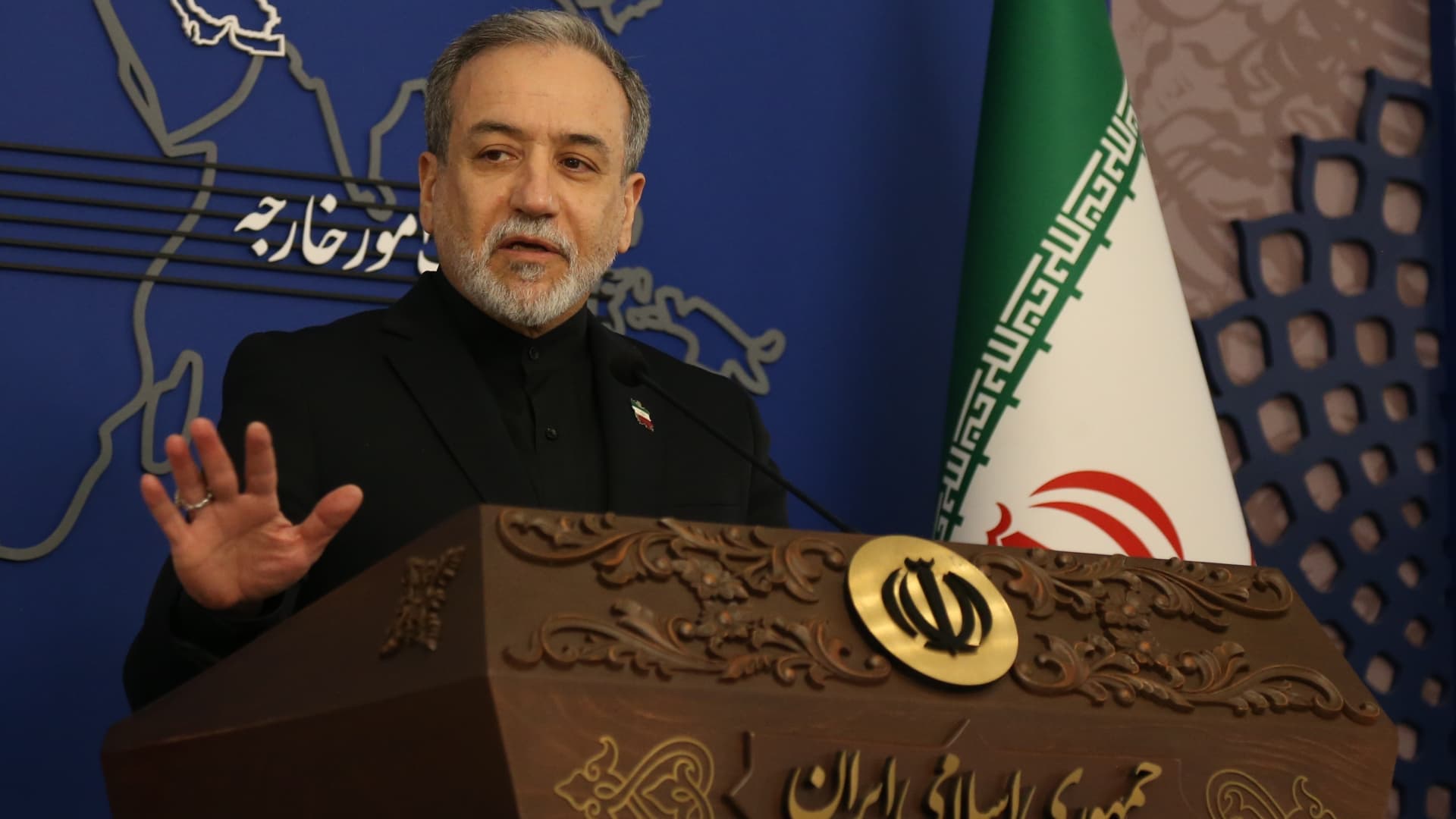
Signaling that attempts to secure a deal were still ongoing, Iran’s foreign minister, Abbas Araghchi, made a brief return to Islamabad on Sunday as Pakistan’s leaders push to revive talks between Tehran and Washington — though Trump said discussions could instead take place over the phone. Araghchi has reportedly departed Islamabad for Moscow.
Amid lingering uncertainty over the critical energy waterway and the Iran war, oil prices inched higher Monday, reinforcing a persistent risk premium in energy markets.
International benchmark Brent oil futures for June rose around 1% to $106.55 per barrel while U.S. crude oil also for June added 0.88% to $95.23 per barrel.
Goldman Sachs now expects oil prices to stay higher for longer, raising its Brent forecast to $90 a barrel by late 2026 from $80 previously, as disruptions in the Persian Gulf prove more persistent than earlier assumed.
The bank wrote in a note published Monday that delayed normalization in Gulf exports, now expected only by end-June, alongside a slower production recovery is tightening supply sharply, with global inventories estimated to be drawing at a record pace of 11 million barrels per day to 12 million barrels per day in April.
The bank’s view is echoed by other market watchers. “I’d argue the fat tail is still ahead of us, not behind,” said Billy Leung, investment strategist at Global X ETFs. Fat tail refers to probability of extreme events.
Even if flows via Hormuz eventually resume, the lag in restoring supply, combined with depleted inventories, suggests sustained tightness. Global investment management firm Invesco estimates that $80 per barrel is likely a floor for Brent this year absent a full normalization of flows.
Experts warned that the longer the strait remains disrupted, the more acute the economic impact becomes, with rising prices eventually forcing demand destruction, particularly in energy-importing regions.
Stocks: Resilient for now
Equities have so far shown surprising resilience, with global markets having recouped losses sustained in the initial outbreak of the war, hovering near record highs despite the ongoing energy shock.
Analysts say this reflects a tug-of-war between geopolitical risks and strong structural drivers, particularly artificial intelligence.
“Equities are essentially balancing two opposing forces: geopolitical left tails on one side, the AI commercialization right tail on the other, and right now the right tail is winning convincingly,” said Leung.
Still, some caution that the sentiment is becoming stretched.
“The primary trend is up and I’d respect that, but I wouldn’t be chasing here either. Sentiment is hot, positioning is crowded, and elevated readings have historically preceded softer forward returns,” Leung said.
Others see volatility as a buying opportunity. Rajat Bhattacharya, senior investment strategist at Standard Chartered, said near-term market swings are likely but expect a deal within weeks that could restore flows.
“Any near-term volatility presents investors with an opportunity to add to risk assets within a diversified allocation,” he said.
Historical precedent also suggests markets can recover quickly from supply shocks. Ed Yardeni, economist and president at Yardeni Research, noted that oil prices doubled and stocks fell during the 1956 Suez crisis but later rebounded to new highs once the canal reopened.
Asia-Pacific stocks gained Monday, with Japan’s Nikkei 225 and South Korea’s Kospi notching new highs, while U.S. stock futures were largely stable, suggesting limited spillover from the weekend’s developments.
Government bond markets were stable with the 10-year yield on U.S. Treasurys up 1 basis point at 4.322%. while yield on same duration Japan government bonds was more than 2 basis points higher at 2.463%.
Commodities, food and second-order effects
Beyond oil, the broader commodity complex is beginning to reflect deeper and more persistent disruptions: particularly in natural gas and food supply chains.
“LNG is the under-discussed leg here,” said Leung. “European benchmarks are running about a third above pre-war levels with roughly a fifth of global LNG supply choked off.”
Higher gas prices feed directly into fertilizer production and agricultural costs, raising the risk of a delayed but sustained increase in food prices.
“The food chain pressure builds with a lag, so the headline CPI prints from this won’t show up immediately,” he added. “Agricultural inputs and shipping insurance are where I’d watch the second-order effects develop over the next quarter.”
Invesco also flagged that disruptions extend beyond oil, affecting goods such as helium, aluminum and sulphur.
That broadens the inflationary impact across industrial supply chains, potentially complicating policy responses even as central banks remain inclined to look through the shock for now, Invesco’s global head of research, Benjamin Jones, wrote in a note Monday.
As Leung put it: “The bull market is intact … but the tape is balancing genuine technological upside against an energy shock that hasn’t fully played out.”
