

Close Menu

    Subscribe to Updates

    Get the latest creative news from FooBar about art, design and business.

    What's Hot

    DeepSeek tells prospective investors of funding pause, Bloomberg News reports

    July 25, 2026

    AI firms want more data centers; Trump’s EPA may give neighbors less say

    July 25, 2026

    Big Tech accused of stonewalling European social media researchers

    July 25, 2026
    Facebook X (Twitter) Instagram
    Addison Markets
    • Home
    • USA
    • Europe
    • Business
    • Investing
    • Tech
    • Politics
    • Contact Us
    Addison Markets
    Home»Tech»MIT’s virtual violin offers luthiers a new design tool
    Tech

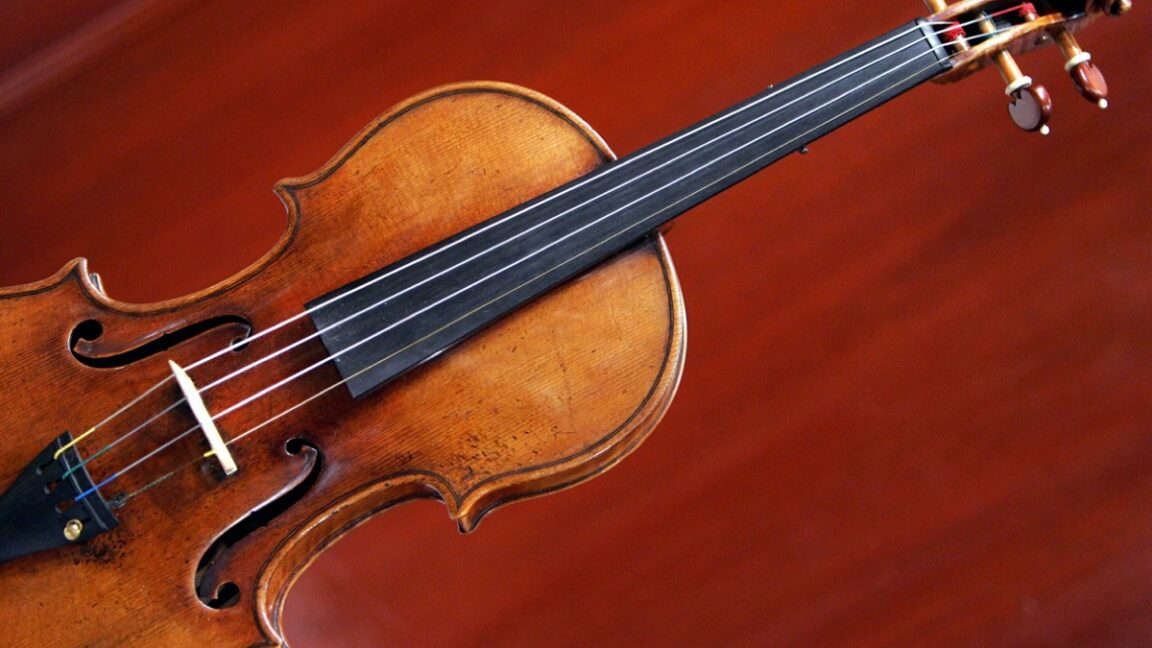
    MIT’s virtual violin offers luthiers a new design tool

    franperez66q@protonmail.comBy franperez66q@protonmail.comMay 5, 2026No Comments2 Mins Read
    Facebook Twitter Pinterest Telegram LinkedIn Tumblr WhatsApp Email
    Share
    Facebook Twitter LinkedIn Pinterest Telegram Email


    The construction of a violin.

    The construction of a violin.


    Credit:

    Sotakeit/CC BY-SA 3.0


    Or perhaps it was the varnish Stradivari used: a cocktail of honey, egg whites, and gum arabic. A 2022 study involving nanoscale imaging of two such instruments revealed a protein-based layer at the interface of the wood and the varnish, which may influence the wood’s natural resonance.

    Biochemist Joseph Nagyvary has argued that it was the chemicals used to treat the wood that give Stradivari violins their unique sound, specifically salts of copper, iron, and chromium used to preserve the wood—all of which are excellent wood preservers but may also have altered the instruments’ acoustical properties. A 2021 study supported that argument, identifying borax, zinc, copper, alum, and lime water as the most likely chemicals affecting the sound.

    CT scans have provided quite a bit of insight into the conundrum, since the technique can reveal wood density, size and shapes, volume measurements, and thickness graduation, as well as any damage or repairs to a given instrument. For instance, a 2009 study used CT scans to study the material properties of the wood. In 2011, Minnesota radiologist Steven Sirr took detailed CT scans of the 1704 “Betts” violin and then collaborated with two luthiers to make a replica.

    One of the most thorough investigations was the Strad3D project, spearheaded in 2006 by the late George Bissinger. That project used 3D scanning lasers to make detailed quantitative measurements of the acoustic properties of several Stradivarius violins, essentially mapping out precisely how the instruments vibrate and produce their distinctive sound. (For what it’s worth, when I interviewed Bissinger in 2007, he was skeptical of efforts to one day reproduce the sound quality of a Stradivarius violin on a mass scale, insisting that making an instrument is as much art as science and that there is no single secret to the Stradivari sound.)


    Source link

    Share. Facebook Twitter Pinterest LinkedIn Tumblr Email
    franperez66q@protonmail.com
    • Website

    Related Posts

    AI firms want more data centers; Trump’s EPA may give neighbors less say

    July 25, 2026

    Big Tech accused of stonewalling European social media researchers

    July 25, 2026

    With help from data, art museums are reframing the visitor experience

    July 25, 2026

    From Silicon Valley to DC, tech world obsessed with AI distillation

    July 25, 2026

    Team uses AlphaFold AI to redesign gene-editing proteins to make them safer

    July 25, 2026

    Anthropic’s Claude Opus 5 AI model rivals Fable 5 and is cheaper

    July 25, 2026
    Leave A Reply Cancel Reply

    Top Reviews
    Editors Picks

    DeepSeek tells prospective investors of funding pause, Bloomberg News reports

    July 25, 2026

    AI firms want more data centers; Trump’s EPA may give neighbors less say

    July 25, 2026

    Big Tech accused of stonewalling European social media researchers

    July 25, 2026

    With help from data, art museums are reframing the visitor experience

    July 25, 2026
    © 2026 All right reserved
    • Privacy Policy
    • Terms & Conditions

    Type above and press Enter to search. Press Esc to cancel.