


Unlock the Editor’s Digest for free
Roula Khalaf, Editor of the FT, selects her favourite stories in this weekly newsletter.
A British national is being treated on the world’s most remote inhabited island for a suspected rare rat-borne virus, as authorities in London grapple with the widening fallout from a deadly cruise ship disease outbreak.
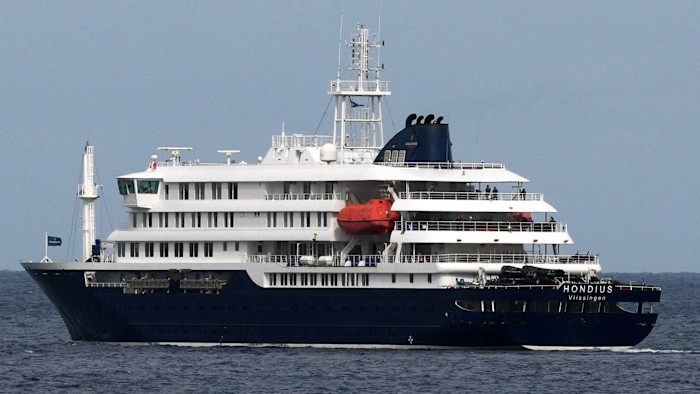
The person was receiving care on the Atlantic volcano of Tristan da Cunha after disembarking from the MV Hondius on one of several stops in tiny British territories en route from South America, the UK government said on Friday.
The case highlights how the Hondius hantavirus crisis has confronted the UK with twin problems: managing its nationals aboard the cruise ship and ensuring the safety of small islands under its sovereignty that have limited medical facilities.
The UK Health Security Agency said it considered the overall risk to Tristan da Cunha’s population of fewer than 300 “very low”. Local doctors had been using suitable personal protective equipment when managing the suspected case, it added.
“There were no symptomatic passengers or crew on board the ship when it docked at the island,” the UKHSA said. “Furthermore, the interaction between the passengers [and] crew and local residents was mostly indirect or very brief.”
Three passengers on the Hondius have died and five cases have been confirmed of hantavirus, which is carried by rodents and often spread via their excreta. The original source of the infection is thought to be a Dutch couple who had been on a birdwatching trip in Latin America and have since died.
The suspected hantavirus case in Tristan da Cunha would be the third infection of a British national on the cruise. The remaining UK passengers and crew are due to be met by British officials when the ship docks in the Canary Islands on Sunday.
If they are asymptomatic they will be escorted to an airport, given free passage to the UK and then asked to self-isolate under the supervision of health authorities for 45 days.
The Hondius left southern Argentina on April 1 and then stopped in Tristan da Cunha, Saint Helena and Ascension Island. All are part of the same British overseas territory, more than 1,500km from the coast of Africa. A journey between the trio of islands covers more than 3,000km of ocean.
Britain’s 14 overseas territories worldwide are imperial-era legacies that are not part of the UK but come under the sovereignty of the country’s monarch. All the inhabited territories have a UK-appointed governor who in most cases is responsible for external affairs, defence and internal security.
Ascension Island has a population of about 800 and a military airfield. St Helena, best known as the place where Napoleon Bonaparte died in exile in 1821, covers the same area as Disney World Orlando and had a population of 4,439 in 2021.
The UKHSA acknowledged that healthcare facilities on the three islands visited by the Hondius were “small” but said there were established pathways to refer cases they could not treat. Both the agency and the World Health Organization have given the islands support, it added.
The Foreign Office did not immediately respond to a request for comment.
