


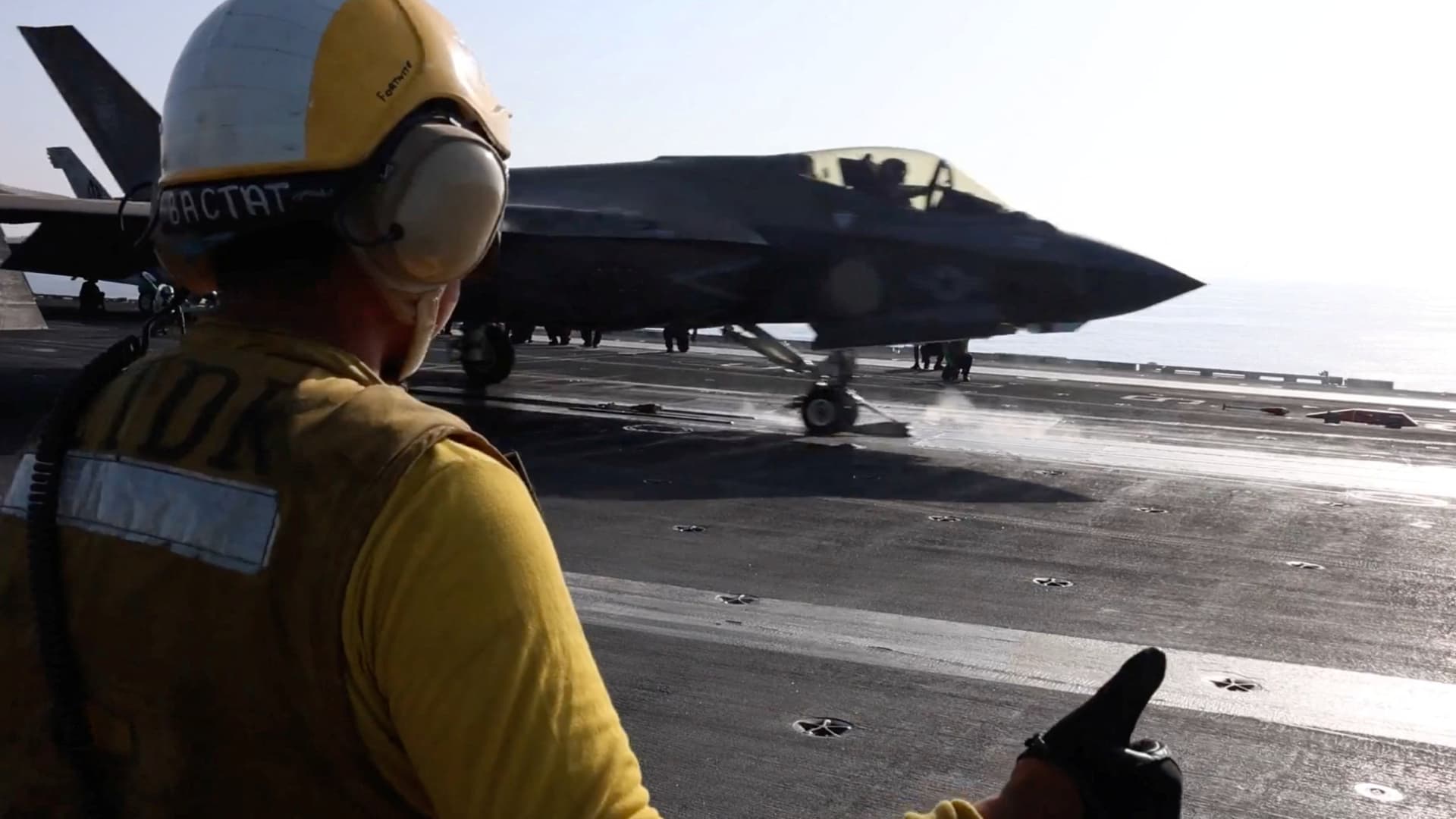
A screengrab from a video released by U.S. Central Command (CENTCOM), which accompanied a press release describing the operation dubbed “Epic Fury”, an attack by the United States and Israel on Iran, shows a flight deck crew member signaling an F‑35 jet on an aircraft carrier, in this image obtained from social media released on Feb. 28, 2026.
CENTCOM Via X Via Reuters
The U.S. military said it struck two Iran-flagged unladen oil tankers in the Gulf of Oman on Friday, preventing the vessels from entering an Iranian port in violation of a U.S. naval blockade.
A U.S. fighter jet “disabled both tankers after firing precision munitions into their smokestacks,” U.S. Central Command said in a statement, which included unclassified video of both strikes.
The attack was the latest in a number of military actions this week that have further undermined the U.S.’ tattered ceasefire with Iran, even as President Donald Trump insists the temporary truce remains in effect.
The U.S. and Iran opened fire on each other in the Strait of Hormuz on Thursday, though both sides say the other shot first.
Trump told ABC News that those strikes were “just a love tap.” In a later Truth Social post, he reiterated that Iran will face further attacks if it does not agree to a nuclear deal.
The strait, which normally supports 20% of the world’s oil trade, has become a key military and economic battleground since the war began on Feb. 28.
Iran effectively closed it after the U.S. and Israel launched their first strikes, and CENTCOM has retaliated with a blockade of Iranian ports. The ongoing stifling of tanker traffic has triggered a global energy supply shock, causing a surge in oil prices and a cascade of other effects.
Thursday’s attacks in the strait came as Iran was reportedly reviewing a U.S. proposal that would end the war and tee up further nuclear talks.
Despite the renewal of hostilities, Secretary of State Marco Rubio said Friday morning that he expects Iran to respond to the proposal later in the day.
“We’ll see what the response entails. The hope is it’s something that can put us into a serious process in negotiation,” he told reporters in Rome following his visit with Pope Leo XIV.
