

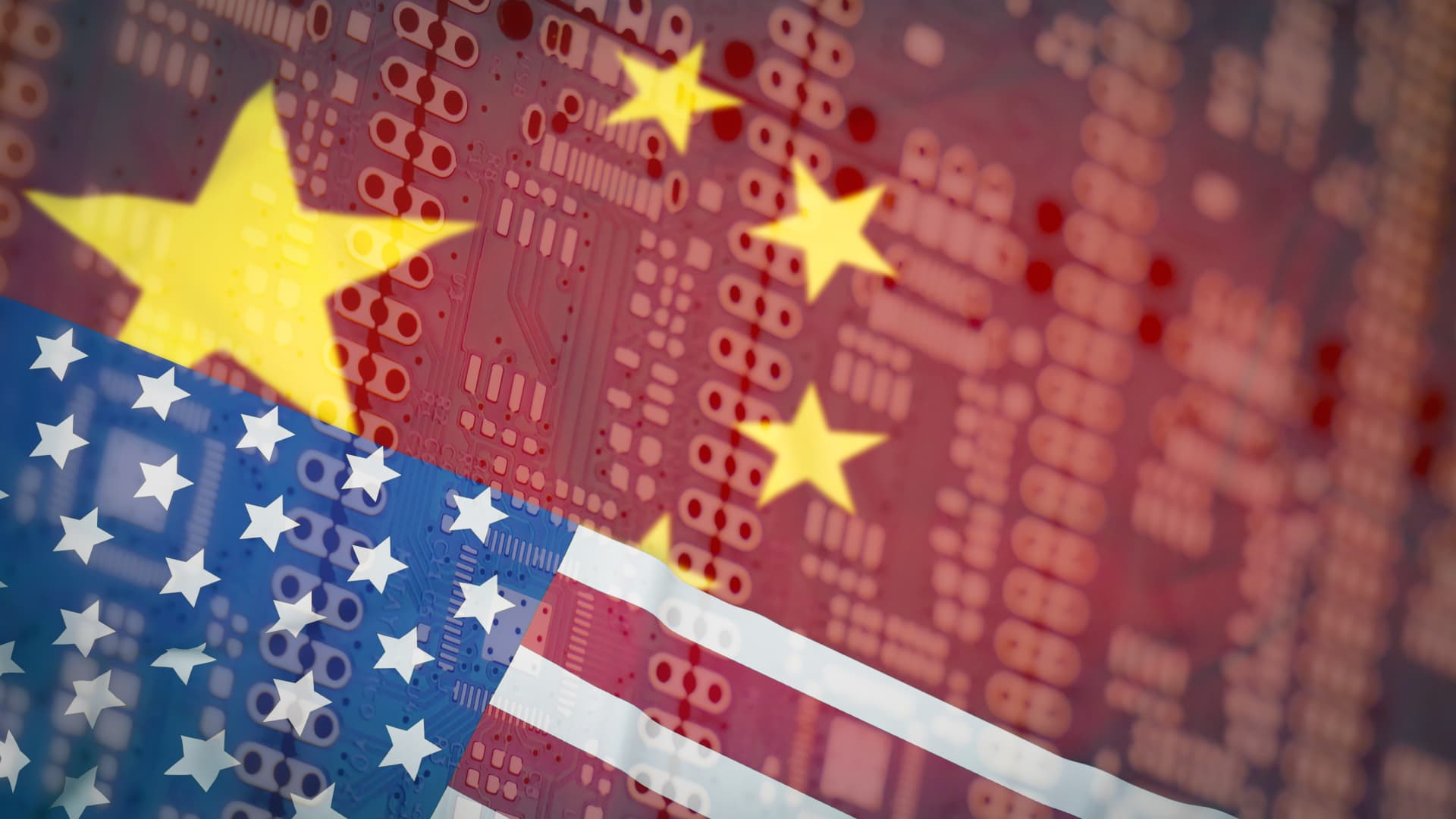
U.S. lawmakers are considering how to curb the growing adoption of Chinese AI models by homegrown companies, as geopolitical tensions surrounding the rollout of artificial intelligence ramp up.
AI has emerged as a key point of rivalry between the U.S. and China, with both nations vying for supremacy in the field.
Chinese models are gaining traction among U.S. firms as they close the performance gap with American rivals while being cheaper to use.
In April, the Trump administration accused Chinese entities of waging “industrial-scale campaigns” to rip off U.S. AI systems, and said it will explore ways to hold foreign actors accountable. Beijing is looking at curbing overseas access to China’s leading AI models, Reuters reported on Tuesday.
Rising adoption of China-built AI models has led to growing calls from U.S. lawmakers for strategies to combat the trend, including via an ongoing investigation from two U.S. House Committees.
“The growing use of Chinese AI models by U.S. companies raises serious concerns,” a State Department spokesperson told CNBC. Those “AI models are designed to advance Beijing’s narratives, censor dissent, and reflect CCP ideology and values.”
A spokesperson for the U.K. embassy of the People’s Republic of China said the country “opposes baseless allegations and malicious smears against its AI development.” They added that “China’s thriving AI sector is built on self-reliance and strength in science and technology.”
Rising adoption
The House Committee on Homeland Security and the House Select Committee on China said in April they will jointly investigate the growing adoption of Chinese-developed AI models. An initial step in the probe was for the chairmen of those committees to send letters to Cursor and Airbnb, over their “use of or exposure to these risks” through AI developed in China.
“The Chinese Communist Party is no longer just nipping at our heels in artificial intelligence; it is racing to close the gap in some of the exact capabilities that will shape the future of cybersecurity,” Andrew Garbarino, chairman of the U.S. House Committee on Homeland Security, told CNBC.
“Recent reporting that a Chinese open-weight model can match leading U.S. models in certain vulnerability discovery and cybersecurity tasks is highly alarming,” said Garbarino.
While some government departments have banned the usage of Chinese AI models including DeepSeek, adoption of them by U.S. companies is not prohibited. Tech chiefs, including crypto company Coinbase‘s Brian Armstrong and AI startup Lindy’s Flo Crivello, have been publicly touting the use of models from China to reduce costs.
Cursor, which will be acquired by Elon Musk’s SpaceX for $60 billion, built its Composer 2 model using Chinese AI model Kimi, which was developed by Moonshot AI. The company declined to comment on the probe when approached by CNBC.
Airbnb told CNBC that its “AI activity runs overwhelmingly on U.S.-origin models.” The company added that it uses a “limited number of China-origin models, all of which are open-source and run only through approved U.S.-based service providers, keeping data and operations separate and protected.”
Tackling adoption
Alongside focusing on the rise of Chinese AI models, the ongoing joint House Committees’ investigation is also looking into whether the U.S. is doing enough to tackle their rise.
“The Committees are also examining whether the United States has a sufficient open-weight AI strategy to ensure American companies and cyber defenders are not forced to choose between expensive or restricted U.S. models and cheap, capable PRC-developed alternatives,” a Committee aide, who asked not to be named as they were not authorized to discuss the ongoing probe, told CNBC.
Andy Ogles, chairman of the Subcommittee on Cybersecurity and Infrastructure Protection, has called for a “serious strategy” to ensure American models are a “real alternative” to those from China.
“When the cheap, capable, easy option for an AI model is Chinese, the rest of the world will build on it,” Ogles said in June.
“If we do nothing, Chinese models become the default foundation of the global digital economy, carrying embedded censorship, uncertain security, and capabilities distilled from our own laboratories with the safety guardrails stripped out,” he added.

The administration could consider the use of federal procurement bans, which would include restricting government agencies and private companies that serve the U.S. government from using Chinese AI models, Kyle Chan, fellow in the John L. Thornton China Center at think tank Brookings, told CNBC.
“However, it’s ultimately impossible to ban China’s open-source AI models because their model weights are available freely on the internet,” Chan added. “This could enter into first amendment speech issues.”
While the Trump administration is “clearly worried” about the risks from American companies’ adoption of Chinese AI models, restricting their use is going to be difficult, Daniel Remler, senior fellow, technology and national security program at think tank the Center for a New American Security (CNAS), told CNBC.
Alongside potential first amendment protections, Remler said the administration may be worried that “action against the Chinese models could harm start-ups that use these models, or chill support for open models generally.”
One approach could be procurement requirements that discourage companies that want to do business with the government from using Chinese AI models, he added. Another could be disseminating findings about risks and vulnerabilities associated with Chinese AI models to U.S. companies.
“Regardless, I do expect both the Executive Branch and Congress to communicate their interest not to see U.S. companies adopting these models,” Remler said.
