
Stay informed with free updates
Simply sign up to the Climate change myFT Digest — delivered directly to your inbox.
The writer is head of atmospheric, oceanic and planetary physics at the University of Oxford
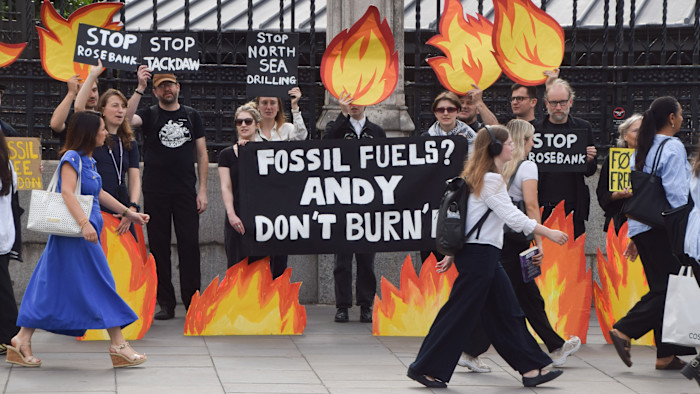
From US President Donald Trump to the protesters in Parliament Square, it seems everyone has something to say to the new Prime Minister Andy Burnham about North Sea oil and gas production. But no one is asking what it would take to make new fossil-fuel extraction compatible with the country’s long-term climate goals. The answer is simple: impose requirements on the oil and gas industry to stop the products it sells from causing global warming by disposing permanently of the carbon dioxide those products generate.
While the Jackdaw and Rosebank projects in the North Sea have already been approved, they remain in legal limbo following the recent Supreme Court ruling that licensing decisions must address their impact on global emissions. The companies claim that their fuels will either displace LNG imports or be sold internationally, making this impact nil. But with oil and gas supplies as tight as they are, a judge might decide otherwise. The harsh truth is that if we burn less imported LNG, someone else will gratefully burn it instead, so more domestic production will increase global emissions.
There is another way forward: make new energy project licences conditional on companies reinjecting carbon dioxide into the earth’s crust equivalent to a prescribed fraction of that generated by the fuels they extract. The legal framework to do this — the Climate Compatibility Test — already exists, as introduced by the Conservative government in 2022.
If that fraction were to rise to 100 per cent by the 2050s, British oil and gas production would be the first in the world to be fully aligned with the Paris Agreement. Take that, Supreme Court.
There is another benefit. Licensees would source carbon dioxide for reinjection from the cheapest eligible sources available, which means industrial and refinery emissions. So this policy could help finance the deployment of carbon capture and storage on British industry, saving the taxpayer millions.
UK gas and electricity prices are set by the cost of imported LNG and oil is sold internationally, so this policy would have no impact on consumer prices unless it were also extended to imports.
The overall impact on the profitability of the North Sea oil and gas fields would depend on what carbon dioxide percentage companies were required to dispose of, by when, and whether they could offset the cost against tax. This is a decision for the government, although any plausible trajectory to climate neutrality by mid century requires at least 10 per cent capture and storage by the mid-2030s. This might add a few pounds to companies’ costs per barrel of oil equivalent, but that is well within their margins unless wholesale oil and gas prices plummet.
But the numbers are almost beside the point. What matters is the principle. If you want to dig up fossil carbon, you must start putting it back. Despite acknowledging in private that carbon dioxide disposal will one day almost certainly be part of its licence to operate, the fossil fuel industry is extremely reluctant to admit any responsibility for neutralising the climate impact of the products it sells. For these companies, this is a slippery slope: if Britain demands it, who will be next?
So expect loud grumbles about how many jobs this policy would cost, even though the jobs in carbon dioxide disposal would ultimately outlast our oil and gas reserves. Indeed, the impact of this policy would outlast Rosebank and Jackdaw.
The world needs to stop fossil fuels from causing global warming before the world stops using fossil fuels. Making producers responsible for carbon dioxide clean-up by progressively decarbonising the products they sell is the only fair way of achieving this. Making this a licensing condition of new North Sea oil and gas extraction could inspire others around the world to follow a similar path.
