Close Menu

    Subscribe to Updates

    Get the latest creative news from FooBar about art, design and business.

    What's Hot

    Trump sued over Truth Social advance access sale

    August 12, 2026

    Retail investors could suffer with Truth API rollout, less earnings reports and Fed communication changes

    August 12, 2026

    Meta and Nvidia plant flag in open-weight AI race led by Chinese Labs

    August 12, 2026
    Facebook X (Twitter) Instagram
    Addison Markets
    • Home
    • USA
    • Europe
    • Business
    • Investing
    • Tech
    • Politics
    • Contact Us
    Addison Markets
    Home»Tech»Did poop enable the evolution of complex animals?
    Tech

    Did poop enable the evolution of complex animals?

    franperez66q@protonmail.comBy franperez66q@protonmail.comAugust 12, 2026No Comments4 Mins Read
    Facebook Twitter Pinterest Telegram LinkedIn Tumblr WhatsApp Email
    Share
    Facebook Twitter LinkedIn Pinterest Telegram Email


    “The advent of fecal pellets,” wrote Kimming and Bicknell, “provided an additional source of organic carbon, as well as iron, nitrogen, and phosphorus, to deeper waters. … In this framework, fecal pellets significantly boosted support for marine animal life and possibly supported the diversification and increased Cambrian biomass.”


    This coprolite still contains remnants of an unlucky trilobite, dating to somewhere between 520 and 506 million years ago in what’s now Australia.

    Kimming and Bicknell 2026
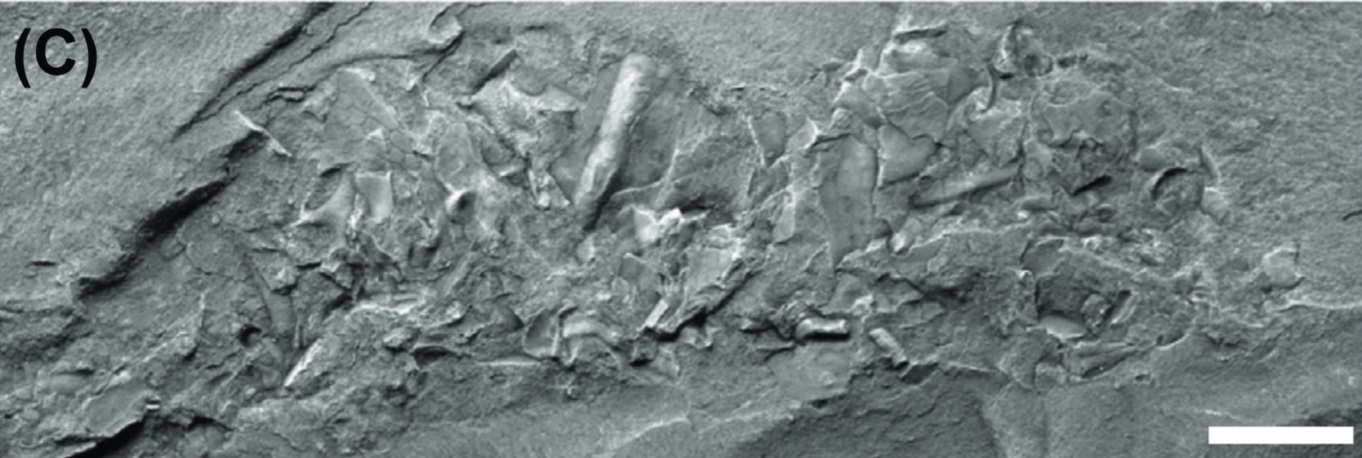
    This coprolite still contains remnants of an unlucky trilobite, dating to somewhere between 520 and 506 million years ago in what’s now Australia.

    Kimming and Bicknell 2026


    Macroscopic coprolite preserving shell fragments from the Buen Formation (Cambrian Series 2), Greenland. PMU 22887.

    This 520-506-million-year-old coprolite from what’s now Greenland contains some shell fragments. All things shall pass.

    John Peel
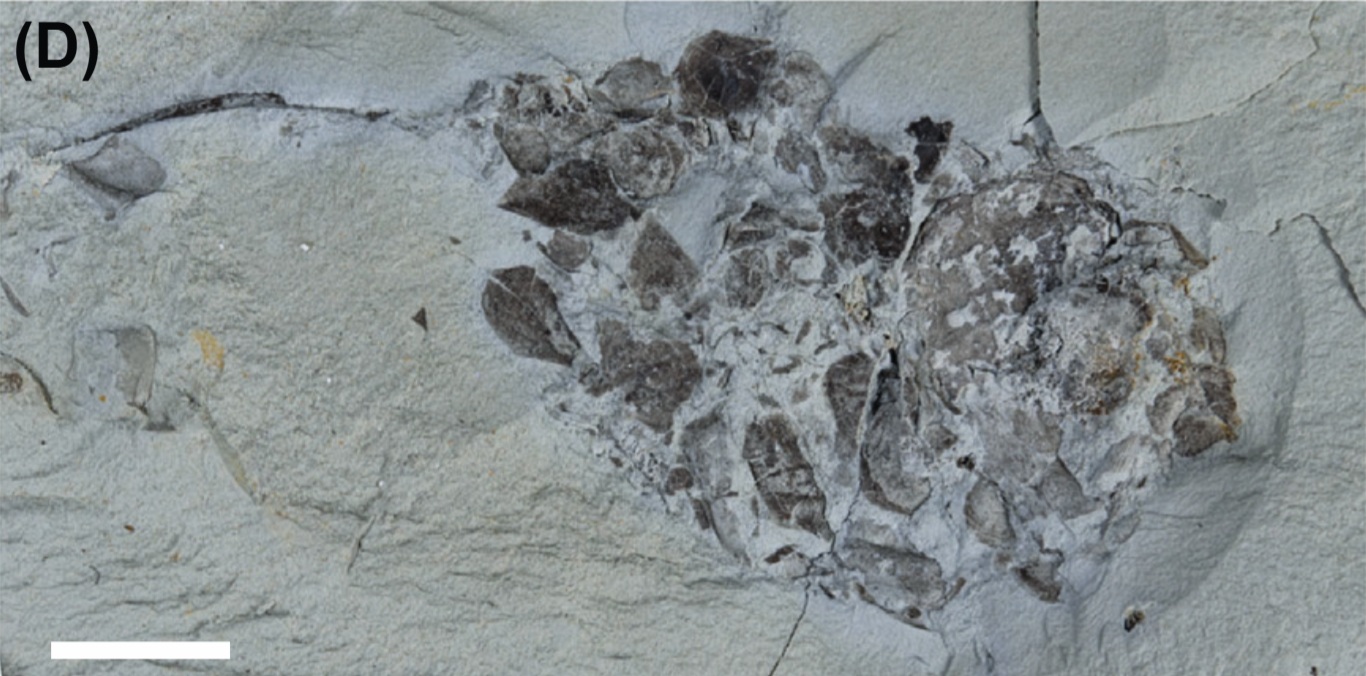
    This 520-506-million-year-old coprolite from what’s now Greenland contains some shell fragments. All things shall pass.

    John Peel


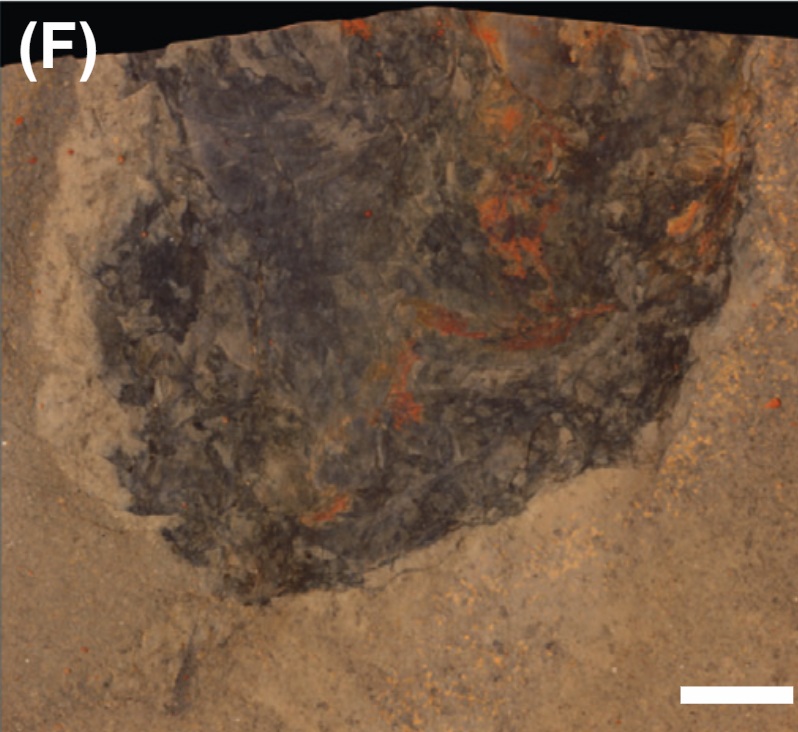
    Macroscopic coprolite preserving shell fragments and organic matter from the Wulongqing Formation (Cambrian Series 2, Stage 4) Yunnan Province, South China. YPM IP 421925.

    Kimming and Bicknell 2026
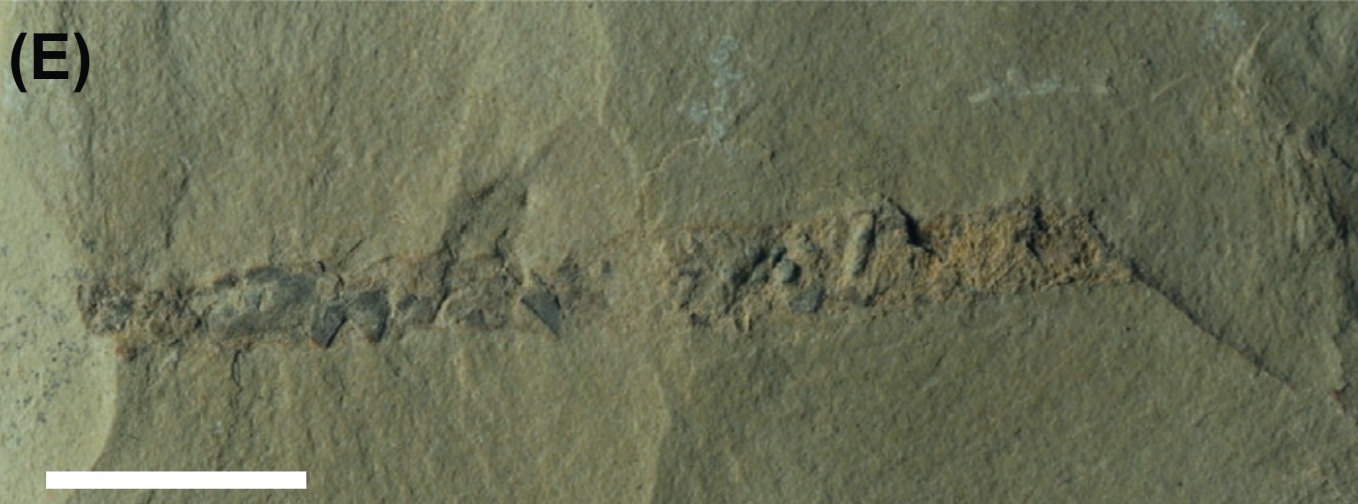
    Macroscopic coprolite preserving shell fragments and organic matter from the Wulongqing Formation (Cambrian Series 2, Stage 4) Yunnan Province, South China. YPM IP 421925.

    Kimming and Bicknell 2026

    This 520-506-million-year-old coprolite from what’s now Greenland contains some shell fragments. All things shall pass.

    John Peel

    Macroscopic coprolite preserving shell fragments and organic matter from the Wulongqing Formation (Cambrian Series 2, Stage 4) Yunnan Province, South China. YPM IP 421925.

    Kimming and Bicknell 2026


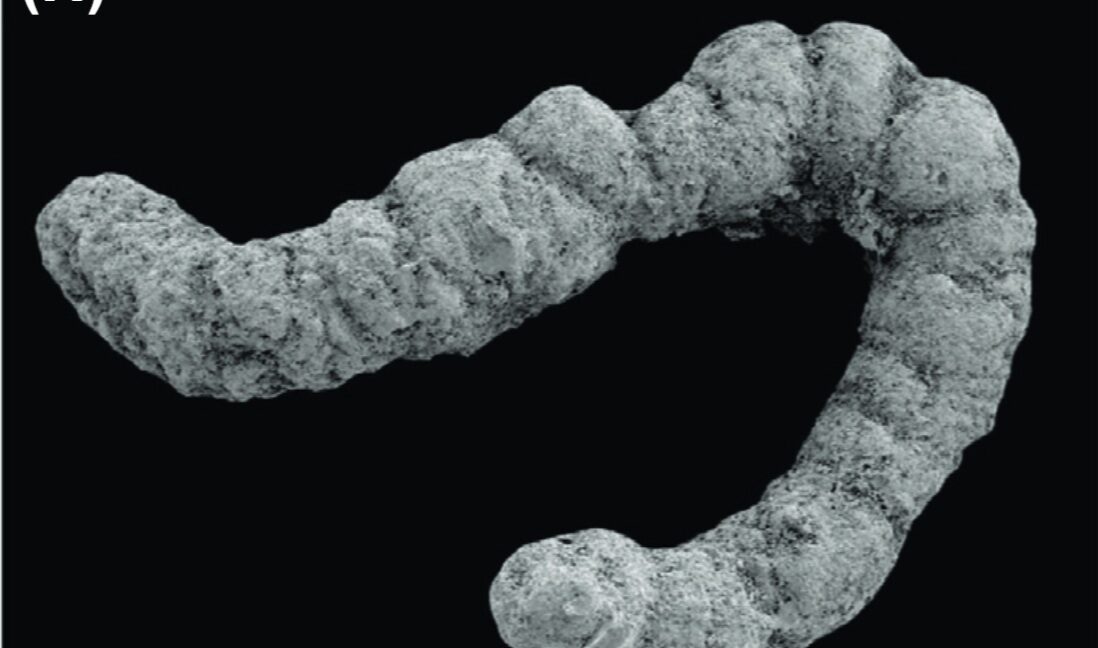
    Macroscopic coprolite preserving three-dimensional fecal pellets from the Ruin Wash Lagerstätte, Pioche Formation (Cambrian Series 2, Stage 4), Nevada, USA. CMC IPC 103497.

    This 520-506-million-year-old coprolite from what’s now Nevada looks more like familiar, modern poop, with a distinctive pellet shape.

    Kimming and Bicknell 2026


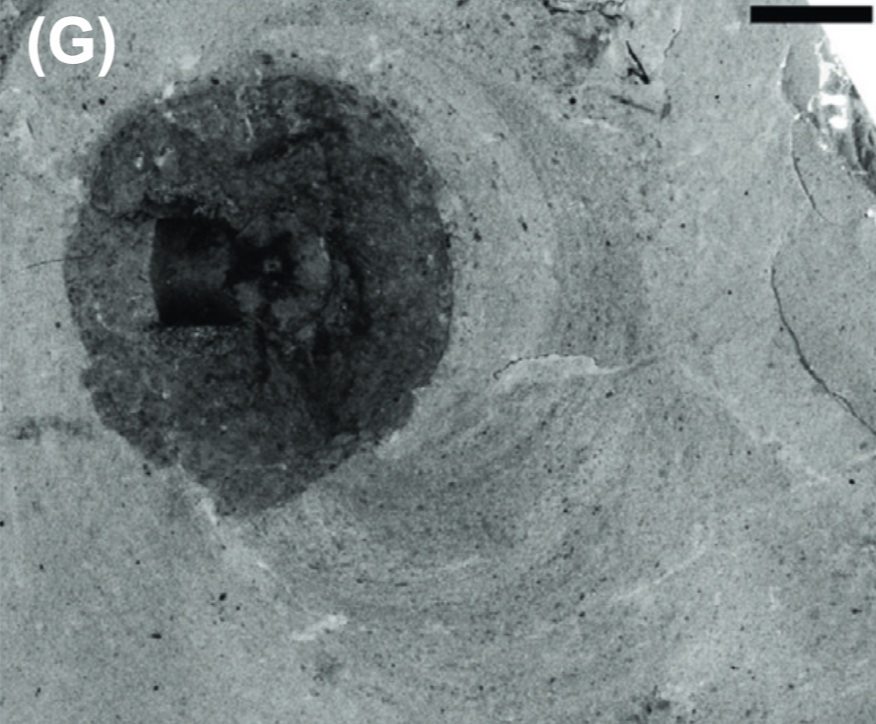
    Macroscopic coprolite preserving unidentified organic matter from the Paseky Shale Member, Holšiny-Hořice Formation (Cambrian Series 2, Stage 4), Czech Republic. I261.

    Petr Kraft


    Spreiten-burrows associated with macroscopic coprolite, view from above containing valve (or valves) of the prey under worm cuticle (not discernible), with spreiten to the lower right from the Ravens Throat River Lagerstätte, Rockslide Formation (Miaolingian, Drumian), Canada. TMP 2013.101.0436.

    These coprolites are arrayed around the exit of a burrow at the Raven’s Throat River site, suggesting they may have been the work of the burrowing creature.

    Kimming and Bicknell 2026


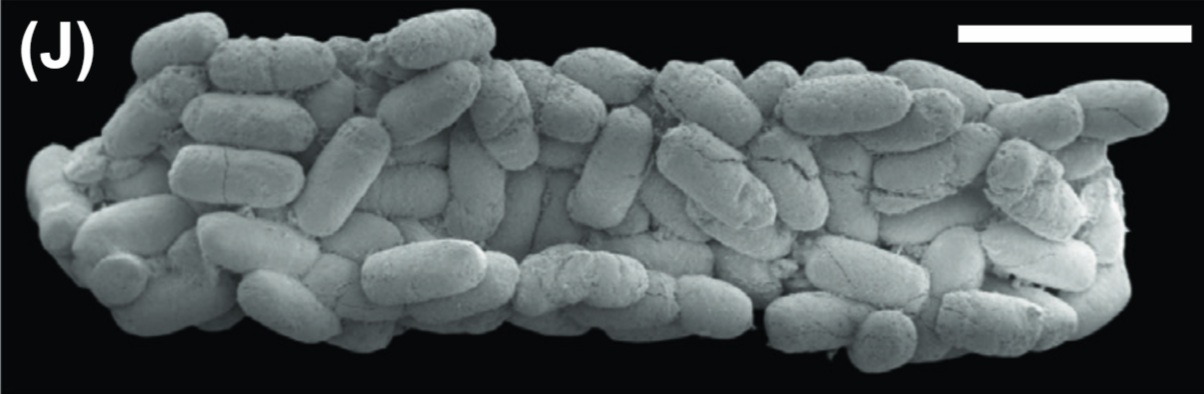
    Phosphatic microscopic fecal pellets from the Aftenstjernesø Formation (Series 2, Stage 4), North Greenland. MGUH 31187.

    These microscopic pellets of poo are rich in phosphate. They were dropped by an unknown defecator 520-506 million years ago in what’s now Greenland.

    John Peel


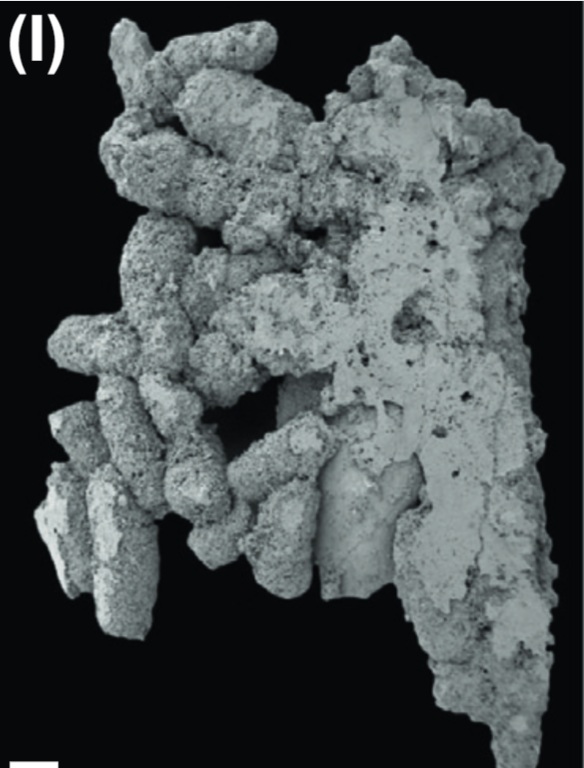
    Phosphatized micro- scopic fecal pellets from the Gaotai Formation (Miaolingian, Wuliuan) Guizhou, China. YKLP.

    More phosphate-rich fecal pellets, this time from what’s now China, seen under an electron microscope.

    Xi-guang Zhang


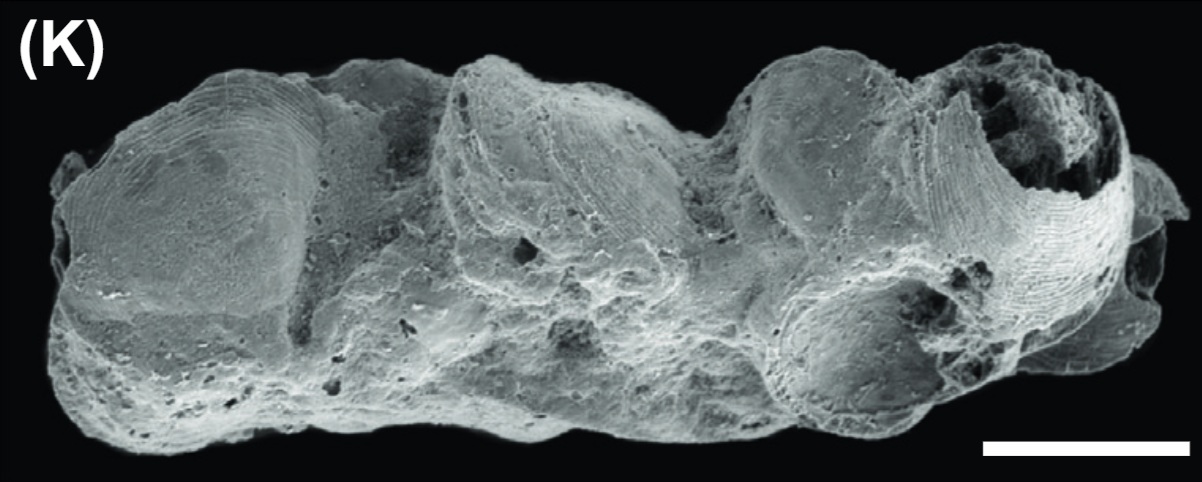
    (K) Phosphatized microscopic coprolite composed of shells from the Gaotai Formation (Miaolingian, Wuliuan) Guizhou, China. YKLP 12112.

    This phosphate-rich microscopic poop from Cambrian China is made up mostly of bits of shell.

    Xi-guang Zhang


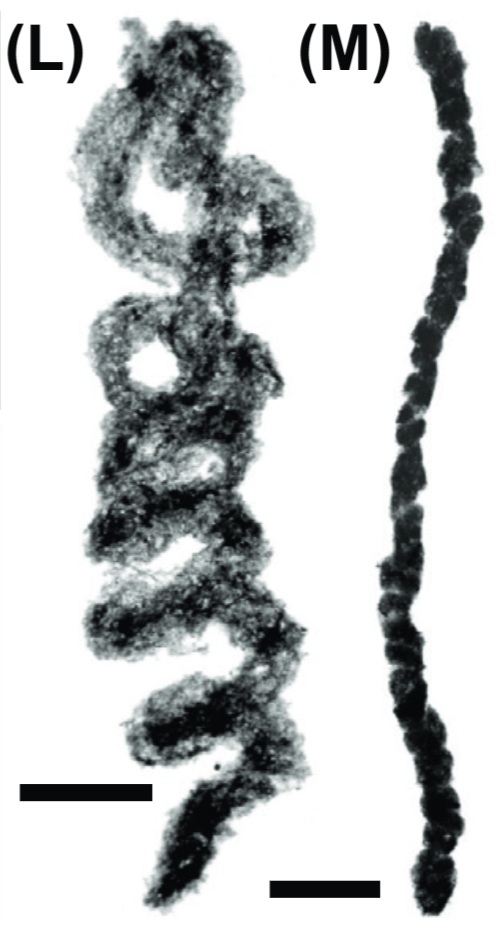
    This pair of carbon-rich coprolites came from what’s now Canada. Note the difference in shape, suggesting they came from creatures with very different digestive tracts and probably different diets.

    Tom Harvey

    How defecation changed the world

    The first animals on Earth were mostly simple creatures that lived in the sunlit upper layers of the ocean or on the shallowest parts of the seafloor. Depending on which set of scientists you ask, those early animals were similar to either sponges or jellyfish. Organs hadn’t been invented yet, so “eating” just meant waiting for tiny particles of food, like bits of plankton or bacteria, to float into the only opening in the animal’s body. Its cells would then engulf the food particle and break it down into its constituent molecules.

    What these early animals released back into the ocean were mostly just chemical byproducts of their cells’ metabolism, not nutrients most other animals could use. So the deeper reaches of the ocean were largely unoccupied, because they didn’t offer enough nutrients to keep animals alive. Digestive tracts and poop changed everything.

    By around 580 million years ago, some animals had started to evolve simple organs. Suddenly, these animals could swallow macroscopic chunks of food and digest them in their very simple—but still revolutionary!—guts, outside their cells, which probably really scandalized the sponges. That meant animals could eat more at a time, to support more complicated bodies, but it also meant they needed to dump the parts they couldn’t digest or absorb. Hence the advent of poop.

    So far, paleontologists have unearthed Cambrian coprolites from about 35 sites around the world, spanning a period from around 540 to 494 million years ago.

    “They range from microscopic to several centimeters in size and include forms such as elongated, cylindrical, ellipsoid, circular, and ‘exploded’ fecal ‘carpets,’” wrote Kimming and Bicknell, rather evocatively. Some of the larger coprolites contain bits of shell or exoskeleton, revealing a bit about the diets of whatever produced them. The sheer diversity of the size and shape of all that fossilized feces suggests that the animals that produced it must also have been diverse (although scientists haven’t yet managed to match very many Cambrian fossil animals to the corresponding coprolites).


    Source link

    Share. Facebook Twitter Pinterest LinkedIn Tumblr Email
    franperez66q@protonmail.com
    • Website

    Related Posts

    Meta and Nvidia plant flag in open-weight AI race led by Chinese Labs

    August 12, 2026

    AI’s costly buildout complicates the Fed’s inflation fight

    August 12, 2026

    Tracking extreme heat by the hour makes climate change seem even worse

    August 12, 2026

    Tencent Q2 earnings: Gaming accelerates, AI-driven ads boost revenue

    August 12, 2026

    Less than 2.5% of Taylor Farms’ recalled lettuce went to Taco Bells

    August 12, 2026

    Norway wealth fund posts $184 billion profit, reveals SpaceX stake

    August 12, 2026
    Leave A Reply Cancel Reply

    Top Reviews
    Editors Picks

    Trump sued over Truth Social advance access sale

    August 12, 2026

    Retail investors could suffer with Truth API rollout, less earnings reports and Fed communication changes

    August 12, 2026

    Meta and Nvidia plant flag in open-weight AI race led by Chinese Labs

    August 12, 2026

    Burnham warned Iran war could hit UK growth next year

    August 12, 2026
    © 2026 All right reserved
    • Privacy Policy
    • Terms & Conditions

    Type above and press Enter to search. Press Esc to cancel.