


Unlock the Editor’s Digest for free
Roula Khalaf, Editor of the FT, selects her favourite stories in this weekly newsletter.
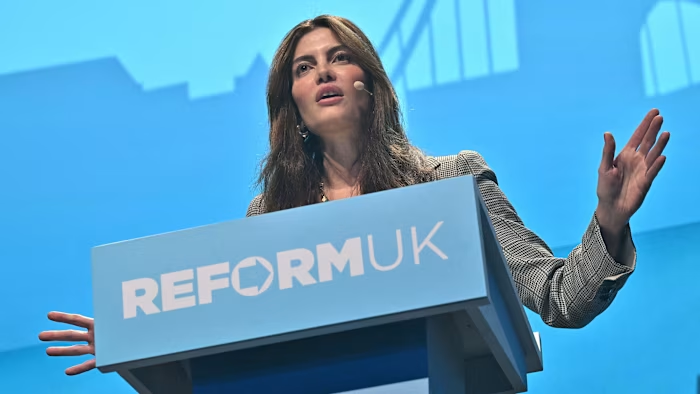
Reform UK’s candidate for mayor of London said the previous Conservative government “should have borrowed and borrowed and borrowed” more money, despite promises by her party to rein in spending if it wins power.
Laila Cunningham told an event in July that the Tories should have borrowed far more to build up the country’s infrastructure when interest rates were low, including funding the proposed Crossrail 2 project, according to a recording of her remarks obtained by the FT.
This rail line development was paused in 2020 and would have run under central London from north-east to south-west.
The level of UK government debt rose to more than 90 per cent of GDP under the last Conservative administration, from about 66 per cent when it took power in 2010. It has continued to rise under the current Labour government to just below 95 per cent of GDP.
“When the interest rates were zero per cent, that’s when the Conservatives should have borrowed and borrowed and borrowed,” Cunningham told an event hosted by the centre-right think-tank Bright Blue.
The comments by Cunningham, who is vying to succeed Sir Sadiq Khan in City Hall in 2028, appear to put her at odds with Reform leader Nigel Farage. He has repeatedly slammed the previous Conservative administration and the current government for failing to tackle the national debt.
Farage has warned that the country has been severely damaged by the “dire state of debt and our finances” built up over the years, while Reform’s Treasury spokesperson Robert Jenrick, who defected from the Conservatives in January, is attempting to build the party’s credibility with gilt investors by pledging to slash government spending.
Cunningham’s comments highlight a shift under way inside Reform, which was criticised at the 2024 general election for proposing a host of uncosted giveaways designed to appeal to voters struggling financially.
The anti-immigration party has since started to outline a more economically conservative agenda that it believes can still win over voters in deprived areas of the country.
If it enters government, Reform has pledged to find £80bn in savings, largely by targeting welfare, while delivering an aggressive social housing programme of new homes and priority for “UK-born” people and military veterans.
Cunningham said in a statement to the FT that “I stand by my remark” and said that “when interest rates are close to zero, it makes sense for a government to borrow and invest that money in infrastructure that improves competitiveness”.
“I don’t even think this is a political position. It’s simply common sense,” she added.
But James Cleverly, who quit as shadow housing secretary to seek the Tory candidacy for the mayoral race, criticised Cunningham’s comments.
“This is the latest sign that Reform cannot be trusted with taxpayers’ money and have no idea what it takes to govern,” he said.
The Bank of England base rate was below 1 per cent between 2009, during the global financial crisis, and 2022 when Russia’s full-scale invasion of Ukraine caused an energy price shock.
In that time, the UK’s public sector net debt nearly tripled in cash terms from about £800bn to more than £2.3tn.
The sharp rise in interest rates and gilt yields since have contributed to a big increase in what the government spends on debt interest, which totalled roughly £109bn in 2025-26, or about 8 per cent of total public spending.
