Close Menu

    Subscribe to Updates

    Get the latest creative news from FooBar about art, design and business.

    What's Hot

    US Air Force B-52 bomber crashes in California; 8-member crew presumed dead

    June 16, 2026

    Mondelez names consumer goods veteran Amit Banati as CFO

    June 16, 2026

    Key mission for Europe’s commercial space enterprise scrubbed again

    June 16, 2026
    Facebook X (Twitter) Instagram
    Addison Markets
    • Home
    • USA
    • Europe
    • Business
    • Investing
    • Tech
    • Politics
    • Contact Us
    Addison Markets
    Home»Tech»Analyst on China’s spent rocket stages: “Things only continue to get worse”
    Tech

    Analyst on China’s spent rocket stages: “Things only continue to get worse”

    franperez66q@protonmail.comBy franperez66q@protonmail.comMay 27, 2026No Comments2 Mins Read
    Facebook Twitter Pinterest Telegram LinkedIn Tumblr WhatsApp Email
    Share
    Facebook Twitter LinkedIn Pinterest Telegram Email


    Up until a decade ago, China had never launched as many as 20 orbital rockets a year. But beginning in 2022, the Asian country launched 64 rockets and last year reached a record total of 93, marking it as the second-most productive space power in the world.

    Further growth is anticipated from both the company’s state-owned enterprises as well as a rapidly expanding number of private launch companies. There is nothing wrong with this, as China’s rapid growth in launch has been mirrored by the United States and, in particular, SpaceX.

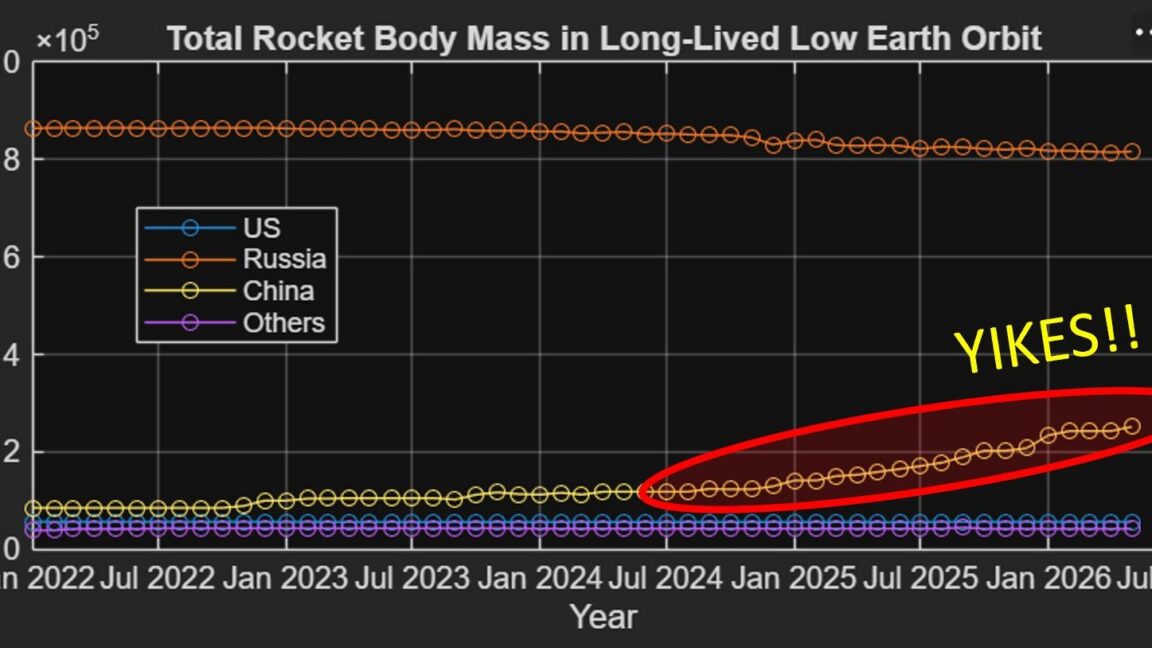
    However there is an issue with these launches, as China appears to be ignoring long-established norms about disposing of the upper stages of rockets. These are the parts of the vehicle that separate from the first stage of a rocket and push a satellite or spacecraft into orbit.

    Moving toward best practices

    In the early decades of spaceflight, the Soviet Union, the United States, and other spacefaring species paid little heed to these upper stages, also known as “rocket bodies.” They were ejected into all manner of orbits, there to remain for decades before ultimately succumbing to the slow pull of Earth’s gravity at higher altitudes.

    But in the last 20 years or so, most countries (and the private companies operating within their borders) have taken a more responsible attitude toward disposing of these upper stages. This is because, as it turns out, having large, multi-ton blocks of metal spinning uncontrollably around low-Earth orbit becomes a problem over time.

    The Soviet Union, and later Russia, is the biggest offender, with about 800 metric tons of rocket bodies in long-lived orbits between 600 km and 2,000 km above the Earth’s surface, according to data from the European Space Agency’s Space Debris Office as well as Jonathan McDowell’s General Catalog of Artificial Space Objects. The United States, by comparison, has about 57 metric tons of spent upper stages in these orbits. However these numbers are more or less holding steady or, in the case of Russia, slowly declining as stages fall out of orbit.


    Source link

    Share. Facebook Twitter Pinterest LinkedIn Tumblr Email
    franperez66q@protonmail.com
    • Website

    Related Posts

    Key mission for Europe’s commercial space enterprise scrubbed again

    June 16, 2026

    A Chinese rocket breaks apart dangerously close to the Starlink constellation

    June 15, 2026

    UK to ban social media for kids under 16, may impose overnight curfews

    June 15, 2026

    COVID vaccines still protect against heart problems, large study finds

    June 15, 2026

    Nvidia plans to raise about $20 billion first debt sale in AI boom

    June 15, 2026

    Chipmaker Nvidia seeks to raise over $25B in first bond deal since 2021

    June 15, 2026
    Leave A Reply Cancel Reply

    Top Reviews
    Editors Picks

    US Air Force B-52 bomber crashes in California; 8-member crew presumed dead

    June 16, 2026

    Mondelez names consumer goods veteran Amit Banati as CFO

    June 16, 2026

    Key mission for Europe’s commercial space enterprise scrubbed again

    June 16, 2026

    People in China are watching the World Cup differently this time

    June 15, 2026
    © 2026 All right reserved
    • Privacy Policy
    • Terms & Conditions

    Type above and press Enter to search. Press Esc to cancel.