
Android in cars
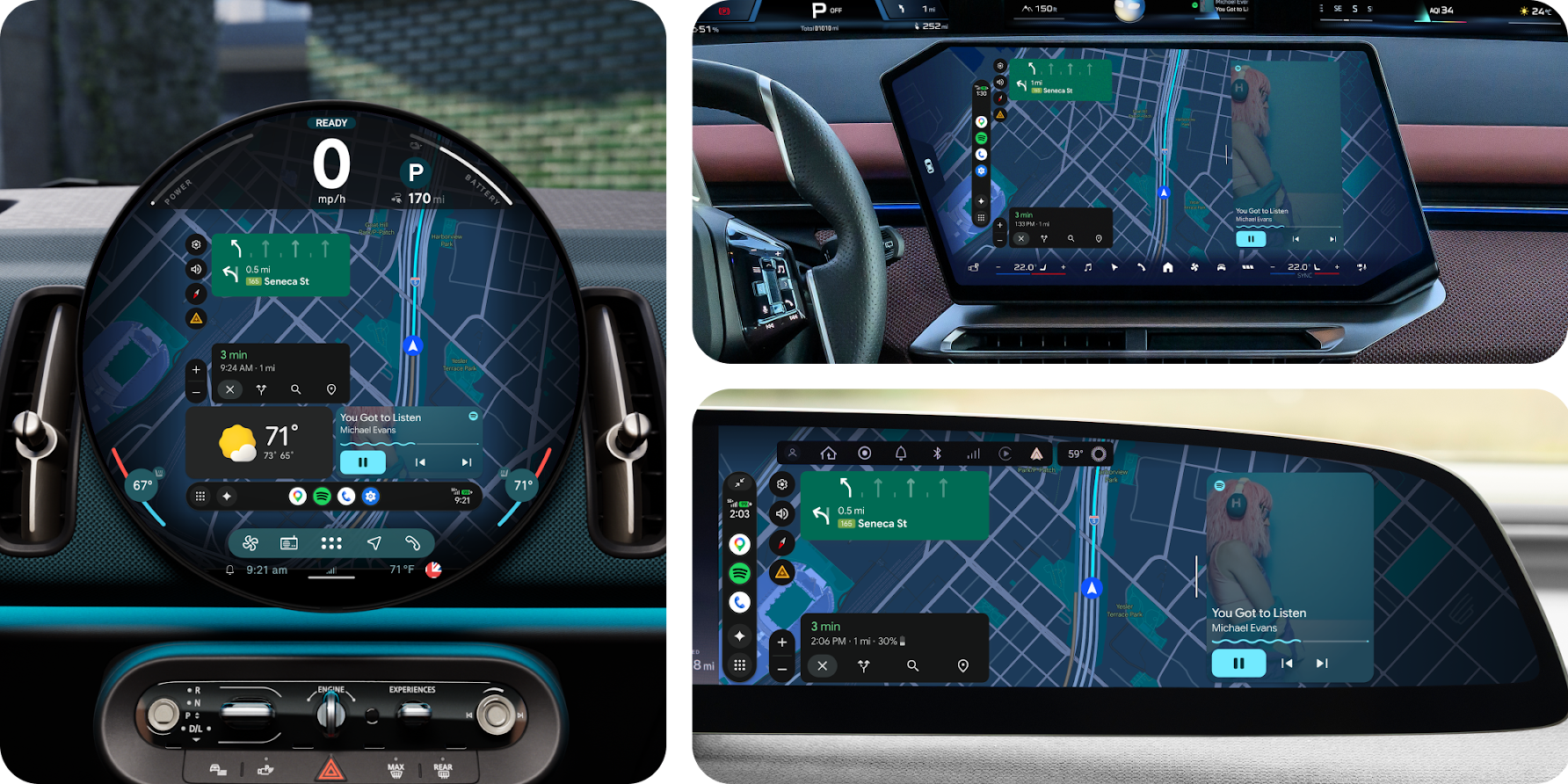
Plugging your Android phone into a car that supports Android Auto will be different soon, too. For starters, Google says Android Auto will now adapt to varying display sizes and shapes. So even if your car has a weird polygon screen, Android should fill it completely.
What you see on that screen will be different, too. Android Auto is getting a makeover with greater support for Material 3 Expressive themes and a new navigation experience. Yep, Immersive Navigation, which Google announced earlier this year, is almost ready to actually roll out to users. Accessing data from other apps in the car will be easier as well due to the addition of widgets. Google says there will be widgets for contacts, weather, and select third-party apps. For cars with Google built in, the vehicle’s cameras will plug into Maps to provide more accurate lane guidance. Gemini will also be able to answer questions about the vehicle’s status, including warning lights and cargo capacity.
Android Auto media apps have hardly evolved over the years, but 2026 will bring some notable changes. Popular apps like YouTube Music and Spotify are getting design overhauls that make them easier to use in the car. Video playback is also coming to Android Auto for the first time. Naturally, this will only work when you’re parked and using a supported app like YouTube.
Video to audio transition in Android Auto
Google says Android Auto will switch seamlessly to audio-only mode when you start driving, but this requires buy-in from automakers for safety and technical reasons. Video will only be available in supported cars from BMW, Ford, Genesis, Hyundai, Kia, Mahindra, Mercedes-Benz, Renault, Škoda, Tata, and Volvo. More vehicles may come later.