Close Menu

    Subscribe to Updates

    Get the latest creative news from FooBar about art, design and business.

    What's Hot

    Why is Kongsberg stock sliding 3% today?

    June 10, 2026

    Google announces Gemini 3.5 Live Translate for instant voice-to-voice translation

    June 10, 2026

    The May inflation numbers are due out Wednesday morning. Here’s what to expect

    June 10, 2026
    Facebook X (Twitter) Instagram
    Addison Markets
    • Home
    • USA
    • Europe
    • Business
    • Investing
    • Tech
    • Politics
    • Contact Us
    Addison Markets
    Home»Tech»Commonwealth Fusion makes the physics case for its 400 MW reactor
    Tech

    Commonwealth Fusion makes the physics case for its 400 MW reactor

    franperez66q@protonmail.comBy franperez66q@protonmail.comJune 10, 2026No Comments2 Mins Read
    Facebook Twitter Pinterest Telegram LinkedIn Tumblr WhatsApp Email
    Share
    Facebook Twitter LinkedIn Pinterest Telegram Email


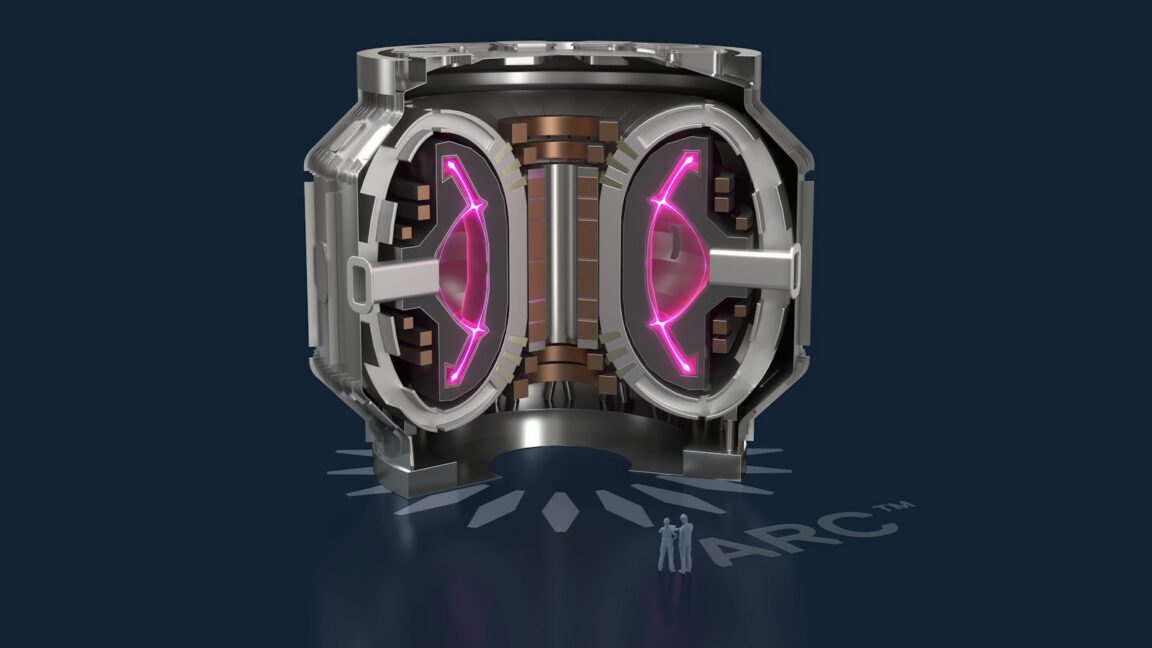
    It’s inevitable that parts of the device will be exposed to radiation and perhaps fusion plasma. The inner walls of the reactor will be shielded by tungsten, which will limit erosion by the conditions. Meanwhile, the vacuum vessel is designed to be replaced every one to two years. The papers note that this flexibility will allow them to make some design changes even after ARC is built. To enable this, the whole tokamak is meant to split in half for maintenance.

    Instabilities

    The two big uncertainties in the operations of ARC are long-standing challenges for fusion: how to handle magnetic instabilities, and how to handle the helium ash and material that escapes the magnetic containment.

    Some of the latter will simply be handled by the resets that happen after every 15 minutes of operation, which will clear the reaction chamber and add fresh fuel. But during operations, this will be handled by what’s called a divertor, an area where the magnetic field lines are shaped to allow some material out of confinement.

    “To maximise ARC’s fusion power output while avoiding excessive erosion of the plasma-facing components, we will need to radiatively dissipate most of the power crossing the last-closed flux surface, injecting radiating impurities such as argon or neon to access divertor detachment,” one of the papers says. “Divertor detachment will need to be integrated with a high-performance core plasma, and with efficient impurity pumping to prevent the accumulation of helium ash in the core.”

    The models they use predict that the system will keep enough pressure at the diverter to spit out enough of the helium ash to keep it from interfering with the fusion reactions. But that prediction will need to be tested empirically.

    Magnetic instabilities can lead to a rapid loss of control of the plasma, potentially leading energetic, charged particles to slam into the reactor walls. The tungsten limits the damage and protects the more sensitive hardware, but will be eroded, and the tungsten that is eroded off can stay in the chamber and contaminate further runs of the system.


    Source link

    Share. Facebook Twitter Pinterest LinkedIn Tumblr Email
    franperez66q@protonmail.com
    • Website

    Related Posts

    Google announces Gemini 3.5 Live Translate for instant voice-to-voice translation

    June 10, 2026

    Beyond ‘Silicon Roundabout’: The next challenge for UK tech

    June 10, 2026

    Three key vital signs make up the “urban pulse” of a city

    June 10, 2026

    Stocks recover from sell-off, but even bulls warn of more volatility

    June 10, 2026

    Locked in heated rivalry with researcher, Microsoft fixes 0-day they disclosed

    June 10, 2026

    How Jim Cramer views Apple on Day 2 of its post-WWDC keynote pullback

    June 10, 2026
    Leave A Reply Cancel Reply

    Top Reviews
    Editors Picks

    Why is Kongsberg stock sliding 3% today?

    June 10, 2026

    Google announces Gemini 3.5 Live Translate for instant voice-to-voice translation

    June 10, 2026

    The May inflation numbers are due out Wednesday morning. Here’s what to expect

    June 10, 2026

    Japan stocks lower at close of trade; Nikkei 225 down 1.66%

    June 10, 2026
    © 2026 All right reserved
    • Privacy Policy
    • Terms & Conditions

    Type above and press Enter to search. Press Esc to cancel.