
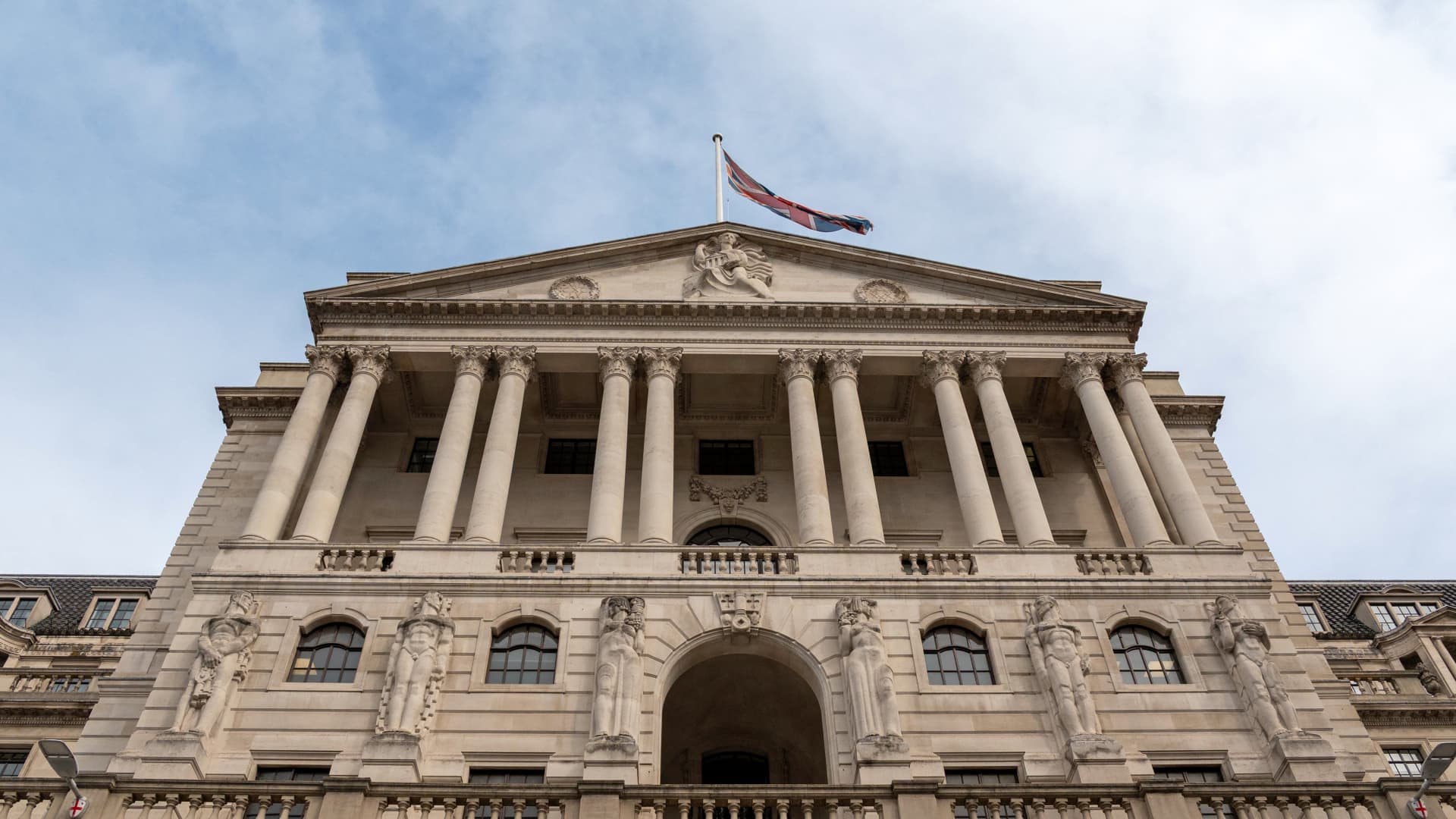
A Union flag flutters from a pole atop the Bank of England, in the City of London on August 7, 2025.
Niklas Halle’n | Afp | Getty Images
Global pressures from rising public debt to financial fragilities and the sustainability of the AI boom are increasing risks, underscoring the need for disciplined policymaking, according to the Bank for International Settlements.
The central bank umbrella group’s Annual Economic Report published on Sunday warned of a complex mix of vulnerabilities, including strained fiscal positions, lingering supply shocks and the risk of a renewed bout of stubbornly high inflation.
While economic activity has remained resilient in recent months, policymakers must act decisively, the BIS said, to preserve stability.
“Policy actions must reinforce each other to avoid a pull and push on the global economy. Ultimately, success depends on sound fiscal and financial foundations,” BIS General Manager Pablo Hernandez de Cos said.
The report highlighted four key pressure points. Inflation has picked up again, with the BIS cautioning that more frequent supply disruptions could cause higher inflation expectations to become entrenched among households and businesses.
“The readiness to act if the central banks observe that there is the anchoring of inflation expectations is the main message that we want to set,” de Cos told reporters.
He said the recent ceasefire between the United States and Iran in the Middle East and the reopening of the Strait of Hormuz was “good news” that meant extreme scenarios would be avoided, although it was likely to take time for the oil market to “normalize”.
Urgent message
The BIS also flagged uncertainty over the durability of the current surge in investment tied to artificial intelligence.
While AI has boosted confidence and supported growth through expectations of productivity gains, the bank warned it was raising fears about jobs and that supply bottlenecks and intense competition could lead to the kind of overinvestment seen in previous boom-and-bust cycles.
For central banks, it was posing fundamental questions about how the economy is likely to function, although de Cos said that for now it would be “unwise” to be prescriptive about how they should react.
Financial vulnerabilities remain another area of concern.
Elevated asset valuations and signs of investor complacency have left core bond markets more fragile, while the financing of the AI boom also looks increasingly reliant on debt and complex funding structures across the supply chain.
At the same time, record-high public debt and sovereign debt markets increasingly dominated by large, highly leveraged hedge funds had created “a new sovereign-financial stability nexus,” which poses growing risks.
“The new fiscal-financial stability nexus may mean more frequent and sharper drops in sovereign bond values,” said Frank Smets, acting head of the BIS monetary and economic department, adding such swings could rapidly tighten financial conditions.
De Cos said the BIS’ message was one of “urgency” in terms of the need to bring down debt levels in key economies, “because the fact is that today debt is high, and this is financed through non-bank financial intermediaries.”
The BIS urged policymakers to prioritize price stability, ensure fiscal sustainability, coordinate and strengthen oversight beyond the banking sector and pursue structural reforms.
“Policymakers must act now. Delay will only make the necessary adjustments more costly,” de Cos said.
