
Unlock the Editor’s Digest for free
Roula Khalaf, Editor of the FT, selects her favourite stories in this weekly newsletter.
The EU is considering pushing back until January a planned increase in its price cap on Russian oil to limit the boost to Moscow’s revenues from higher crude prices triggered by the Iran war.
The proposed measure is part of the 21st package of EU sanctions against Russia in response to its 2022 full-scale invasion of Ukraine. The move would require unanimous approval from the bloc’s governments before July 15, when the cap would otherwise automatically rise from its current level of $44.10 a barrel.
The EU has discussed co-ordinating a delay with some of the other G7 countries that agreed on the price cap in 2022 to limit Moscow’s income from energy sales.
EU officials expect support from Canada and the UK for delaying the increase. The US was keeping its cap at the current level of $60 a barrel, officials said.
Unless the delay is approved, disruptions to the oil trade through the Strait of Hormuz are expected to increase the EU’s dynamic price cap to up to $70 per barrel, due to a mechanism that adjusts it based on the average market price of the previous six months.
Brussels had previously proposed a full maritime services ban, which would have de facto supplanted the oil price cap, but due to lack of agreement from the US, it proposed a pause on the price adjustment mechanism instead, EU diplomats said.
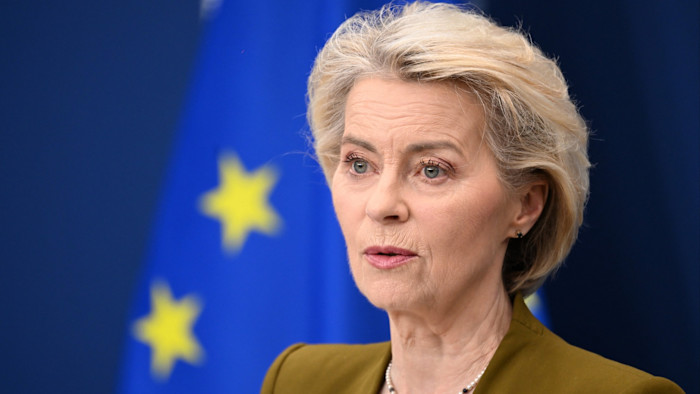
“Our sanctions keep biting hard and cutting deep; they’re weakening the economic foundations of Russia’s war efforts,” European Commission president Ursula von der Leyen said on Tuesday.
The new sanctions also list 31 Russian banks, 20 third-country oil traders, as well as crypto companies and platforms, that are accused of servicing sanctioned entities or helping to evade EU restrictions. That included four banks in Kyrgyzstan, Mongolia and India, 11 crypto platforms in Belarus, Georgia, Nigeria, Panama, the United Arab Emirates and the Marshall Islands, and five oil traders in the UAE, officials said.
In addition, the EU seeks to deny entry to any Russian nationals who have served in the army since the start of the war.
Ukraine’s foreign minister Andriy Sybiha welcomed the proposal to ban active and former Russian servicemen from entering the EU as a “fair and timely” decision. “Those who chose to be part of the largest war of aggression in Europe since WWII must not have any right to enter Europe,” Sybiha wrote on X.
The Commission is also proposing a full ban on crypto services based in third countries to prevent Russian sanctions circumvention, as well as trade restrictions on materials that could be used for launching drones and jamming equipment.
The EU is further seeking to prohibit imports of cod and other fishery products alongside a ban on imports of €60mn worth of metals, metal ores and car parts.
“We want to lock in Europe’s diversification away from Russia’s imports,” von der Leyen said.
