
Unlock the Editor’s Digest for free
Roula Khalaf, Editor of the FT, selects her favourite stories in this weekly newsletter.
Germany’s domestic intelligence agency has reported a surge in leftwing extremism, in response to the resurgent far right and Israel’s actions in the Middle East.
Violent crimes motivated by leftwing ideological beliefs include attempted murder, assaults, sabotage and arson attacks and rose 60 per cent in 2025, the Federal Office for the Protection of the Constitution (BfV) said on Tuesday.
“Leftwing extremism is on the rise again in Germany and poses a threat to public safety and order,” said interior minister Alexander Dobrindt at a news conference presenting the intelligence agency’s annual report.
He added that the phenomenon was largely a reaction to the already widespread problem of rightwing extremism in Germany, warning of a radicalising dynamic developing between the two.
“For both groups — leftwing extremists and rightwing extremists alike — we can see here that the potential for violence is rising significantly,” Dobrindt said.
Events in the Middle East over the past 18 months have played a significant role in recruiting Germans to violent leftwing causes. Pro-Palestinian movements in Germany are proving fertile recruiting grounds for extremist organisations that have infiltrated them, the BfV said.
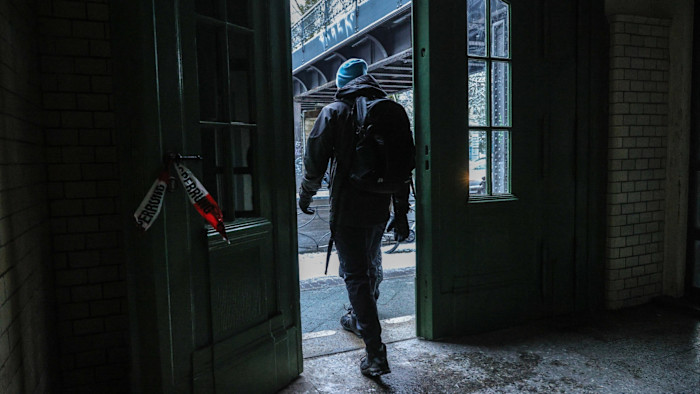
An electricity substation in Berlin was destroyed by the leftwing terrorist Vulkangruppe in January, leaving some 100,000 residents without power in freezing conditions for several days. Authorities were surprised by the attack and have struggled to trace the origins of the group or its membership.
Leftwing terrorism plays a dark role in postwar German history: during the 1970s and 1980s the Red Army Faction, also known as the Baader-Meinhof gang, conducted a campaign of robberies and bombings. They assassinated US soldiers, German diplomats and the CEO of Deutsche Bank as well as many ordinary West German citizens.
The BfV is now tracking multiple extremist leftwing organisations, many of which profess violence as a political tool and are mostly underground.
“We’re dealing here with highly secretive structures . . . which, at times, also operate very professionally,” said BfV president Sinan Selen.
German intelligence and law enforcement services were working hard to penetrate the organisations, he said. “Various security agencies are very active in this area, and we’ll see what the coming months bring in this respect.”
The BfV is having to rapidly adapt as it races to keep up with a changing threat environment.
The agency is also responsible for countering Russian espionage and hybrid warfare. Tackling rightwing extremism in Germany continues to be its most pressing task, however.
While there were 856 violent crimes motivated by leftwing extremist ideology in 2025, there were 1,395 motivated by rightwing extremist ideology.
Under Selen, the agency has also sought to have the far-right Alternative for Germany (AfD) — which now polls as the country’s largest political party — classified as a rightwing extremist organisation.
The determination was struck down by a German court in February but is still under review.
“My personal assessment is that the AfD is an extremist party,” Selen said on Tuesday. His agency’s goal was to continue to scrutinise the party and its membership, he said.
