
Stay informed with free updates
Simply sign up to the Retail sector myFT Digest — delivered directly to your inbox.
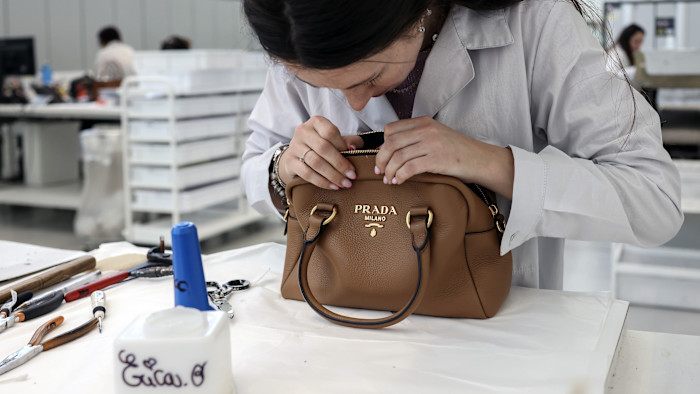
Large fashion groups including LVMH, Prada, Chanel and Inditex will be banned from destroying unsold clothes and footwear in the EU from this week, forcing the industry to overhaul the way it handles excess stock and customer returns.
The blanket ban is particularly sensitive for luxury fashion groups because it removes one of the industry’s least visible tools for keeping their products desirable by maintaining their scarcity value.
The new rule will force brands to choose between carrying higher inventory costs, expanding tightly controlled discount channels or producing fewer goods in the first place.
A court case this week revealed that Chanel routinely destroyed thousands of unsold products in Hong Kong as part of its inventory-management strategy.
Chanel told the FT the numbers cited in court did not reflect its current global practices, adding that products that could not be sold were now handled through L’Atelier des Matières, a recycling business it founded in 2019 to recover materials and return them to circular supply chains.
Between 4 per cent and 9 per cent of textile products offered for sale in Europe — equivalent to an estimated 264,000 to 594,000 tonnes a year — are destroyed before use, according to the European Environment Agency.
Official company data is not available and there is no public breakdown showing how much of that waste comes from luxury groups compared with fast-fashion brands.
The ban was approved in 2024 as part of efforts to curb overproduction, reduce waste and keep valuable materials in circulation for longer.
From July 19, large companies will be prohibited from incinerating or sending to landfill unsold clothes, accessories and footwear, including products returned by customers.
The rules encourage donation, repair and reuse as more environmentally sustainable alternatives, with destruction to be permitted only under certain circumstances such as where goods pose health or safety risks, are counterfeit or irreparably damaged.
While donation and reuse could create new resale and upcycling channels for mass-market fashion, experts say the rules will pose greater challenges for luxury groups, which rely on tightly controlled distribution and scarcity to protect brand value.
Putting more unsold products into outlets, donation networks or secondary markets risks increasing discounting or feeding grey-market sales while repair, storage and material recovery could add to costs, they say.
As much as 40 per cent of luxury goods were sold at a discount in 2025, according to figures released by Bain and Italian industry association Altagamma as weaker demand and excess inventory increased brands’ reliance on outlets and markdowns.
There are also questions over whether brands could circumvent the ban should unsold goods they sell to overseas distributors end up being destroyed outside the EU, insiders say.
“The new rules will lead companies to pay even closer attention to planning and inventory management,” said Luca Solca at Bernstein.
“That said, no one can work miracles: apparel brands in particular will inevitably be left with some end-of-season stock. This is unavoidable . . . so I also expect companies to make a greater effort to manage off-price sales in a way that preserves quality.”
He argued this would create an opportunity for companies such as UK-based luxury outlet operator Value Retail, creator of The Bicester Collection of shopping villages in Europe, China and New York.
The rules could also accelerate the adoption of artificial intelligence to monitor inventories in real time, forecast demand and better co-ordinate stock across stores and warehouses, according to industry executives and analysts.
Giulia Iuticone, a Milan-based partner at executive search firm Heidrick & Struggles, said the rules would “redefine how companies make decisions . . . if unsold stock can no longer serve as a safety valve, the quality of planning becomes a competitive advantage.”
Additional reporting by Adrienne Klasa in Paris
