
Unlock the Editor’s Digest for free
Roula Khalaf, Editor of the FT, selects her favourite stories in this weekly newsletter.
MPs have urged the UK government to routinely test children living near abandoned lead mines for the toxic metal, warning that the health risks from the country’s industrial past have been “left unaddressed” for too long.
In a letter to Welsh secretary Stephen Kinnock, the House of Commons Welsh affairs committee called for the launch of a co-ordinated four-nation programme that would identify children with elevated lead levels.
“Across the UK there has been a failure to fully understand where contamination exists in the environment,” the cross-party group of MPs said. “We are dismayed that the legacy of metal mine pollution has been left unaddressed for so long.”
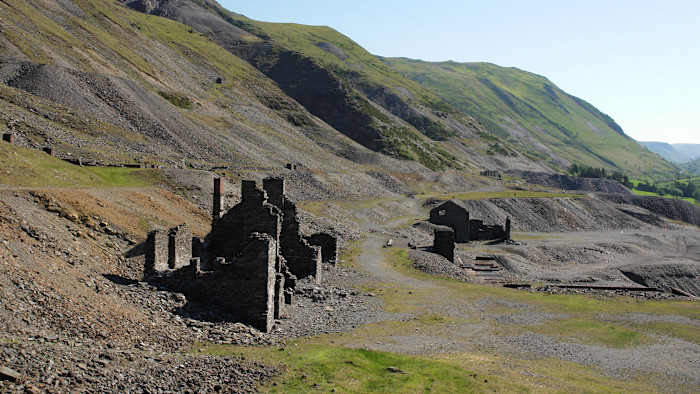
The UK has 6,630 disused industrial lead mines, including more than 1,300 in Wales, which continue to release lead into rivers and surrounding land decades after they closed. Since a wave of closures in the early 1900s, they have largely been neglected by successive governments because they lie in sparsely populated rural areas.
Lead is often an invisible and odourless poison, which accumulates in waterways, soil and floodplains where it can be consumed by animals and seep into homegrown or agricultural food production, or private drinking water supplies, and be passed on to humans.
Any level of exposure can have a harmful effect on humans, according to the World Health Organization.
A rapid review, ordered by ministers after an FT investigation, found lead pollution from abandoned metal mines was contaminating produce, animals and potentially drinking water across England and Wales. It also called for more research into the long-term health risks for nearby communities.
In their letter, sent last week, the cross-party group of MPs warned there was “no long-term, UK-wide co-ordinated approach” to testing children for elevated levels of lead, despite evidence that legacy contamination may continue to pose a risk to human health.
They also urged Kinnock, MP for Aberafan Maesteg, to set up a nationwide testing programme and questioned why “such a small amount of food [was] tested every year” for lead contamination.
Every year, the UK’s Veterinary Medicines Directorate, a government agency, tests roughly 33,000 samples of meat, milk, fish, eggs and honey.
Of these, 400-450 samples are tested for the presence of lead and other heavy metals, with the exception of eggs, for which no lead level is set in the UK, which experts have argued is an insufficient risk assessment.
In 2022, a study funded by the Welsh environment agency uncovered harmful levels of lead in eggs produced on two small farms downstream from former lead mines in west Wales.
Although environmental policy is largely devolved, the committee said much of the contamination predated devolution in 1999 and urged Whitehall to work with the Welsh government to fund a targeted programme of testing “without undue delay”.
The UK government has said it is reconsidering whether to routinely test children for lead exposure following a two-year FT investigation. Last year, the first pilot screening study was launched in Leeds, under which thousands of families are being sent finger-prick blood test kits alongside instructions to collect soil and house dust samples.
The government said in a statement: “The secretary of state for Wales has received the Welsh affairs committee letter, which focuses on an important issue relating to children’s health. He will consider the contents and respond in due course.”
