
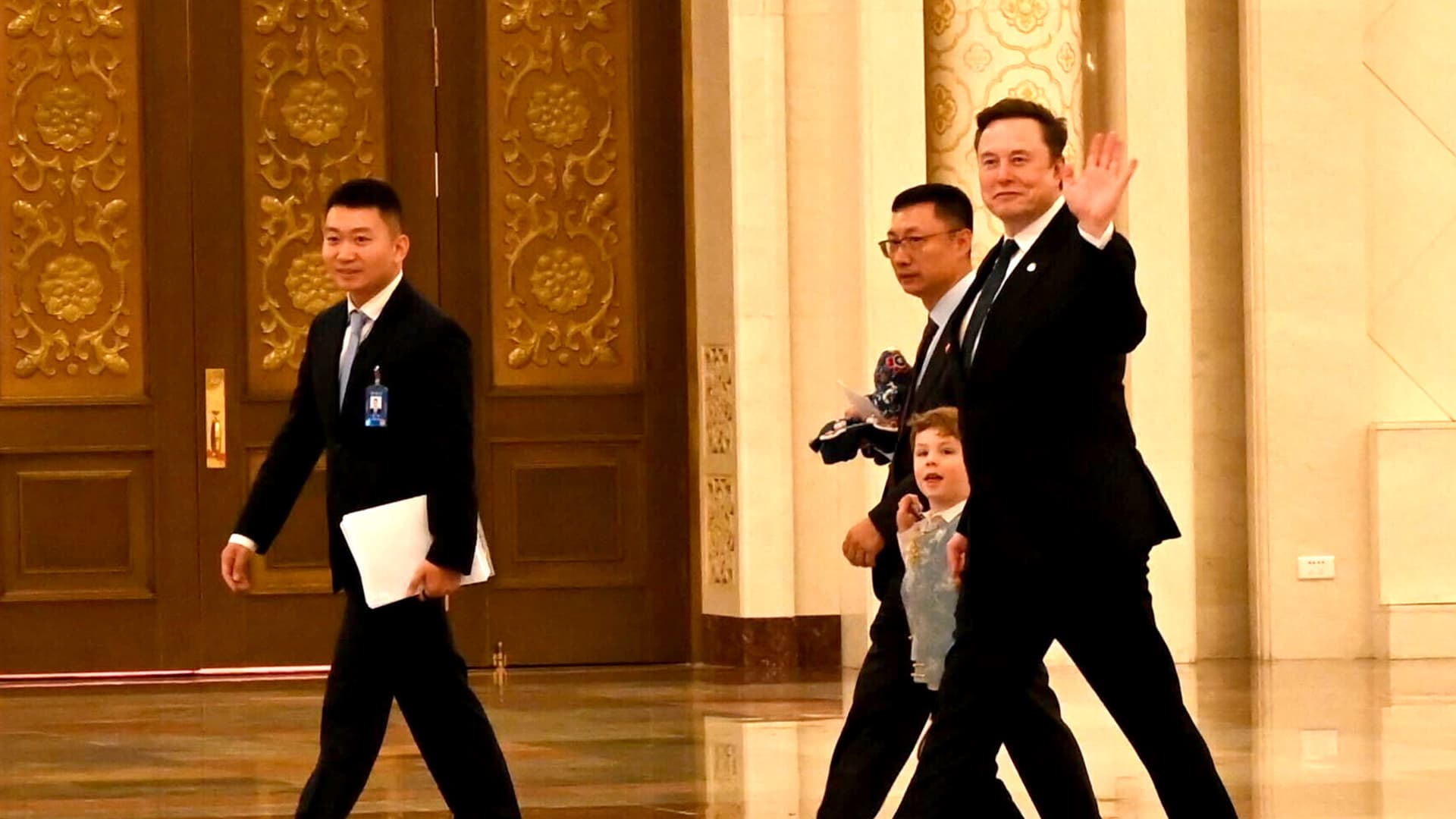
Tech billionaire and Tesla founder Elon Musk walks through the Great Hall of the People with his son X Æ A-XII.
Picture Alliance | Picture Alliance | Getty Images
Elon Musk’s lead counsel, Steven Molo, apologized to the jury for his absence on Thursday, with the Tesla and SpaceX CEO accompanying President Donald Trump in China as closing arguments were made in the Musk-Altman trial.
“This is something he is passionate about,” Molo assured the jury about Musk’s attention to the trial.
The trial in federal court stems from a lawsuit Musk brought against his OpenAI co-founders, Sam Altman and Greg Brockman, alleging they had violated a promise to keep their company a nonprofit, and had unjustly enriched themselves by restructuring the business.
Judge Yvonne Gonzalez Rogers previously placed Musk on “recall status,” meaning he was supposed to be available to return to the court, if needed, to testify on short notice, as NBC reported.
The world’s richest person testified during the first week of the trial.
Witnesses in a trial would normally need to submit a motion for permission to travel and wait for a judge to grant that motion before traveling far away.
A spokesperson for the court said they did not know if Musk obtained permission to travel. Musk’s attorneys did not respond to a request for information about whether they cleared his travel with the judge or consulted with Musk regarding his travel.
Musk traveled with Trump before closing arguments were underway, as the president held meetings with Chinese President Xi Jinping.
Nvidia‘s CEO Jensen Huang, and Apple CEO Tim Cook were part of Trump’s delegation.
In the Oakland courtroom on Thursday, Altman and Brockman were both in attendance.
William Savitt, counsel for OpenAI, also pointed to Musk’s absence in his closing arguments.
“Mr. Musk isn’t here today — my clients are here,” he said. “They’re here because they care about this.”
During their close, Savitt and fellow counsel Sarah Eddy walked the jury through documents in evidence, showing Musk had wanted to turn OpenAI into a for-profit entity, but only if he could control the business or merge it with Tesla.
Eddy told the jury Musk had claimed his donations to the nonprofit in its early years had “specific strings attached.” She added, “Mr. Musk has come nowhere close to making that case,” and “even the people who work for him, even the mother of his children can’t back his story,” a reference to the testimony of former OpenAI board member Shivon Zilis, the mother of four of Musk’s children.
WATCH: It’s the final full day of testimony in Musk v. Altman
