

Close Menu

    Subscribe to Updates

    Get the latest creative news from FooBar about art, design and business.

    What's Hot

    Why is Talen Energy stock up today?

    June 18, 2026

    Intel stock rises after Trump touts U.S.-built chip deal with Apple

    June 18, 2026

    'Scared to go to work': Shop assistant tells of customer abuse

    June 18, 2026
    Facebook X (Twitter) Instagram
    Addison Markets
    • Home
    • USA
    • Europe
    • Business
    • Investing
    • Tech
    • Politics
    • Contact Us
    Addison Markets
    Home»Tech»New robotic control software avoids jamming their joints
    Tech

    New robotic control software avoids jamming their joints

    franperez66q@protonmail.comBy franperez66q@protonmail.comApril 26, 2026No Comments2 Mins Read
    Facebook Twitter Pinterest Telegram LinkedIn Tumblr WhatsApp Email
    Share
    Facebook Twitter LinkedIn Pinterest Telegram Email


    Switching from one smartphone to another is mostly a smooth procedure. You log into your accounts and your apps, preferences, and contacts should sync to the new hardware. But in the world of robotics, swapping an old robotic arm for a newer model has meant setting everything up from scratch.

    To fix that, a team of researchers at the Swiss École Polytechnique Fédérale de Lausanne (EPFL) has developed what they call Kinematic Intelligence, a framework that makes switching robots work more like switching smartphones. They describe their system in a recent Science Robotics paper.

    Demonstrating skills

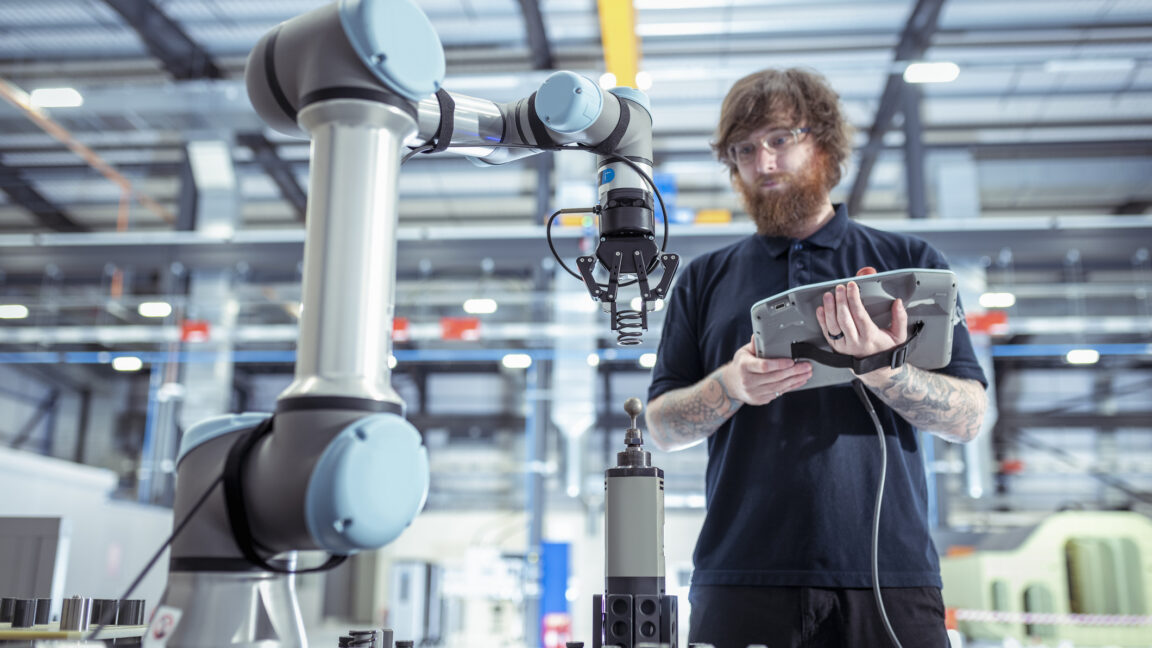
    For years, roboticists have been working on getting robots to learn from demonstration—teaching them new skills by showing them what to do, rather than writing lines of code. The idea is to remotely control or physically guide the robot’s arm to teach it a task like wiping a table, stacking boxes, or welding a car component. The problem is that most of these taught skills end up tied to the specific robot the training was done with.

    But robotics is advancing quickly. “The robots have different designs, and nowadays there are new designs being proposed—that brings its own set of challenges,” said Sthithpragya Gupta, a roboticist at EPFL and lead author of the study. If a new robot has slightly longer links, a different joint orientation, or a more complex configuration, that learned behavior instantly breaks and the new robot will likely flail, freeze, or crash if attempting it.

    “With new designs come different capabilities and constraints,” said Durgesh Haribhau Salunkhe, an EPFL roboticist and co-author of the study. “The problem is to adapt to these constraints and capabilities—to faithfully replicate the actions demonstrated by a human.” Today, making the leap from one robot body to another usually means starting from scratch and retraining the whole system.


    Source link

    Share. Facebook Twitter Pinterest LinkedIn Tumblr Email
    franperez66q@protonmail.com
    • Website

    Related Posts

    Intel stock rises after Trump touts U.S.-built chip deal with Apple

    June 18, 2026

    Hulk, Punisher join Peter Parker in Spider-Man: Brand New Day trailer

    June 18, 2026

    Towers once planned for California shuttle launches leveled for SpaceX rockets

    June 18, 2026

    “Dangerous” AI models are coming no matter what

    June 18, 2026

    The Slate Truck’s price may have leaked, starts at $24,950

    June 18, 2026

    Tesco moving 40,000 server workloads off VMware amid Broadcom’s “abusive conduct”

    June 18, 2026
    Leave A Reply Cancel Reply

    Top Reviews
    Editors Picks

    Why is Talen Energy stock up today?

    June 18, 2026

    Intel stock rises after Trump touts U.S.-built chip deal with Apple

    June 18, 2026

    'Scared to go to work': Shop assistant tells of customer abuse

    June 18, 2026

    Strait of Hormuz reopening may take weeks

    June 18, 2026
    © 2026 All right reserved
    • Privacy Policy
    • Terms & Conditions

    Type above and press Enter to search. Press Esc to cancel.