
Unlock the Editor’s Digest for free
Roula Khalaf, Editor of the FT, selects her favourite stories in this weekly newsletter.
Investors can never quite seem to recall just how long consumer goods turnarounds take to show results. That helps explain why they sliced about 8 per cent — or SFr16bn ($19.6bn) of value — from Nestlé’s market value on Thursday on the back of only moderately underwhelming results.
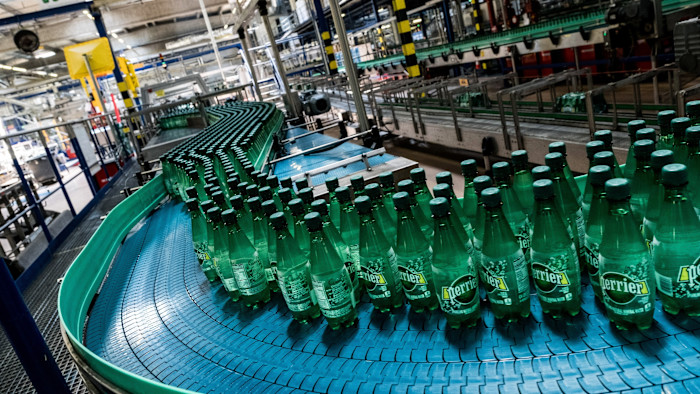
Under the surface, however, the components of a genuine turnaround are beginning to fall into place. Nestlé has made headway in the common conglomerate-management task of ditching sleepy brands for more lively ones. This week, it sold 50 per cent of its water business, whose margins are about half the group average, to private equity firm Platinum Equity for SFr2.8bn, and it divested the physical café operations of Blue Bottle Coffee to Centurium Capital earlier this year. Meanwhile, it acquired the entirety of fast-growing German health food brand yfood.
And Nestlé isn’t going backwards any more. Its stable of billion-franc brands stopped losing market share last year for the first time in a decade. The group is growing sales by volume, which is increasingly important given inflation-linked price increases are now behind it: in the second quarter, volumes rose 1.8 per cent, up from 1.2 per cent in the first quarter and 0.8 per cent the year before, helping it to deliver organic sales growth of 3.7 per cent.
The question for investors, however, is whether Nestlé can go back to its historical outperformance compared with companies such as Danone — and justify its premium rating. That will require its fast-growing brands to pick up speed and its core brands to avoid misfiring.
On the first front, at least, there are signs that its investments in petcare and coffee, which the maker of Nespresso is prioritising, are paying off. In particular, coffee sales rose almost 6 per cent in the last quarter, with a significant fillip from pricing, on the back of higher marketing spend. Its petcare division, meanwhile, has room to grow: Barclays estimates that, while it will account for more than 40 per cent of North America sales this year, its contribution in Asia, Oceania and Africa will be a lowly 3 per cent.
Nestlé’s progress is reassuring, not least because the business has churned through three chief executives in the past two years. And history suggests that, in the case of consumer giants, patience is warranted. Procter & Gamble launched its own turnaround in 2014 after slowing organic sales growth. It sold dozens of brands to focus on its leading products such as Tide and Pampers, and didn’t return to mid-single-digit organic growth until four years later. It has since outperformed rival Unilever by more than 80 per cent. Maybe supertankers don’t turn quickly, but once they start, they are hard to stop.
[email protected]
