

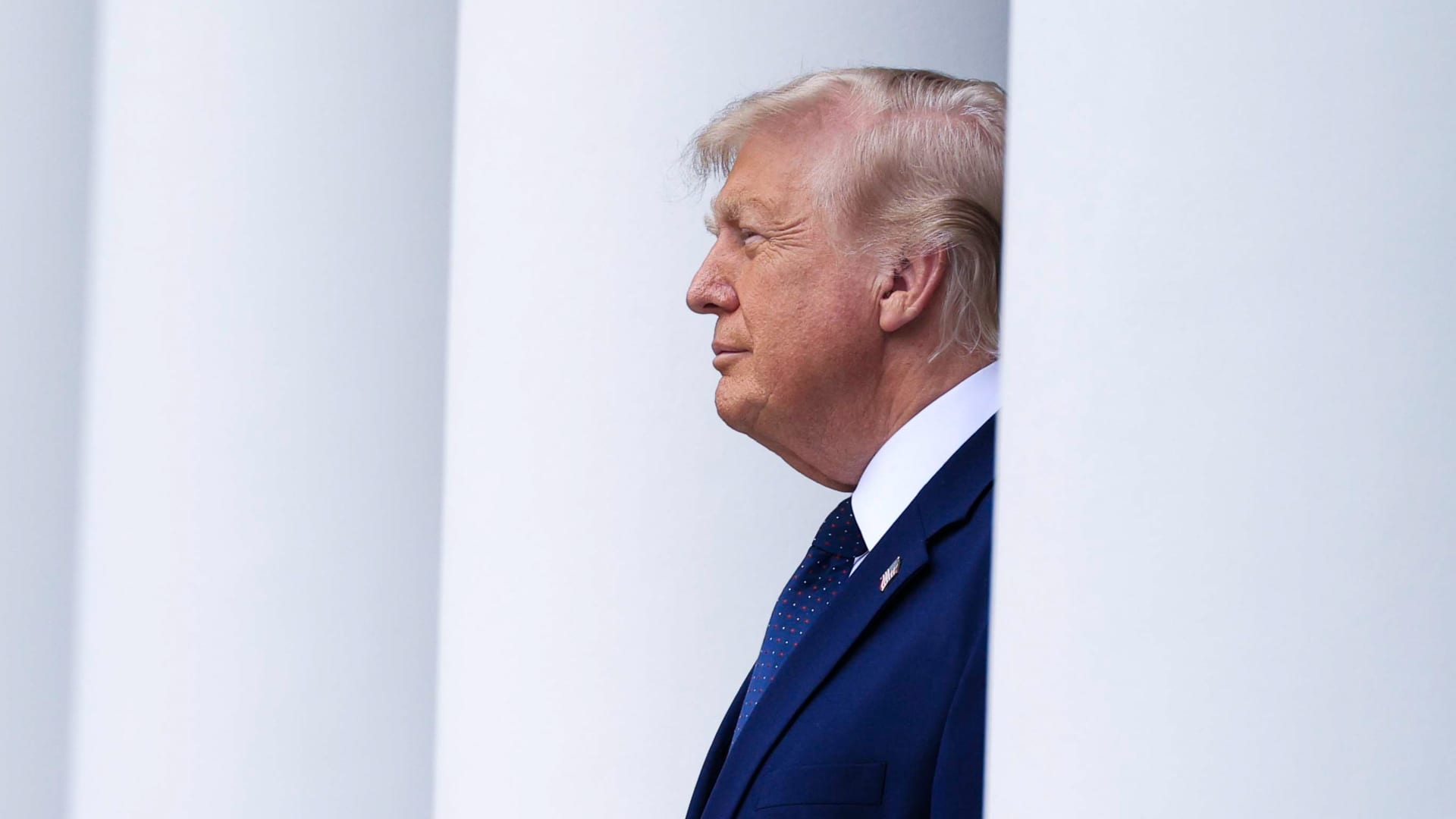
President Donald Trump points his finger as he signs an executive order on AI next to Senate Commerce Committee Chairman Ted Cruz, R-Texas, left, and Commerce Secretary Howard Lutnick, in the Oval Office at the White House in Washington, Dec. 11, 2025.
Al Drago | Reuters
The Trump administration has taken new steps to assert more control over the rollout of future artificial intelligence model releases by dictating which companies and entities are allowed access to the latest frontier models, two sources familiar with the matter told CNBC.
Until now, that decision was in the hands of American AI giants.
Both Anthropic and OpenAI have decided which companies and agencies have access to their most powerful models, and have often included major enterprise customers.
Anthropic unveiled its most capable Mythos cybersecurity model to a handful of partners with Project Glasswing. OpenAI was asked by the administration to gate its recent GPT-5.6 release, and has a similar consortium called Daybreak for its cybersecurity model.
A White House official told CNBC that it doesn’t provide approvals for AI releases from private companies.
The official said any engagements, testing or meetings with government experts are “voluntary” and that “decisions on timing and scope of releases rest entirely with the companies,” referring CNBC to Trump’s recent executive order.
“The Administration continues to collaborate with all of America’s frontier labs to strengthen the security of this technology without stifling innovation,” they wrote.
However, last month the Trump administration blocked Claude Mythos 5 and Fable 5 due to “national security concerns,” reinstating access after weeks of intense negotiations with Anthropic. OpenAI last month said it would limit new AI models to “trusted partners” to comply with government requests.
The White House is walking a fine line on regulation at a time when sophisticated AI tools pose massive cybersecurity risks and cheaper, open-weight models from China are quickly closing the gap with American frontier labs.
Chinese startup Moonshot AI unveiled its Kimi K3 model on Friday, which largely caught up to the performance of Fable and GPT-5.6, and even outperformed the U.S. frontier models in at least one independent benchmark.
David Sacks, founder of Craft Ventures and the former White House AI czar, called the Kimi breakthrough “concerning.”
“This is how you lose the AI race,” he wrote. “The rest of the world won’t play by our rules if we bog ourselves down.”
The administration has already taken several steps to reshape AI oversight in recent months, starting with President Donald Trump’s June executive order, which asked companies to voluntarily give the government early access to models for testing.
This week, the administration launched its own program, dubbed “Gold Eagle,” aimed at collaborating with the private sector to find and fix cyber vulnerabilities.
The so-called clearinghouse would put the White House in charge of greenlighting which companies can access new AI models, according to a source familiar with the matter, who spoke on condition of anonymity in order to discuss information that is not public.
The administration’s moves have left the future of company-led initiatives like Project Glasswing and OpenAI’s Daybreak in doubt.
Going forward, according to one source, these rollouts will require explicit government approval for which partners can be involved.
— CNBC’s Megan Cassella and Ashley Capoot contributed reporting
