
Unlock the Editor’s Digest for free
Roula Khalaf, Editor of the FT, selects her favourite stories in this weekly newsletter.
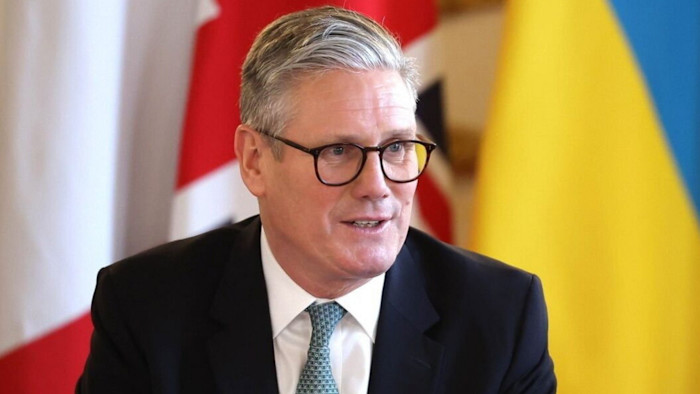
Sir Keir Starmer is next week set to sign Britain up to a €60bn EU defence loan scheme for Ukraine, as he seeks to use his last week in Number 10 to cement an improved post-Brexit relationship with Europe.
The UK prime minister will commit to financial contributions to the scheme proportional to the value of the contracts awarded by Kyiv to British defence companies.
Without paying, they would only be able to receive 35 per cent of the value of any contract.
Downing Street said details would be announced on Monday at a meeting in Paris of the UK-French-led “coalition of the willing”, set up to discuss security guarantees for Ukraine, and confirmed negotiations were at an advanced stage.
One British official said: “Through our participation, the UK will make a fair contribution to the EU for the cost of providing the loan. This contribution will be proportional to the value of the contracts awarded to UK industry.”
In a sign that Starmer sees foreign policy as one of the bright spots of his two-year premiership, the UK prime minister will remain in Paris with French President Emmanuel Macron for Bastille Day celebrations on July 14.
The improved UK-French relationship, built on a need to boost European defence co-operation, also manifested itself on Friday with the arrival in London of the Bayeux Tapestry, ahead of its unveiling at a British Museum exhibition in September.
Macron was instrumental in organising the loan of the tapestry during the renovation of the Bayeux Museum where it was being housed, paving the way for what is expected to be the British Museum’s biggest “blockbuster” exhibition in decades.
The talks on the Ukraine loan scheme were launched in May by Starmer and Ursula von der Leyen, European Commission president, as part of a wider reset of UK/EU relations, 10 years on from the Brexit referendum.
Under the deal, Britain would contribute to the borrowing costs, while the EU agreed that British armaments should be included to ensure that Ukraine has the weapons it needs to counter Russian aggression.
Starmer said at the time: “When the UK and the European Union work together, we all reap the benefits — and in these volatile times we need to go further and faster on defence to keep people safe.
“That is why we are beginning negotiations with the EU to ensure Ukraine gets the equipment it needs to defend its freedom, while driving opportunities for British industry to play its full part.”
The sealing of the loans agreement for Ukraine was originally intended to be a central feature of a UK/EU summit this month, but Brussels postponed the meeting because of Starmer’s impending departure.
Britain has previously tried to negotiate membership of a separate €150bn EU “Safe” defence fund, but talks foundered after Starmer refused to pay the access fee demanded by the EU, with France driving a particularly hard bargain.
UK officials say the terms for the Ukraine loan are better and represent a fair deal.
Starmer will formally tender his resignation to King Charles on July 20 and is expected to be succeeded by former Greater Manchester mayor Andy Burnham.
