
Stay informed with free updates
Simply sign up to the UK energy myFT Digest — delivered directly to your inbox.
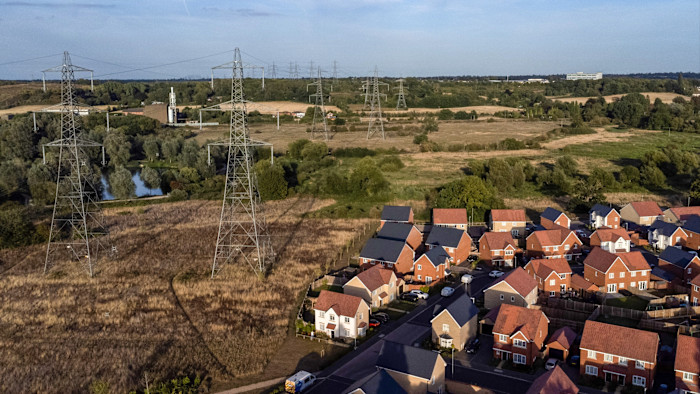
Households near more than 40 big grid upgrade projects will be eligible for money off electricity bills, as the UK government looks to improve support for the infrastructure needed to drive the shift towards lower-carbon energy.
The Department for Energy Security and Net Zero on Wednesday announced the first batch of projects covered by the scheme, which has been set up to fend off a groundswell of local opposition to many grid upgrades that threatens to slow their development.
The list covers planned development of or upgrades to power lines, pylons and converter stations, the vast majority of which are in Scotland and the east of England.
Households living within 500 metres will be able to save £2,500 off their electricity bills over 10 years, the government said, with more projects due to be added. Discounts will be applied only once the relevant project is fully consented and building has started. The first are expected next year.
The move marks the long-awaited culmination of recommendations made by industry veteran Nick Winser in 2023 to the then Conservative government as part of the drive to decarbonise.
Michael Shanks, energy minister, said upgrading the grid was vital for “secure, homegrown energy” and that he was “determined those communities which host pylons should benefit”.
But campaigners opposed to SSEN’s Kintore-Tealing 400kV proposed overhead power line in Scotland described the announcement as a “slap in the face” for local communities facing “ruined businesses and unsellable homes”.
“This government is either massively out of touch or is showing their contempt for affected residents and energy consumers,” said Kate Matthews at campaign group Save Our Mearns. “Residents have lived with horrific uncertainty for over three years.”
The payments will be funded by network owners, who recoup their costs from network users. The energy department said it expected payments to cost average British households roughly £4-£5 in total between now and 2044, with a peak annual payout of about 50 pence.
Britain’s electricity system needs to be upgraded and massively expanded to cope with the surge in wind farms and solar farms dotted around the country over recent years as well as the anticipated growth of electric cars and heat pumps.
Delays to projects could hinder the government’s target of decarbonising the electricity system by 2030 and mean that more wind farms are paid to switch off because their power cannot be moved to where it is needed.
However, local campaigners have objected to projects in several areas, citing factors ranging from the risk of damage to wildlife, impact on the views, noise and land use.
Critics have also voiced concerns about the cost of grid upgrades, which are funded by all electricity consumers and one factor behind Britain’s high electricity bills.
A Scottish government-mandated inquiry is under way into the Kintore-Tealing proposal after local pushback prompted area councillors to object. The inquiry is expected to make its recommendations by early January, with a final decision by Scottish ministers afterwards.
SSEN, which operates the transmission network in north Scotland, has said that the overhead line is a vital part of the wider grid upgrade and will bring investment and jobs to north-east Scotland.
