
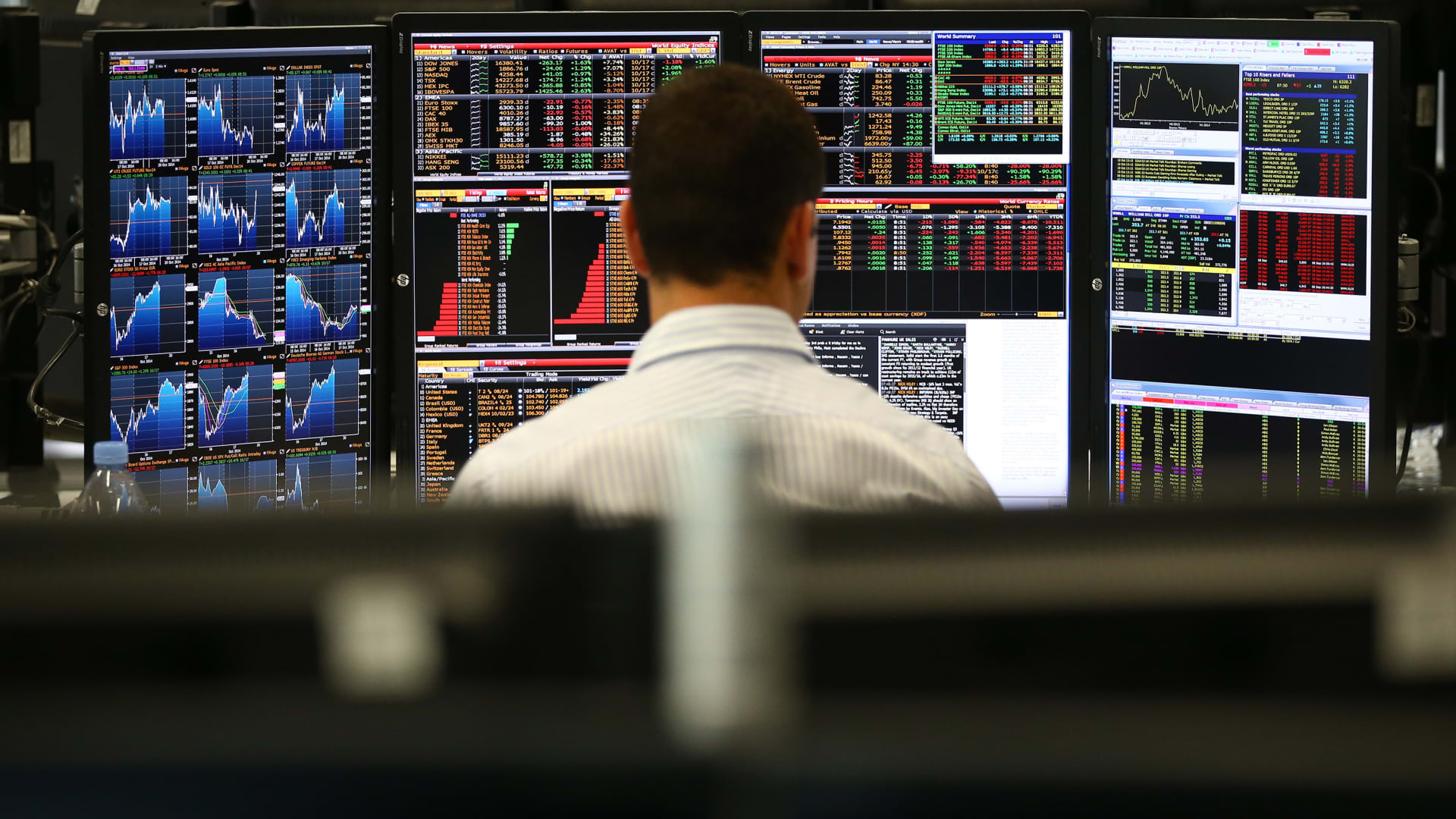
The surge in oil prices and ongoing volatility have netted major gains in a corner of the market that rarely captures headlines: quantitative trend-following hedge funds.
Quantitative trend-followers — also known as commodity trading advisors (CTAs) or managed futures funds — use complex machine-learning algorithms, statistical analysis and factor-based modelling to identify price trends across futures markets, including equities, bonds, commodities and currencies.
The spike in commodity prices caused by the war in the Middle East has handed them one of their richest trading environments in years.
By trading on both rising and falling markets, with investment decisions made by computer-based systems driven by data and signals rather than human judgment or emotion, CTAs can often provide uncorrelated returns and so-called “crisis alpha” to investment portfolios during market turbulence.
Societe Generale’s main SG CTA Index — the sector’s main benchmark and the key barometer for trend-following strategies’ overall performance — is up 11.9% year-to-date to June 2. The SG Trend Index, a daily performance tracker of the 10 biggest trend-following hedge funds, has risen almost 11.8% over the same period.
Energy commodities have been a standout contributor to CTAs’ gains since the start of the Middle East conflict on Feb. 28.
Brent crude.
But the splintering narrative around the conflict and the increasingly uncertain direction of U.S.-Iran peace negotiations are now pushing such strategies to scale back their oil bets.
Helen Doody, head of Abbey Capital U.S., said many funds established long energy positions early in the first quarter as the price of crude oil rose.
“They were positioned to capture the sharp rally that occurred in late February and early March due to events in Iran,” Doody told CNBC via email. “CTA strategies also typically participated in the up moves in distillate contracts like gasoline and diesel.”
Nicolas Gaussel, CEO and CIO of Paris-based CTA Metori Capital Management, which trades both commodities and financial contracts, said roughly a third of his firm’s performance this year has come from energy trades.
Another banner year for CTAs?
The gains have drawn comparisons with 2022, when oil and other commodity prices surged following Russia’s full-scale invasion of Ukraine.
Trend-following hedge funds generated their best-ever annual performance that year, with the SG CTA Index advancing more than 20%, as managers also successfully latched onto the sustained fall in equities and bonds.
Could the sector now be in line for another banner year?
Razvan Remsing, chief product strategist at Aspect Capital, said the impact of the current energy shortage is “far more profound and widespread” than in previous shocks, which occurred in a far more homogenized, globalized world.

Simplify Managed Futures ETF.
“Right now, the potential disruption to world energy supply is bigger,” Remsing said, adding: “Volatility is more suppressed given the AI optimism pulling risk assets higher despite the seemingly inevitable shortage of molecules to contend with down the line.”
“Magnitude-wise, the contribution from long energy positioning year-to-date is comparable to the contribution seen in March 2022,” said Yung-Shin Kung, head and CIO of Mast Investments.
“It’s worth noting that CTAs were generally losing money on energy exposure through February 2026, so year-to-date attribution reflects a gain since March, which is roughly 250% the size of loss coming into March and similar in size to the gains CTAs achieved on energy exposure in the first quarter of 2022,” he told CNBC via email.
Beyond oil
Tom Wrobel, director, capital consulting, prime services and clearing at Societe Generale, said oil gains are just one part of a much broader macro bonanza powering CTAs’ returns in 2026.
“There are a lot of things going on — it’s not just one trend in one market,” Wrobel told CNBC in an interview.
Yung-Shin Kung said that CTAs had captured the rally in precious metals, primarily silver and gold, at the beginning of the year, before switching to industrial metals that are poised to benefit from AI infrastructure investment and supply constraints caused by the Iran war.
Remsing, meanwhile, said that commodity-sensitive currencies like the Norwegian krone, Australian dollar and Brazilian real have also trended strongly as the de-dollarization theme petered out and the euro was weakened by the war.
“Energy markets and in particular oils have generated gains in the aftermath of the Gulf war but by no means are our gains concentrated in that sector,” Remsing told CNBC via email.
Gold futures.
Now, with oil price momentum showing signs of slowing amid stuttering peace negotiations, the quant models may now be cutting back on their exposures.
Doody said long positioning across energy markets has been reduced in response to increased volatility and choppier price action, leaving CTAs still typically long energy but less exposed than earlier in the year.
Fixed income remains more challenging, however, as yields have risen because of concerns over inflation.
“CTAs on balance are short fixed income at present. Positions are broad-based across markets. While some of the largest short positions are in U.S. Treasury futures, CTAs are generally short European, Australian and Japanese futures contracts also,” Doody added.
Wrobel said managers will be monitoring positions closely. “They won’t want to have an outsized loss from markets reverting back down — I think a lot of CTAs will have been trimming their position sizes.”
That, ultimately, is business as usual for CTAs, he added. “Capture trends as they emerge, and manage risk as they fade,” he said. As volatility rises, managers do not need to take as large positions to meet return targets, Wrobel said.
In a note on Tuesday, Citi analysts pinpointed a “relatively rich volatility premia” for gold, copper and soybean oil, noting the difference between three-month implied volatility and one-month realized volatility. In contrast, the volatility premium remains negative across the petroleum complex, they noted.
Gaussel said the truly negative scenario for CTAs would be a majority of markets moving into mean-reversion mode, as happened following U.S. President Donald Trump’s “Liberation Day” tariffs announcements last year.
“An isolated sharp pull-back in energies would generate losses in that sector, but might generate gains in other sectors such as equities or other commodities, so it might not necessarily translate into losses.”
